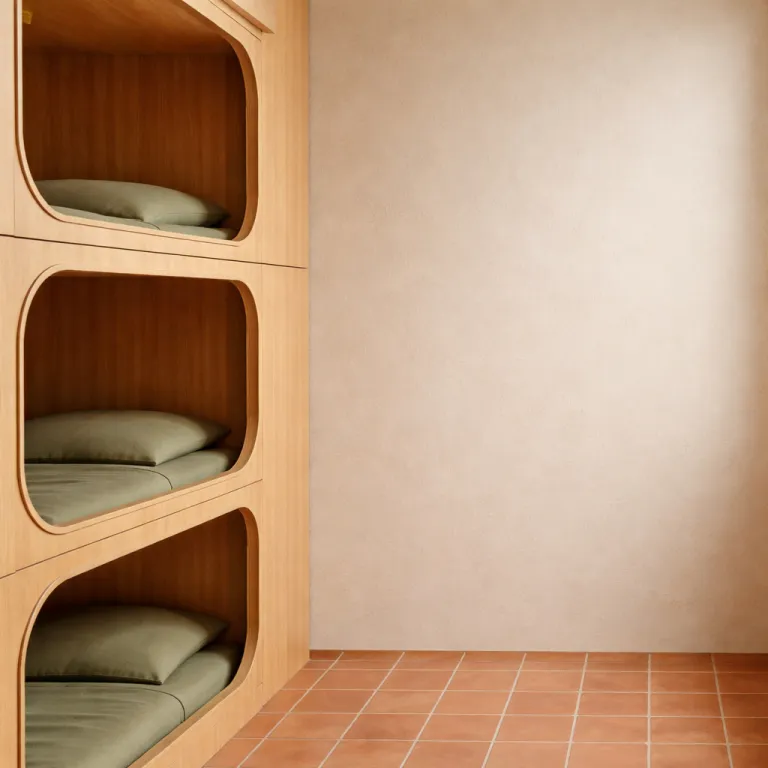
The city centre capsule advantage for business leisure travellers
A capsule hotel in the city centre turns location into the real luxury. In dense districts where a traditional hotel would be unviable, compact capsules allow operators to fit several times more guests per square metre, which radically changes the real estate equation for both owners and travellers. That is why the smartest urban capsule properties tend to sit on corners where only flagship retail or premium offices used to make financial sense.
In London, for example, Zedwell Hotels has used this model to place a large number of windowless sleep pods directly at Piccadilly Circus, a location where affordable central accommodation options were previously almost nonexistent. Public reports describe entry level rates that are markedly lower than nearby full service properties, with some nights advertised from under £100 compared with average West End hotel rates well above that figure, which underlines how a capsule style concept can undercut conventional hotels while still offering strong margins (see Zedwell Piccadilly Circus listings on major booking platforms in 2023–2024). For hotel guests who value walking out into the city rather than into a ring road, that trade off between pod size and postcode is compelling.
Across Japan, the same logic explains why modern capsule hotels cluster around major transit nodes and entertainment districts. In Tokyo, compact pod accommodation often sits within minutes of key metro interchanges such as Shinjuku, Ueno or Tokyo Station, making a short stay capsule booking ideal between meetings or flights. Industry surveys by the Japan Tourism Agency have noted that average nightly rates for capsule style properties in central Tokyo remain significantly below those of business hotels in the same wards, even as occupancy has risen with inbound tourism. This is the structural gap that capsule operators fill: they offer a clean, engineered sleep solution where a conventional hotel room would either be prohibitively expensive or simply not built.
Trading square metres for minutes saved in top urban districts
For the business leisure executive, the core calculation is simple: less room, more city. A compact pod in a central location means accepting a smaller footprint in exchange for minutes saved every morning and night, because the meetings, restaurants and cultural venues are all within a short walk. When you check into a capsule style hotel in the heart of the city, you are effectively buying back time rather than floor space.
Consider London again, where hotels in outer zones may offer larger rooms but require long commutes on crowded trains. A centrally located capsule property allows guests to sleep metres from Soho or the West End, and the quiet pod with its curtain door becomes a private retreat above the urban theatre. As one frequent guest put it, “I traded a desk and armchair for an extra hour of sleep and still made every breakfast meeting on foot.” For travellers who value wellness, that reduction in transit stress can matter more than an extra armchair in the room.
North American cities now follow this pattern, with capsules appearing in downtown districts where nightly rates once excluded younger professionals. In Vancouver, for example, Panda Pod Hotel offers a stay capsule experience at a price point under many traditional hotels in comparable neighbourhoods, illustrating how pod based concepts open premium postcodes to a wider audience. Readers interested in how elevated pods use skyline views as part of their value proposition can explore our guide to capsule hotels with panoramic city views for luxury travellers, which shows how location and design now work together.
Tokyo’s capsule hotel city centre blueprint
Tokyo remains the reference point for any capsule hotel city centre strategy. The first capsule hotels emerged in Osaka, but Tokyo quickly refined the model around dense business and nightlife districts such as Shibuya, Shinjuku and Asakusa, where land values are among the highest in Japan. In these neighbourhoods, a capsule hotel allows operators to host many more guests on each floor while keeping nightly rates accessible.
Properties marketed as compact hotel capsules in Tokyo often sit within a few minutes of major stations, which is crucial for travellers connecting through Haneda Airport or Narita Airport. A guest might land late at Haneda Airport, ride a short train into the city, and check into a Tokyo capsule near Shinjuku rather than paying for a full room near the terminals. For those heading to meetings in Tokyo Odaiba or Marunouchi the next morning, that central sleep stop reduces both travel time and fatigue.
Neighbourhood specific offerings such as a Shibuya capsule hotel or an Asakusa hotel with pod style rooms show how the concept adapts to different urban textures. In Shibuya, a capsule hotel city centre property might emphasise sound insulation and a secure curtain door for guests returning late from bars, while an Asakusa capsule hotel could lean into Japanese design cues and proximity to temples. Travellers planning a wider circuit through Japan can compare this approach with the refined pods highlighted in our feature on capsule hotel stays in Fukuoka for urban travellers, where the balance between calm interiors and city access is handled with particular care.
From airport layovers to extended city stays
Capsule hotels were once associated mainly with missed trains and late nights, but that perception is changing fast. Operators now design a capsule hotel city centre experience that works for both a single night between flights and several nights on a blended business and leisure itinerary. The key is how well the facilities capsule offering supports real life routines rather than just emergency sleep.
At major hubs such as Haneda Airport and Narita Airport, capsule hotels give travellers a precise tool: a quiet capsule near the terminal for a defined block of rest. A guest can check in for the night, store luggage securely, use laundry facilities and wake up already inside or adjacent to the airport complex, which is far more efficient than shuttling to distant hotels. The quote “They are designed for short term stays.” still holds, yet the quality of those short stays has improved dramatically.
In city centres, the same facilities capsule logic now supports longer trips. When laundry facilities, strong Wi-Fi and thoughtfully designed shared lounges are present, hotel guests can treat a capsule hotel as a practical base for a week of meetings and evenings in the city. For executives extending a work trip into a weekend, that combination of predictable sleep, central location and controlled cost often beats a larger suburban hotel room that requires daily commuting.
Designing comfort inside the capsule and beyond
Real luxury in a capsule hotel city centre property lies in engineering, not excess. The capsule itself must deliver a consistently good sleep, with ventilation, mattress quality and lighting all tuned for rest, while the surrounding floor layout handles circulation and privacy. When capsules are stacked efficiently yet quietly, guests feel the benefits of density without the stress.
Premium operators pay close attention to the micro details that matter at two in the morning. A well weighted curtain door or sliding panel should block corridor light, while sound dampening materials keep footsteps on the floor from intruding into the room like pod. Many capsule hotels now integrate individual controls for temperature and lighting, so each capsule becomes a personalised cocoon even within a shared space.
Outside the capsules, thoughtful amenities elevate the experience from basic to premium. Lockers that allow guests to store luggage near their pod, well maintained showers and clearly signed quiet zones all contribute to a sense of calm order. When these elements are combined with a central address, the result is a capsule hotel city centre stay that feels intentionally minimalist rather than merely cheap.
How to choose the best capsule hotel in the city centre
Selecting the best capsule hotel city centre option starts with clarifying your priorities. If you are arriving late by air, proximity to a direct line from the airport may matter more than being beside a specific landmark, especially in cities where Haneda Airport or Narita Airport trains run deep into the urban core. For travellers focused on meetings, being able to walk from the hotel to key offices can justify a slightly higher nightly rate.
Before you book, always check capsule size, layout and shared space rules. The guidance “Book in advance.” and “Check capsule size.” remains sound, particularly in districts where central Tokyo or central London options sell out quickly during major events. You should also review how the property manages mixed gender floors, whether there are women only areas and how hotel guests access facilities such as showers and lounges.
Finally, look closely at the service layer, because that is where premium capsule hotels differentiate themselves. Policies on free Wi-Fi, early check in, late check out and luggage storage can transform a simple capsule into a flexible urban base. Travellers interested in how this model translates to emerging markets can examine our overview of capsule hotel stays in Miami with a luxury edge, which shows how North American operators adapt Japanese inspired pods to new city contexts.
FAQ
What is a capsule hotel and who is it for ?
A capsule hotel offers small, bed sized rooms for affordable stays, typically arranged as stacked capsules along a corridor. In a capsule hotel city centre setting, this format suits solo travellers, business guests and transit passengers who prioritise location and efficient sleep over large private space. Couples who are comfortable with compact living can also find value, especially when the property offers double capsules or adjacent pods.
Are capsule hotels suitable for long stays in major cities ?
They are designed for short term stays, usually one to three nights, but well equipped properties can support longer visits. In a capsule hotel city centre with strong laundry facilities, reliable Wi-Fi and generous storage, a business traveller can comfortably stay a week while keeping costs predictable. The key is to ensure that shared spaces feel calm and that the nightly routine of accessing showers and lockers fits your schedule.
How do capsule hotels compare with traditional hotels on price and value ?
Because capsules allow several times more guests per square metre than many conventional rooms, operators can offer lower nightly rates in premium locations. A capsule hotel city centre stay often costs significantly less than a standard hotel room in the same district, while still providing clean bedding, security and essential amenities. For travellers who spend most of their time in the city and only use the room for sleep and short work sessions, that trade off usually represents strong value.
Are capsule hotels safe and private enough for business travellers ?
Reputable capsule hotels use keycard controlled floors, CCTV in public areas and secure lockers to protect guests and belongings. Inside the capsule, privacy comes from a curtain door or sliding panel, combined with quiet hours and clear etiquette guidelines. For executives, choosing a capsule hotel city centre property with good reviews on cleanliness, noise control and staff responsiveness is the best way to ensure a professional grade experience.
What should I check before booking a capsule hotel near an airport ?
When booking a capsule hotel city centre or near an airport, confirm the exact distance to terminals or train lines and the operating hours of transport connections. You should also check whether the property offers flexible check in and check out times, as flight schedules may not align with standard hotel policies. Finally, verify that you can store luggage securely and access showers even if you arrive very late or depart very early.