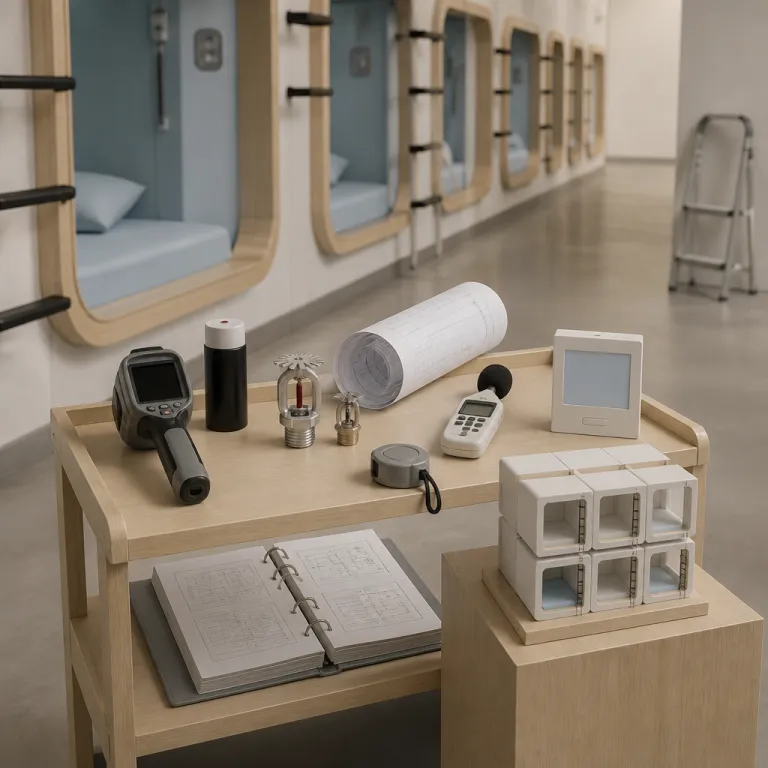
How capsule hotel regulations and zoning shape what you can book
Capsule hotel regulations and local zoning frameworks quietly decide whether you ever see pods on a booking screen. In most cities, a capsule hotel must squeeze into rules written for a traditional hotel or a hostel, and that mismatch shapes everything from pod dimensions to nightly pricing. For a luxury minded solo traveler or business traveler, the result is simple yet powerful: either capsule hotels appear as refined urban accommodation options, or they never get built at all.
City planning departments and fire departments sit at the centre of this hotels market story. Planning officials act as regulators for land use, while fire authorities enforce safety codes that were never designed with stacked capsules or pod hotels in mind, so every project becomes a case study in regulatory interpretation. In practice, cities govern capsule hotels through a mix of zoning rules, building codes and fire safety standards, often drawing on frameworks such as the International Building Code (IBC) and National Fire Protection Association (NFPA) 101 Life Safety Code.
For travelers comparing capsule hotels in Asia, Europe or North America, these invisible rules explain why the global market feels so uneven. Tokyo and Osaka offer a mature capsule hotel market with clear classifications under Japan’s Ryokan Business Act, while only a handful of cities in the United States currently allow similar density in central districts. Industry reports such as the 2023 Mordor Intelligence capsule hotels market study now track this niche within the wider hotels market, noting that Asia Pacific accounts for well over half of global revenue, because regulatory treatment and land use decisions directly influence market size, market share and long term market growth.
Fire codes, pod design and the limits of density
Fire safety rules are the most unforgiving part of the regulatory debate around high density pod accommodation. When a capsule hotel is treated as a standard hotel, each capsule may be considered a room, which triggers strict requirements for emergency egress, ventilation and corridor width. Those rules can reduce the number of capsules per floor, reshaping the pricing model and the guest experience for both solo travelers and business travelers.
Fire departments focus on how quickly guests can exit capsules and reach protected stairwells. Minimum distances between capsules, smoke detection inside each pod and the use of non combustible materials all affect whether a project is approved, and these technical decisions ultimately filter through to what you see on a booking website. In jurisdictions that adopt IBC Chapter 10 on means of egress or NFPA 101 provisions for sleeping accommodations, designers must prove that pod layouts meet travel distance, compartmentation and sprinkler coverage rules before permits are issued.
Premium pod hotels in Japan, such as the refined concepts showcased in guides to a high design capsule hotel stay in Shinjuku, illustrate how thoughtful engineering can turn strict codes into a calm, quiet capsule. In these properties, each capsule feels like a private cocoon rather than a cramped bunk, because ventilation, lighting and acoustic insulation have been optimised within the regulatory envelope. As one Tokyo based architect noted in a 2022 design review, “we treat every pod as a tiny fire compartment,” and when you compare capsules across regions, you are really comparing how different fire codes have been translated into design, comfort and perceived value in the hotels market.
Zoning classifications and the geography of capsule hotel markets
Zoning is the second pillar of the regulatory framework, and it explains the geography of capsule hotels worldwide. A planning department must decide whether a capsule hotel is a hotel, a hostel, a form of shared accommodation or something closer to capsule homes, and that label determines which districts are open to development. In dense urban cores where tourism is politically sensitive, that single classification can mean the difference between a thriving cluster of pod hotels and a complete absence of options.
Asia Pacific cities such as Tokyo, Kyoto, Singapore and Seoul have generally slotted capsule hotels into existing hotel categories, which allows them in commercial and mixed use zones near major stations. This regulatory clarity has supported strong market growth, giving the region a dominant market share within the global market for capsule hotels and pod hotels, while also shaping a sophisticated guest experience for both solo travelers and business travelers. By contrast, many cities in North America and Europe still treat capsules as experimental, so each new hotel or group proposal faces lengthy market analysis, public hearings and sometimes outright bans in residential zones.
In the United States, only a small number of cities currently host capsule hotels, even though interest among solo traveler communities and digital nomads is rising. In Seattle, for example, a proposed micro pod hostel near a light rail station was approved only after the developer agreed to cap the number of beds per floor and upgrade shared egress routes to match hotel standards, a compromise recorded in the city’s 2019 design review report for a downtown micro lodging project. For a traveler planning a trip, this kind of negotiated approval means that capsule hotel availability is not just a question of demand or pricing; it is a direct reflection of how local zoning maps have been drawn and interpreted.
Regional market insights from asia pacific to north america
From a traveler’s perspective, the most visible outcome of capsule hotel regulations and zoning decisions is regional variety. Asia Pacific remains the reference point, with Japan’s mature capsule hotel market joined by newer concepts in Singapore, Hong Kong and parts of mainland China, all supported by tourism policies that welcome compact accommodation near transit hubs. This concentration has given the region a significant share of the global market, with a hotels market structure where capsules sit comfortably alongside traditional hotels and hostels.
Europe tells a more fragmented story, with London and a few northern capitals cautiously embracing pod hotels while cities such as Paris and Rome remain hesitant. Planning debates often revolve around housing affordability, with critics arguing that capsule hotels and capsule homes might displace long term residents, and supporters countering that these projects activate underused commercial plots instead. In the Middle East and East Africa, regulators are only beginning to test capsule hotel concepts, usually within airport or rail precincts where zoning already anticipates transient accommodation and where market report data is still too thin for precise market size or size in USD estimates.
North America sits between these poles, with New York and a handful of West Coast cities experimenting while many other jurisdictions in the United States and Canada remain cautious. For travelers, this means that a premium capsule hotel stay is easy to book in parts of Asia but still a niche option in North America, despite clear signals of market growth in tourism and business travel segments. When you read a market report or market analysis that tracks capsule hotels, you are really seeing a map of where regulators have chosen to welcome or restrict this format, and how quickly local ordinances are adapting to compact hospitality models.
What regulations mean for pricing, experience and future growth
Regulation does not just decide where capsule hotels appear; it also shapes how they feel and what they cost. When fire codes limit the number of capsules per floor or require generous circulation space, the effective market size in a given building shrinks, and nightly pricing must rise to keep the project viable. That is why some capsules in prime urban locations can approach the rate of a compact hotel room, even though the footprint is far smaller.
For solo travelers and business travelers, the upside of strict rules is a more consistent guest experience. Clear standards on accessibility, sound insulation and shared facilities can elevate capsules from budget pods to premium micro suites, especially when developers use mass timber, modular construction and smart ventilation to meet both green building standards and comfort expectations. As cities in North America, the Middle East and East Africa refine their frameworks, market growth will depend on whether regulators treat capsules as a way to support sustainable tourism or as a threat to existing hotels market dynamics.
Forward looking market analysis now tracks how capsule hotels intersect with transit oriented development, especially in projects that extend beyond airports into rail and ferry nodes. For travelers, this means that future stays might include pods at major train stations or ferry terminals, similar to the concepts explored in guides to transit focused capsule accommodation. Before you plan a stay in any capsule hotel, one simple rule from regulators remains relevant: check local regulations before planning a capsule hotel stay, because compliance with zoning and fire codes is what ultimately underpins safety and availability.
FAQ
Are capsule hotels legal in the United States ?
Are capsule hotels legal in the US? Yes, if they comply with local zoning and fire codes. In practice, this means a capsule hotel must satisfy both building safety standards and land use classifications set by each city, often based on the IBC and NFPA 101. As a traveler, you will only see capsules listed in destinations where regulators have already approved at least one compliant project.
Why do some cities have many capsule hotels while others have none ?
The presence of capsule hotels in a city usually reflects local regulatory decisions rather than demand alone. Where planning departments classify capsules as standard hotel accommodation and allow them in central commercial zones, developers can create dense yet comfortable properties that appeal to solo travelers and business travelers. In cities where capsules fall into a regulatory grey area, projects often stall, so the hotels market remains dominated by conventional rooms.
How do fire codes affect the design of capsule hotels ?
Fire codes influence almost every aspect of capsule design, from pod spacing to corridor width and the materials used inside each capsule. Stricter rules can reduce the number of capsules per floor, which affects pricing and the overall market size that a single building can support. For guests, these requirements usually translate into better ventilation, clearer escape routes and a safer, more predictable guest experience.
Do capsule hotels compete with housing or with traditional hotels ?
Regulators often debate whether capsule hotels and capsule homes compete with residential housing or with traditional hotels, and the answer shapes zoning outcomes. In most cases, capsules operate as short stay accommodation for tourism and business travel, so they function as part of the hotels market rather than the housing stock. When cities recognise this distinction, they are more likely to allow capsule hotels in commercial or mixed use zones without intensifying pressure on long term housing.
What should I check before booking a capsule hotel in a new region ?
Before booking, confirm that the capsule hotel operates as a licensed hotel or hostel under local regulations, which indicates compliance with fire and building codes. Reading recent reviews can help you gauge how those rules translate into real world comfort, especially around noise, privacy and shared facilities. If you are travelling to a region where capsule hotels are still rare, such as parts of North America, the Middle East or East Africa, expect fewer options and more experimental concepts as the global market continues to evolve.