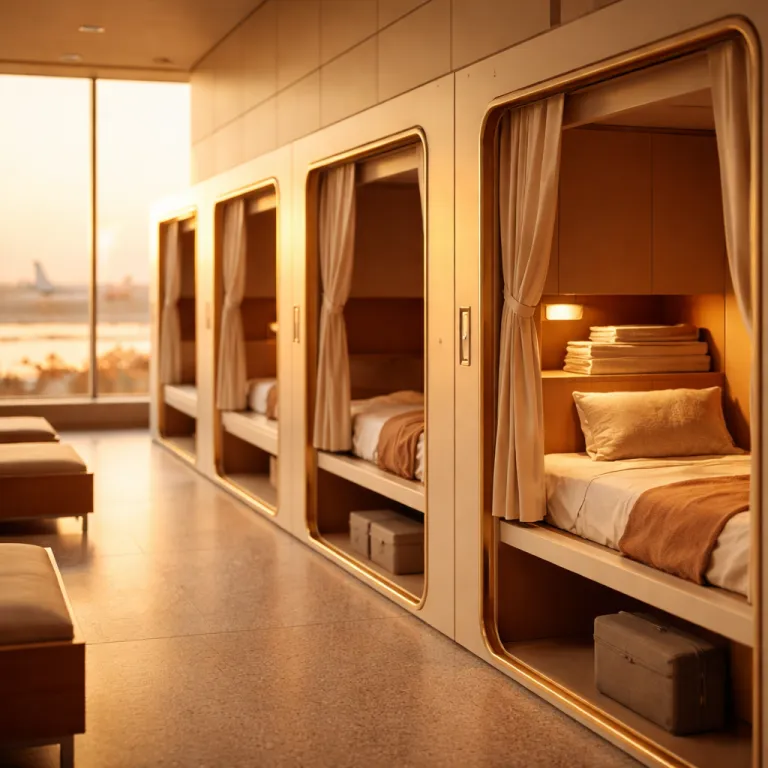
Why an airport capsule hotel changes the layover equation
At a busy international airport, the difference between exhaustion and clarity is often a proper sleep. When you book an airport capsule hotel inside the terminal, you trade fluorescent gate lighting and plastic chairs for a controlled cocoon where sleeping finally feels intentional rather than improvised. That shift matters when your next flight is a high-stakes meeting, a family reunion, or the start of a long trip.
Capsule hotels inside airports exist for one purpose: to turn dead hours into meaningful rest. Operators design each capsule or pod to maximise sleep quality in a compact room, with sound insulation, blackout blinds, and intuitive controls that you can manage in a single minute. For business travellers used to premium hotels, the surprise is how quickly a well‑engineered sleep pod can rival a traditional hotel room for short stays.
Across major airports, from Asia to the United States and the United Kingdom, capsule hotels now sit steps from departure gates. You will find sleeping pods and compact sleep cabins integrated into airport lounges, near security in a South Terminal, or beside key transit corridors in an international terminal. This proximity means you can check in, shower, sleep for a few hours, and still walk to your gate in under ten minutes without leaving airport security.
The model is simple yet powerful for anyone facing a long layover or overnight airport layover. Instead of airport sleeping on benches, you pay by the hour for a capsule, pod, or compact suites‑style cabin that prioritises rest over square metres. For premium travellers, the value lies not only in price but in the ability to control your environment during those fragile hours between flights.
Named operators such as CapsuleTransit at Kuala Lumpur International Airport, Minute Suites at major U.S. hubs, and YOTELAIR at airports including London Gatwick and Paris Charles de Gaulle show how far the concept has evolved. Their capsules and private rooms combine digital check‑in, secure luggage storage, and quiet zones that feel closer to private airport lounges than to basic hostels. For frequent flyers, an airport sleep strategy now often starts with checking whether an airport capsule hotel is available before even looking at nearby city hotels.
Where airport capsule hotels work best around the world
Not every international airport offers a capsule hotel yet, so knowing the right hubs saves time and sleep. In Asia, Narita International Airport, Singapore Changi Airport, Dubai International Airport, and Istanbul Airport have become reference points for airport sleeping pods and transit sleep cabins, with facilities located directly inside the terminal buildings. These hubs treat the airport capsule hotel as core infrastructure, not an afterthought hidden far from the main flow of travel.
In Kuala Lumpur, CapsuleTransit operates inside both KLIA1 and KLIA2, offering compact pods and capsule rooms that you can book for a few hours or an overnight stay. Sheremetyevo International Airport in Moscow hosts branded sleep cabins in airside zones so you can rest without leaving airport security or worrying about immigration queues. These operators show how a well‑placed sleep pod or series of sleeping pods can transform a long layover into a controlled, almost spa‑like pause.
Across the United States, the Minute Suites concept brings private rooms and pod‑like cabins to airports such as Hartsfield‑Jackson Atlanta, Dallas Fort Worth, and Philadelphia. These Minute Suites locations are not classic capsule hotels, yet they serve the same purpose: short‑term airport sleep with a door you can close, a bed, and a desk for work. For premium travellers, they bridge the gap between a full hotel room and a simple sleeping pod in the corridor.
In the United Kingdom, London Gatwick’s South Terminal and London Heathrow’s terminals have experimented with compact sleep pods and capsule‑style rooms close to gates. Here, the airport capsule hotel model focuses on early‑morning departures and late arrivals, when leaving airport grounds for city hotels makes little sense. You check in, sleep for a few hours, shower, and then walk straight to security with minimal friction.
City‑centre capsule hotels in Japan, such as those in Fukuoka, offer a useful comparison for travellers planning multi‑stop itineraries. If you are curious about how refined urban pods feel away from the runway, a guide to capsule hotel stays for refined urban travellers in Fukuoka shows how the same capsule concept adapts to business districts and nightlife areas. The key difference is purpose: airport capsules optimise for transit efficiency, while city capsules lean into neighbourhood exploration and longer stays.
How booking and pricing work for airport sleep pods
Booking an airport capsule hotel rarely feels like reserving a traditional hotel room, and that is intentional. Most operators sell time in hours rather than nights, with typical rates between 10 and 25 US dollars per hour depending on the airport and the level of privacy. For a business traveller facing a six‑hour airport layover, paying only for the hours you actually sleep or rest can be more efficient than a full night at nearby hotels.
Digital check‑in systems now allow you to reserve a pod, capsule, or compact suites‑style cabin online before you even reach the terminal. You select your arrival time, the number of hours you need, and whether you want extras such as shower access or a work desk inside the room. For those who prefer spontaneity, walk‑in bookings remain common, especially outside peak travel seasons when airport sleeping facilities have spare capacity.
Luxury‑focused booking platforms increasingly integrate airport capsule hotels alongside premium hotels, so you can manage every stay in a single itinerary. When you plan a complex trip with multiple airports, you might book a city hotel for the main destination, then add a sleep pod or private nap cabin for a red‑eye connection. This approach turns fragmented airport sleep into a curated sequence of controlled rest periods.
Some airports, particularly in the United States, combine capsule‑style pods with lounge access, creating hybrid products that sit between airport lounges and hotels. You might pay a flat fee for a few hours in a Minute Suites‑style room, with showers, Wi‑Fi, and snacks included, or choose a pure capsule hotel where every extra is à la carte. Either way, the focus is on flexibility: you pay for the exact duration of your stay, whether that is ninety minutes or twelve hours.
For quick comparison, many travellers use a simple checklist when weighing airport pods against nearby hotels: hourly rate versus day‑use rate, distance from gate, shower access, noise levels, and whether you can stay airside. At the airport, the premium you pay buys proximity to your gate and the ability to sleep without ever leaving airport security.
What to expect inside an airport capsule, pod, or suite
Step into a well‑designed airport capsule hotel and the first impression is calm, not claustrophobia. The corridors are usually dim, the noise from the terminal fades, and each capsule or pod feels like a private cocoon engineered for sleep. You trade expansive views for control: lighting, ventilation, and privacy are all within arm’s reach.
Inside a typical capsule, you will find a full‑length bed, storage for a cabin bag, power outlets, and sometimes a small fold‑out desk for work. More premium pods and Minute Suites‑style rooms add a proper chair, a larger mattress, and sometimes a small window facing the terminal or an internal atrium. Shared facilities usually include showers, restrooms, and a lounge area where you can sit upright, answer emails, or simply rest between sleeping sessions.
Airport capsule hotels prioritise hygiene and security because guests turn over every few hours. Expect crisp linens, regular cleaning between stays, and secure access systems that ensure only registered guests can enter the sleeping‑pods zone. Operators emphasise that these facilities offer secure, private spaces and that basic amenities like Wi‑Fi and charging ports are included, which reassures travellers who are new to the concept.
Noise levels vary by airport, but serious operators design their pods and capsules with sound‑dampening materials and clear quiet hours. Earplugs and eye masks are often provided, and many travellers bring their own to fine‑tune their airport sleep environment. For those used to airport lounges, the difference is that you can lie fully flat, close a door or curtain, and commit to real sleeping rather than half‑conscious dozing.
Design language also shifts between regions: Japanese‑inspired capsules tend to be minimalist and efficient, while European and Middle Eastern pods may add warmer lighting and more textiles. If you want to understand how this design philosophy plays out in a cultural capital, a guide to premium capsule stays in Kyoto offers a useful reference point. At the airport, the same principles apply, but every decision is filtered through the lens of transit, timing, and the next departure board update.
Business traveller playbook: turning a long layover into performance
For executives who blend business and leisure, an airport capsule hotel is less a novelty and more a performance tool. A six‑hour airport layover after an overnight flight can either erode your focus or become a strategic reset if you manage sleep and rest deliberately. The right pod, capsule, or Minute Suites‑style room lets you control that outcome with precision.
Start by mapping your flight times against your natural sleep rhythm, then book sleeping pods or rest cabins in blocks that align with when your body expects rest. If you land at an international airport at dawn and connect mid‑morning, a ninety‑minute sleep‑pod session followed by a shower and light breakfast can restore clarity. For late‑night connections, a three‑ to four‑hour stay in a capsule hotel often strikes the balance between meaningful sleep and avoiding full jet lag.
Business travellers in the United States often use airport sleeping facilities in hubs such as Atlanta or Dallas as an extension of their office. A Minute Suites‑style room becomes a private meeting space, a quiet zone for calls, and then a bed for a short sleep before the next flight. In Europe and the United Kingdom, pods in terminals at Heathrow or Gatwick’s South Terminal serve a similar role, especially during weather disruptions when leaving airport grounds is risky.
When delays hit, the ability to check into a capsule hotel inside the terminal can salvage both mood and productivity. Instead of improvised airport sleeping on benches, you move to a controlled room with Wi‑Fi, power, and a door, then re‑emerge when boarding finally begins. For those extending business trips into leisure, this approach keeps you sharp for client dinners, gallery visits, or late‑night walks once you reach the city.
Practical habits make the experience smoother: pack a small amenity kit, keep a change of clothes in your cabin bag, and preload offline work for times when airport Wi‑Fi is patchy. Rather than relying on rough estimates, check current pricing and availability with the specific operator at your transit airport, bring earplugs for noise reduction, and use provided amenities for comfort. Treated this way, the airport capsule hotel becomes a quiet ally in a demanding travel schedule.
How airport capsule hotels differ from city capsules and classic hotels
Airport capsule hotels share DNA with city capsule hotels, yet their purpose and design diverge in important ways. At the airport, every decision revolves around timing, security, and proximity to gates, while in the city the focus shifts to neighbourhood character and longer stays. Understanding these differences helps you choose the right type of room for each segment of your travel.
In a city‑centre capsule hotel, such as those in Tokyo or Fukuoka, you might stay multiple nights, use shared lounges as social spaces, and step out into restaurants or nightlife between sleeping periods. The capsule or pod becomes a compact base for urban exploration, with pricing optimised for nightly stays rather than hourly use. At an airport, by contrast, the capsule is a precision instrument: you pay for specific hours, rarely leave the terminal, and treat the pod as a controlled bubble between flights.
Traditional hotels, whether near airports or in city centres, still matter for travellers who need full‑service suites, meeting rooms, and expansive hotel‑room layouts. Yet for many itineraries, especially those with awkward arrival times or short airport layovers, the friction of leaving airport grounds outweighs the benefits of a larger room. Capsule hotels inside airports fill this gap by offering real sleep without the taxi ride, check‑in queue, and early checkout pressure.
In Los Angeles and other sprawling cities in the United States, the distance between the international airport and downtown hotels can reach tens of kilometres. For a traveller landing late at night with a morning connection, an airport capsule hotel or sleep pod inside the terminal often makes more sense than a brief dash to a city hotel. The same logic applies in the United Kingdom, where traffic between Heathrow and central London can turn a short stay into a logistical puzzle.
As more airports integrate sleeping pods and compact cabins into their infrastructure, the line between airport lounges and hotels continues to blur. Industry reports on compact accommodation suggest that there are now on the order of one hundred capsule‑style properties worldwide, with many airport pods priced around twenty US dollars per hour, though exact figures vary by operator and season. The model has moved from niche experiment to a standard option in the global travel toolkit.
Key figures on airport capsule hotels and transit sleep
- Recent hospitality surveys on compact accommodation indicate that there are now roughly one hundred capsule‑style hotels worldwide, showing that pods and capsules have moved from a Japanese niche to a recognised global category. Always consult the latest industry data for precise counts.
- Across published Capsule Hotel Pricing Surveys and operator rate cards, many airport capsules and sleep pods cluster around an average of about 20 US dollars per hour, which makes a three‑hour airport sleep session competitive with many mid‑range hotel day rates. Actual prices depend on location, demand, and room type.
- Major international airports such as Narita, Singapore Changi, Dubai International, and Istanbul now treat airport capsule hotels as core passenger services, reflecting growing demand from transit travellers documented in airport‑authority and airline reports.
- Business travellers aged roughly 35 to 55 form a primary user group for airport sleeping pods, especially on red‑eye routes where a short, controlled rest period can significantly improve next‑day performance, according to corporate travel‑management feedback and airport‑lounge usage studies.
- Industry forecasts from hospitality analysts point to continued expansion of capsule hotels into more airports, with integration into airline apps and airport services expected to streamline digital check‑in and real‑time availability checks over the next few years.
FAQ: airport capsule hotels and transit sleep
Are capsule hotels safe inside airports?
Airport capsule hotels are generally considered safe because they sit within secure terminal zones and use controlled access systems for guests. Operators emphasise security with staffed reception areas, CCTV in public corridors, and lockable storage for luggage. This combination makes a sleeping pod or capsule a safer option than improvised airport sleeping in open waiting areas.
Can I book an airport capsule hotel in advance?
Yes, most airport capsule hotels allow online reservations, often through their own websites or major booking platforms. You can usually choose the exact number of hours you need and your preferred time window, then pay in advance to guarantee a pod or capsule. Walk‑in bookings remain possible, but advance reservations are wise during peak travel periods.
What amenities do airport sleeping pods usually include?
Standard amenities in airport sleeping pods include a full‑length bed, power outlets, reading lights, and Wi‑Fi, with shared access to showers and restrooms. Many operators also provide basic toiletries, towels, and sometimes light snacks or drinks in a small lounge area. Higher‑end pods and Minute Suites‑style rooms may add a desk, more storage, and enhanced sound insulation for deeper sleep.
How long should I book a sleep pod for during a layover?
The ideal duration depends on your flight schedule and how tired you are, but many travellers find that two to four hours strikes a good balance. For a short airport layover, ninety minutes can be enough for a power nap and shower, while overnight connections may justify six hours or more. Always factor in time to walk from the capsule hotel to your gate and to complete any required security checks.
Do airport capsule hotels work for families or only solo travellers?
Most capsules and pods are designed for solo travellers, yet some airports now offer family‑friendly cabins or interconnected pods. Parents often book adjacent capsules or a small suites‑style room so children can sleep nearby while still enjoying privacy and security. It is worth checking the specific configuration at your international airport in advance, especially during school‑holiday travel periods.
Sources and further reading
- Global Hospitality Report – capsule hotel and pod accommodation trends in major transit hubs, including adoption by airports and rail stations.
- Capsule Hotel Pricing Survey – analysis of hourly and overnight rates worldwide for airport and city capsules, with regional breakdowns and seasonal variations.
- International Air Transport Association (IATA) – data on transit passenger volumes and layover patterns that underpin demand for airport sleep facilities and compact accommodation.