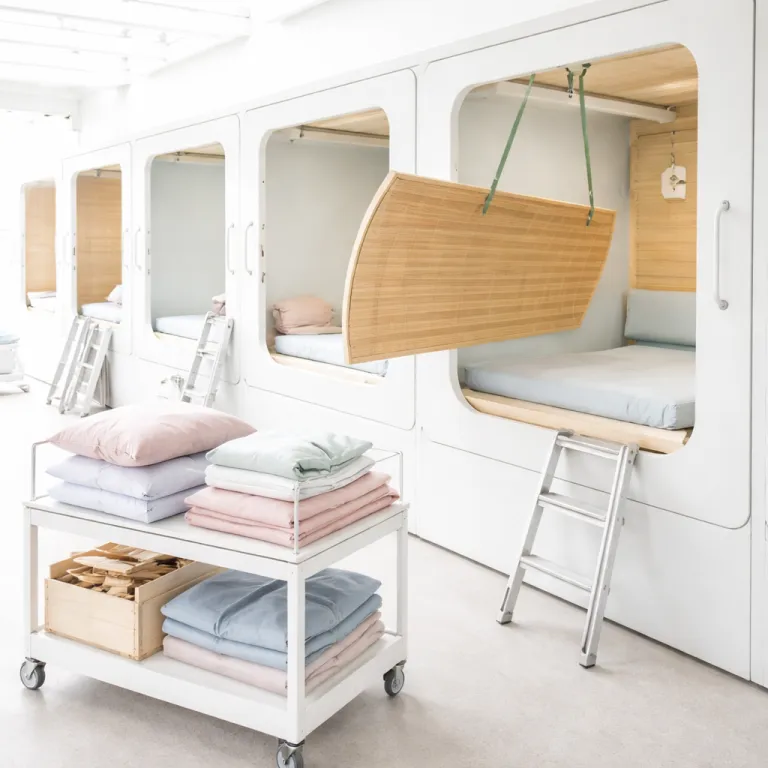
Why compact pods are a natural ally for sustainable stays
Choosing an eco friendly capsule hotel is one of the most efficient ways to reduce your travel footprint without sacrificing comfort. A well designed hotel capsule uses far less floor space per guest than a conventional hotel room, which means less area to heat, cool and clean every night. For families, that compact space can translate into lower energy use per person while still offering a calm pod where everyone actually sleeps well.
The structural advantage is simple ; fewer square metres mean fewer linens, fewer towels and less water used in bathrooms and shared showers. When you compare capsule hotels with traditional hotels, the difference in laundry volume per guest night is striking, especially in destinations such as Tokyo, Japan or Zurich where water and energy are carefully managed. Many Japanese capsule properties now pair this inherent efficiency with smart design touches like zoned air conditioning and motion sensors, so your pod only draws power when you are inside the capsule.
Families often worry that a capsule hotel will feel cramped, but the best capsule hotels balance intimacy with thoughtful shared space. You might sleep in stacked beds or sleeping pods, yet enjoy generous lounges, a compact kitchen corner and children friendly seating where you can plan the next day. Look for layouts where the capsule rooms sit close to quiet corridors, while social areas and any capsule house style dorms are separated, so younger guests can fall asleep early without hearing late night arrivals.
Technology and smart design behind low impact capsule stays
Modern eco friendly capsule hotels rely on technology as much as architecture to keep their footprint light. Across new capsule installations, operators report that smart energy management systems can cut operational energy use by around one third, which is a significant saving for any property. In practice, that means your pod hotel stay is orchestrated by sensors that dim LED lighting, regulate air flow and even pause power to charging points when nobody is inside the capsule.
Look for an eco-friendly capsule hotel that advertises IoT based controls, because these systems quietly optimise every watt behind the scenes. In many hotel capsule corridors, LED lighting now brightens only when guests walk through, while individual pods use low voltage reading lamps and timed ventilation fans. Families travelling through Tokyo Japan or staying at a capsule inn in Osaka often notice that the air feels fresher and temperatures more stable, even when rooms are fully booked on a busy night.
Smart design is not just about gadgets ; it is also about how space is organised for real people. A well planned capsule house will place shared bathrooms, family friendly changing areas and compact kitchen facilities on the same level, so parents are not constantly moving between floors with tired children. When you compare a traditional hotel Tokyo corridor with a Japanese capsule floor, you will often see that every metre of space is used for storage, circulation or sleep, which reduces wasted construction materials and long term energy demand.
Materials, amenities and the quiet luxury of using less
The most convincing eco friendly capsule hotel experiences start with what you can touch. Many properties now specify recycled or locally sourced materials for pod shells, flooring and built in beds, which reduces transport emissions and supports regional suppliers. Families who care about what surrounds their children at night should look for natural fibres in bedding, low VOC finishes and refillable amenity stations instead of single use plastic bottles in every bathroom.
In Zurich, Green Marmot Capsule Hotel shows how a compact property can feel both pared back and warm at the same time. The capsules are simple yet comfortable, and the team relies on energy efficient lighting and robust recycling programmes to keep the operation lean without feeling austere for guests. This kind of restrained palette is becoming common across capsule hotels in Europe and in the United States, where operators understand that sustainability can sit comfortably alongside premium touches such as high quality mattresses and generous duvets on all beds.
Thoughtful amenities matter just as much as construction choices for an eco-friendly capsule hotel that aims at premium families. Instead of a sprawling spa, you might find a serene lounge with a city view, filtered water taps, organic toiletries and a small kitchen area where you can prepare simple meals for children. Properties such as Pangea Pod in Whistler or Green Marmot in Zurich show that sleeping pods, compact rooms and shared spaces can still feel indulgent when the design is coherent, the bed is excellent and the overall house style respects both guests and the environment.
Community, education and how green capsules go beyond the pod
Some of the most forward thinking eco friendly capsule hotels treat sustainability as a shared project with their guests. Instead of limiting their efforts to efficient pods and LED lighting, they host workshops on local ecology, organise neighbourhood clean ups or curate low impact city walks for families. This community layer turns a simple night in a capsule into a learning experience, especially for children who are seeing how travel and environmental responsibility can align.
In Indonesia, for example, Bobobox’s Bobocabin eco properties use locally sourced materials and often connect guests with nearby communities through guided activities. In Switzerland, Green Marmot in Zurich’s old town benefits from a central location that encourages walking, tram use and lakefront exploration rather than car based sightseeing. When you book a stay at an eco-friendly capsule hotel with this kind of ethos, you are not just renting a bed ; you are supporting a property that invests in its surroundings and invites guests to participate.
Families planning multi stop trips between Japan and the States United region can now weave a chain of such experiences. A night in a Japanese capsule hotel Tokyo, a few nights at a capsule inn Osaka, then a stay at a North American pod hotel such as Pangea Pod or a refined capsule hotel in Lucerne with an urban edge can create a coherent, low impact itinerary. For a curated overview of these options, guides on refined urban capsule stays provide a useful starting point for comparing properties, shared spaces and the balance between privacy and community.
How to read between the lines when booking sustainable capsules
When you search for an eco friendly capsule hotel on a premium booking website, the language can blur quickly. Many hotels now sprinkle terms such as green, sustainable or eco friendly across their descriptions, yet only some back those claims with measurable actions. As a traveller, especially as a parent booking for several guests, you need a simple checklist to separate genuine commitment from marketing gloss.
Start with the basics ; look for clear information about energy systems, water saving fixtures and waste management on the property page, not just in a vague mission statement. A serious capsule hotel will mention specific features such as LED lighting throughout, low flow showers in shared bathrooms, refill stations instead of plastic bottles and sometimes solar panels or heat recovery systems. You should also be able to find and read the privacy policy and policy terms easily, because transparent communication about data, safety and house rules often reflects a broader culture of accountability.
Next, examine how the space is actually used and described, especially if you are travelling as a family. Does the hotel capsule layout offer separate quiet zones for sleep, child friendly beds and clear guidance on age limits for certain rooms or sleeping pods ? Are there shared kitchen facilities, laundry options and storage that make a longer stay realistic, or is the property clearly optimised for one night business travellers only ? A trustworthy eco-friendly capsule hotel will answer these questions directly in its descriptions and images, rather than hiding behind generic lifestyle language.
Practical booking tips for premium families choosing capsule stays
For families used to traditional hotels, the first eco friendly capsule hotel can feel like a leap. The key is to match your expectations with the specific capsule format, whether that means side entry pods, Japanese capsule rows or compact family clusters. Always check the maximum number of guests per pod and per room, because fire regulations and house rules are strict and some capsule hotels do not allow children below a certain age.
When comparing options in Tokyo Japan, Osaka or Zurich with those in the United States, pay attention to how each property describes its shared facilities. A capsule inn in Osaka might offer gender separated floors, large communal baths and minimal lounge space, while a North American pod hotel such as Pangea Pod will lean into ski storage, social bars and flexible co working areas. Families often appreciate properties that provide at least one quiet lounge, a small kitchen or pantry and clear signage, so moving between pods, bathrooms and storage late at night feels safe and intuitive.
Finally, read recent guest reviews with an eye for detail rather than star ratings alone. Look for comments about noise levels at night, cleanliness of shared bathrooms, comfort of beds and the reliability of climate control inside each capsule. If several reviewers mention that they slept well, felt the space was genuinely friendly and appreciated the sustainability measures, you are likely looking at an eco-friendly capsule hotel that delivers on its promises rather than just repeating fashionable words.
FAQ
What is a capsule hotel and how does it work for families ?
A capsule hotel is a hotel with small, bed sized rooms arranged in rows or stacks, usually alongside shared bathrooms and lounges. For families, the most practical approach is to book several adjacent capsules or a small cluster of pods on the same corridor. Parents should confirm age policies in advance and check whether mixed gender floors are available when travelling with older children.
Are capsule hotels eco friendly by default or only some of them ?
Many adopt sustainable practices, but not all capsule hotels are equally committed to environmental performance. The format itself uses less space, fewer linens and less water per guest night, which is an inherent advantage. Genuine eco-friendly capsule hotels go further with smart energy systems, responsible materials, recycling programmes and transparent reporting on their initiatives.
Where is Green Marmot Capsule Hotel located and what makes it special ?
Green Marmot Capsule Hotel is located in Zurich’s old town, close to the lake and public transport. The property combines compact capsules with energy efficient lighting, recycling and a focus on affordable yet sustainable stays. Its central location encourages walking and tram use, which aligns well with the overall eco friendly concept.
How can I tell if a capsule hotel is suitable for children ?
Check the property’s policy terms and privacy policy for age restrictions, then read room descriptions carefully to see whether children are explicitly welcomed. Family friendly capsule hotels usually offer clear guidance on which floors or pods are best for younger guests and may provide storage for strollers or child equipment. Reviews from other families are also a strong indicator of how practical the layout, bathrooms and shared spaces are in real life.
Do capsule hotels provide enough privacy and comfort for longer stays ?
Well designed capsules use curtains, sliding doors and sound dampening materials to create a surprising amount of privacy, especially when combined with respectful house rules. For longer stays, look for properties with generous lounges, workspaces, kitchen facilities and secure lockers, so your pod remains a place for sleep rather than all day living. Many premium eco-friendly capsule hotels now cater to digital nomads and slow travellers, which benefits families seeking more than a single night stopover.
References
World Travel & Tourism Council ; Global Sustainable Tourism Council ; International Energy Agency.