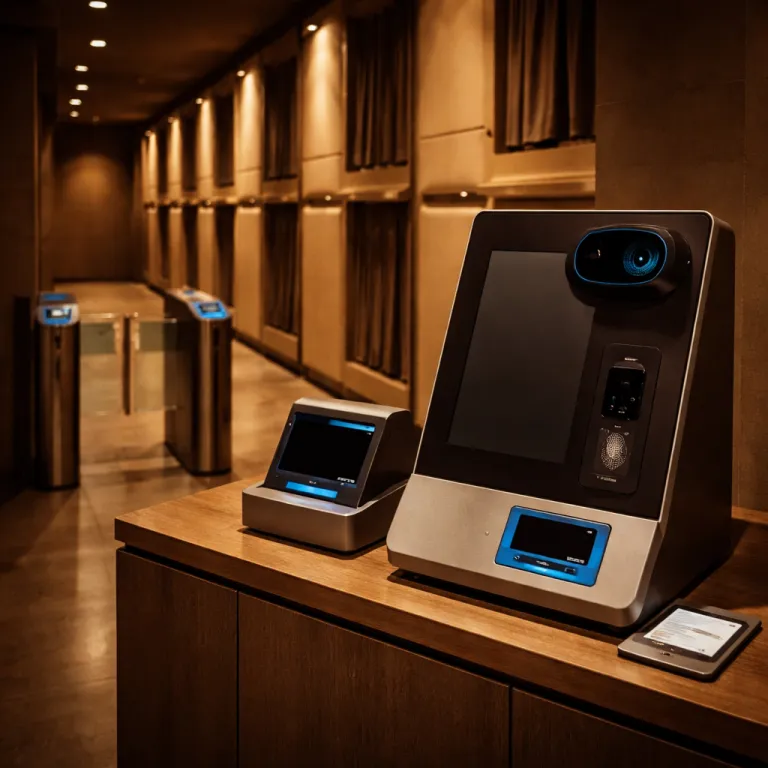
From front desk to phone screen: how smart capsule hotel technology reshapes arrival
Walk into a leading capsule hotel today and you may not see a front desk at all. The most advanced properties designed around app-driven capsule hotel systems move the entire arrival ritual onto your phone, from selecting a pod to unlocking the door of your small space capsule style cabin. For business travelers used to late flights and early meetings, that shift from queue to instant access can redefine the first impression of hospitality.
Operators such as Nine Hours in Tokyo, First Cabin in Osaka and The Millennials in Kyoto now treat the lobby as a calm shared lounge rather than a transactional zone with counters and queues. Guests check in through mobile apps or kiosks, verify identity digitally, then head straight to their assigned capsule or pod hotel wing, where smart locks replace keycards and a subtle light guides them to the correct room. This is intelligent capsule infrastructure rather than a gimmick, quietly orchestrating flow in properties where limited space must work harder than in traditional hotels.
For travelers comparing hotel rooms across a crowded hotel market, the contrast is sharp. In many traditional hotels, late night arrivals still mean paperwork, card impressions and a tired clerk searching for a reservation, while in hotels capsule concepts the system already knows when a guest will arrive and preconditions the pod with air conditioning and lighting preferences. Research from industry studies, including analyses published on ResearchGate and by the World Travel & Tourism Council, indicates that digital check in can cut reception staffing needs by around 60 to 70 percent, and those savings in the hospitality industry are often reinvested into better amenities, higher quality shared facilities and more refined design touches that guests find immediately tangible.
Connected pod technology also changes how luxury and budget expectations intersect. Capsule hotels once targeted only budget travelers, but premium operators now use automation to deliver a higher level of privacy and comfort inside each capsule hotel pod while keeping rates below many full service hotels. When hotels offer app based control of lighting, air conditioning and entertainment, a compact hotel capsule can feel more tailored than a larger but generic room in older properties.
For solo travelers and business travelers, that control matters more than marble lobbies. A well designed capsule with intuitive controls, quiet air conditioning and a supportive mattress can turn a short stay between meetings into restorative sleep, especially when the pod hotels concept is paired with calm shared lounges and reliable Wi Fi. The Millennials in Japan exemplify this approach, using IoT devices so each guest can adjust their pod, while the system optimizes energy use across the entire hotel.
Automation does not remove hospitality; it relocates it. Instead of a staff member handing over a key, smart capsule hotel technology welcomes the guest through a frictionless sequence of confirmations, wayfinding and subtle cues that make even a very small room feel considered. As one frequent business traveler quoted in a World Travel & Tourism Council case study put it, “Arriving at midnight and going straight to my pod without paperwork feels like the hotel respects my time.” For travelers who value efficiency, the absence of a front desk becomes a quiet form of luxury, signalling that their time is the most important amenity.
Inside the pod: when compact design feels genuinely premium
Step into a well executed capsule and the first surprise is how complete the space feels. Smart capsule hotel technology turns a small pod into a finely tuned micro room, where every surface, switch and storage nook has been designed for both comfort and efficiency. In the best capsule hotels, the experience is less about compromise and more about precision.
Premium pod hotels in cities such as London, Milan and Los Angeles now treat each capsule as a first class seat rather than a downgraded hotel room. Travelers slide into a private shell with adjustable lighting scenes, responsive air conditioning, integrated sound masking and a control panel that manages everything from wake up alarms to do not disturb indicators. For business travelers extending a work trip into leisure, that level of control can feel more relaxing than a sprawling suite where half the amenities remain unused.
On capsulehotelstay.com, a specialist guide to refined capsule hotel stays in Los Angeles for modern urban travelers illustrates how this concept translates in practice. There, hotels designed around pods use layered lighting, acoustic insulation and high quality bedding to offset limited space, while shared facilities such as lounges, work booths and compact gyms absorb the functions that traditional hotels keep inside individual hotel rooms. Guests find that the combination of a quiet pod and generous shared zones can feel surprisingly luxurious, especially when the design language is coherent from capsule to corridor.
Smart capsule hotel technology also supports different traveler profiles within the same footprint. Budget travelers may book a standard capsule hotel pod with essential amenities, while business travelers choose a slightly larger space capsule style cabin with a fold out desk, upgraded mattress and enhanced soundproofing. Because hotels capsule operators can reconfigure lighting, media and even pricing dynamically through software, the same physical capsule can serve multiple segments over time without structural changes.
For the hospitality industry, this flexibility is a powerful lever. Hotels offer tiered experiences inside a uniform grid of pods, using data from smart systems to understand how guests actually use their room and which amenities drive satisfaction. When over three quarters of hotel owners report plans to increase AI tool budgets this year, according to surveys cited by the World Travel & Tourism Council and other hospitality research platforms, capsule hotels become the ideal testing ground, because every adjustment to layout, lighting or temperature can be measured across hundreds of nearly identical units.
From a guest perspective, the result is a more predictable stay. Whether in Hong Kong, Tokyo or Los Angeles, a well run pod hotel delivers the same core promise: a clean, quiet, private capsule with reliable technology and thoughtfully designed shared spaces. For travelers who care more about sleep quality and smart features than about square metres, that consistency is a new form of luxury.
Staffless, not soulless: AI concierges and the new service script
Remove the front desk and the question becomes simple: who looks after the guest when something goes wrong. Smart capsule hotel technology answers with a layered system of AI assistants, remote human teams and on demand local staff, each handling different parts of the hospitality script. In practice, the most successful capsule hotels do not eliminate people, they redeploy them.
AI powered chat tools now sit at the centre of many capsule hotel operations. Guests message through the hotel app to ask about late check out, nearby restaurants or transport, and the system responds instantly with context aware suggestions, while escalating complex issues to a human when needed. AI assistants handle bookings, questions and service guidance around the clock, which means solo travelers arriving after midnight still receive timely support without waiting for a night manager.
At The Millennials in Japan, IoT integrated pods allow the system to adjust lighting, blinds and air conditioning automatically based on occupancy, while the AI layer monitors patterns across the entire hotel. A refined capsule hotel Akihabara experience for premium urban stays, as profiled on capsulehotelstay.com, shows how this plays out in a dense city district where limited space and high expectations collide. There, guests find that automation covers routine needs, while a small on site équipe focuses on exceptions such as lost luggage, noise complaints or special accessibility requests.
The failure modes of full automation are real and should not be romanticised. When a guest misplaces a passport, when a fire alarm sounds, when a neighbouring pod becomes unacceptably loud, no chatbot can replace a calm, trained human presence in the corridor. Smart capsule hotel technology works best when it handles repetitive tasks such as check in, payments and basic information, freeing staff to concentrate on high stakes, emotionally charged moments where hospitality still depends on empathy.
For business travelers used to concierge desks and bell staff, the new model can feel unfamiliar at first. Yet many guests report, in surveys compiled by hospitality research firms and similar platforms, that they value fast, accurate digital responses more than small talk, especially during short stays where every minute counts. In capsule hotels that strike the right balance, the guest experiences a seamless digital layer backed by discreet human support, rather than a cold, fully automated machine.
Luxury in this context becomes less about visible staff and more about invisible competence. When the pod door closes, the air conditioning hums quietly, the lighting shifts to a sleep mode and the AI has already adjusted the wake up time to match a delayed flight, the guest feels cared for even without a single face to face interaction. That is the subtle promise of smart capsule hotel technology: service that is always present, rarely obtrusive and increasingly personalised.
From niche pods to mainstream playbook: why the whole hotel market is watching
What begins in a capsule hotel rarely stays there. The hospitality industry has long used compact, high density formats as laboratories for new ideas, and smart capsule hotel technology is now the most closely watched experiment. If staffless pods can deliver high guest satisfaction and strong margins, the implications for larger hotels are significant.
Energy management is one of the clearest examples. Studies on smart key and IoT systems in capsule hotels, including research aggregated on ResearchGate, show energy cost reductions of around 20 percent, and more recent industry data suggests that over 75 percent of new pod installations feature smart energy management that can cut operational costs by roughly 30 to 45 percent. When each capsule, pod or micro room reports real time occupancy, hotels designed around these systems can dim lights, reduce air conditioning and power down non essential amenities without compromising comfort.
For operators such as Nine Hours and First Cabin, these efficiencies are not abstract. They translate into lower running costs per capsule, which allows hotels offer better mattresses, higher quality linens and more generous shared facilities such as lounges, co working areas and compact wellness zones. On capsulehotelstay.com, coverage of capsule hotel Fukuoka stays for refined urban travelers highlights how some Japanese properties now channel savings from automation into elevated design, art collaborations and thoughtful public spaces that rival those of far more expensive hotels.
The hybrid staffing model emerging from capsule hotels is likely to move upmarket next. Large traditional hotels are already experimenting with mobile keys, AI concierges and automated check in kiosks, but they still carry the weight of legacy layouts and service expectations. By contrast, hotels capsule concepts are built from the ground up for automation, with clear sightlines, compact footprints and standardised pods that make maintenance, cleaning and security easier to manage with a smaller on site équipe.
For travelers, this shift will create a wider spectrum of choices between pure budget and classic luxury. Some pod hotels will remain firmly focused on budget travelers, offering simple capsules and essential amenities at sharp prices, while others will evolve into premium micro hotels where limited space is offset by exceptional design, technology and location. Business travelers and solo travelers who already feel at ease in a high quality capsule hotel will be the first to embrace similar smart features in larger hotel rooms and suites.
Ultimately, smart capsule hotel technology is less about gadgets and more about a new contract between guest and hotel. The guest accepts a smaller private space in exchange for efficiency, control and access to well designed shared areas, while the hotel commits to using technology to remove friction rather than to cut corners. If that balance holds, the quiet revolution that began inside a single pod could reshape expectations across the entire hotel market.
Key figures shaping smart capsule hotel technology
- Industry surveys, including those referenced by the World Travel & Tourism Council, indicate that around three quarters of hotel owners plan to increase AI tool budgets this year, reflecting a strong shift toward automation in both capsule hotels and larger properties.
- Research on smart key and IoT systems in compact accommodations, as summarised in several ResearchGate papers, reports around 20 percent energy cost reduction through smart systems, a figure that aligns with broader studies on smart energy management in the hospitality industry.
- Operational data from new pod installations, cited in analyses of micro accommodation strategies by hospitality consultancies, shows that over 75 percent of these projects now include smart energy management, helping reduce overall operational costs by an estimated 30 to 45 percent compared with similar properties without automation.
- Studies on digital check in processes suggest a reduction in reception staff needs of approximately 60 to 70 percent when mobile or kiosk based systems replace traditional front desks, especially in high density capsule hotel formats.
- Guest surveys in smart capsule properties consistently show that contactless check in, reliable Wi Fi and intuitive in pod controls rank above traditional services such as bell staff for business travelers and solo travelers on short urban stays.
References
- ResearchGate – peer reviewed and industry studies on smart key technology, IoT enabled pods and energy efficiency in compact accommodations.
- Specialist hospitality consultancies and research platforms – quantitative analyses of micro accommodation strategies, AI adoption and digital check in impacts on staffing and operating costs.
- World Travel & Tourism Council – reports on technology adoption, AI budgets and sustainability trends in the global hospitality industry, including capsule and pod hotel formats.