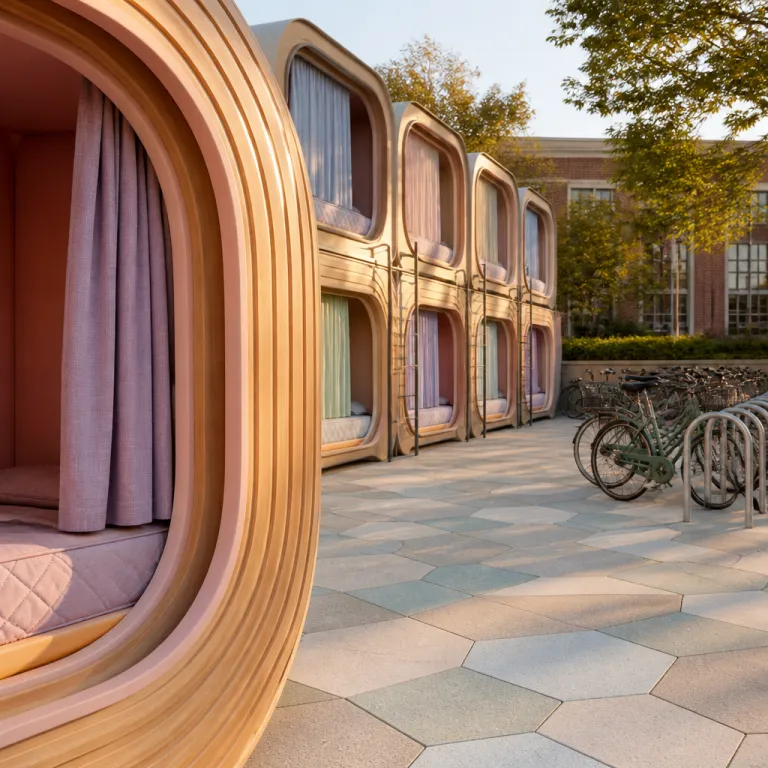
Why capsule hotel secondary cities are becoming serious hospitality players
Capsule hotel secondary cities are no longer a niche experiment. As real estate costs in primary urban cores climb in North America, Asia Pacific and Europe, the hotel market is quietly recalibrating toward smaller pods in smarter postcodes. For travelers, that shift means more choice in where to stay, not just which hotel to book.
Operators read the same market analysis you do, but with sharper bps analysis and a closer eye on market size and demand curves. When lease costs fall by a few share bps in a secondary district, the same capsule hotel concept suddenly becomes a high margin proposition rather than a risky design statement. That is why capsule hotels now appear in university towns, regional business corridors and resort adjacent suburbs where the figure global pipeline once showed almost no compact accommodation at all.
For a premium booking website focused on capsule hotel secondary cities, the key is translating that market attractiveness into clear choices for each traveler type. A solo guest in the 25 to 34 age group wants a different capsule and booking mode from a senior executive arriving late on a regional flight. Curated listings, transparent room size data in square metres and honest photography of pods and shared spaces help convert abstract growth in the hotel market into confident bookings.
University towns as natural capsule hotel markets
Walk around a serious university town and you can almost map capsule hotel secondary cities demand by lecture timetable. Visiting parents, guest lecturers and conference delegates all need short stay accommodation that feels efficient, central and priced below the classic full service hotel. Capsule hotels answer that need with compact pods, strong Wi Fi and social spaces that work as informal campus extensions.
Chains such as Graduate Hotels and stayAPT Suites have already proved that the university hotel market can sustain focused concepts, even if they are not pure capsule brands. Their presence signals to investors that this traveler type is stable, with predictable peaks around graduations, sports fixtures and academic conferences that show up clearly in any serious attractiveness analysis. When you overlay that with a capsule hotel model, the market share potential in these towns becomes more than a theoretical figure in a report denominated in USD.
For guests, the benefit is simple and immediate, especially when using a refined guide to find capsule hotels near you for a stress free stay. A well run capsule hotel in a college district offers walkable access to campus, late check in that respects student life rhythms and pod layouts that suit every age group from first time solo travelers to older alumni. The right booking mode, whether flexible or advance purchase, lets you lock in value while the hotel quietly optimizes its own bps analysis behind the scenes.
Regional business centres and resort adjacent bases for focused stays
Regional business hubs are where capsule hotel secondary cities move from trend story to practical tool. A sales manager or consultant flying into a mid sized city in North America or Latin America often needs one efficient night, not a sprawling suite and a lobby bar they will never use. For that business travelers segment, a premium capsule hotel with excellent soundproofing and a strong mattress is the right type of accommodation.
In these markets, the key figures in any hotel market report are weekday occupancy, average length of stay and the split by traveler type. Capsule hotels can price sharply for Monday to Thursday demand, then flex rates for weekend leisure guests heading toward nearby resort areas, which improves overall market attractiveness and stabilizes revenue measured in USD. Operators track share bps shifts carefully, because even a small gain in market share can justify new pods or an extra floor of capsules in a regional property.
Resort adjacent locations add another layer to the capsule hotel secondary cities story, especially in Asia Pacific, the Middle East and East Africa where coastal or safari destinations can be prohibitively expensive. Here, a capsule hotel on the edge of the action becomes an affordable base, letting guests spend on experiences rather than on a traditional hotel room they barely occupy. The same logic already shapes airport capsule hotels, where a well designed pod can turn a layover into real rest, as explored in depth in this guide to turning airport layovers into restorative capsule stays.
How operators adapt capsule hotels for secondary markets
Running capsule hotel secondary cities properties is not simply a matter of shrinking rooms and copying a capital city playbook. Secondary markets often mean lower footfall, thinner restaurant scenes and fewer late night services, so the hotel must work harder as a self contained ecosystem. That is where modular construction, efficient design and locally tuned amenities become more than design talking points.
Operators in North America and Asia Pacific increasingly use modular capsule units to control build cost and room size with surgical precision, which keeps the overall market size viable even when demand is seasonal. A compact capsule hotel with 80 pods can reach breakeven at lower occupancy than a conventional 120 key hotel, especially when the booking mode mix leans toward direct channels that reduce commission bps. In practice, that means more flexibility to experiment with age group specific offers, from student friendly midweek rates to premium pods aimed at business travelers who value quiet floors and early breakfast.
Partnerships also matter in capsule hotel secondary cities, because local universities, event organizers and employers can become de facto distribution channels. When a regional tech firm blocks a set of capsules for visiting staff, it stabilizes demand and improves the property’s position in any market attractiveness or bps analysis. For guests, those behind the scenes agreements translate into reliable availability during peak periods, rather than the sold out notices that still plague many traditional hotels in small markets.
What premium guests should look for when booking in secondary cities
For discerning travelers, capsule hotel secondary cities stays begin with clarity about priorities. You are trading floor space for location, design intelligence and often a more interesting mix of fellow guests than in a conventional hotel. The right capsule hotel will state its pod size in square metres, outline storage solutions and show real images of shared bathrooms and lounges.
When comparing options in the hotel market, pay attention to how each property describes its traveler type focus and age group mix, because that shapes the atmosphere more than any lobby artwork. A capsule hotel leaning toward business travelers in a regional hub will feel different from one serving students and visiting families in a college town, even if the pods share the same technical specifications. Look for transparent policies on noise, late check in and cleaning schedules, as these are key figures in guest satisfaction that rarely appear in a formal market share report.
Booking platforms dedicated to capsule hotel secondary cities, such as capsulehotelstay.com, help by curating only properties that meet clear quality thresholds. Their editors understand that “A compact, efficiently designed hotel offering affordable accommodations.” is not a budget compromise but a design choice that can feel quietly luxurious when executed well. For airport transfers or multi city itineraries, pairing a regional capsule stay with refined sleeping pods at major hubs creates a seamless mode of travel where every night, and every capsule, works as hard as your days.
FAQ
What is a pod or capsule hotel, and how does it differ from a hostel ?
A pod or capsule hotel is defined as “A compact, efficiently designed hotel offering affordable accommodations.” where each guest has an individual enclosed sleeping space rather than a bunk in a shared dorm. Unlike most hostels, capsule hotels usually offer more privacy, stronger sound insulation and clearer zoning between sleeping areas and social spaces. In capsule hotel secondary cities, that balance of privacy and efficiency is particularly attractive for business travelers and visiting families who want control over their environment.
Why are capsule hotels appearing in university towns and regional hubs ?
Capsule hotel secondary cities expansion follows clear patterns in hotel market analysis, especially where there is steady demand from conferences, campus events and regional business travel. Lower property costs in these areas improve market attractiveness and allow operators to reach breakeven with fewer rooms, which is ideal for compact capsule formats. For guests, the result is more central accommodation options at accessible prices, often within walking distance of universities or business districts.
Are capsule hotels suitable for older travelers or only for younger guests ?
Well designed capsule hotels serve a wide age group, not just younger backpackers. In secondary cities, many pods are booked by parents visiting students, mid career professionals and retirees attending cultural events, all of whom value privacy and cleanliness over room size. When booking, older travelers should check pod access (ladder or side entry), bathroom layout and on site assistance to ensure the accommodation matches their comfort needs.
How can I choose the right capsule hotel in a secondary city for business travel ?
Business travelers should focus on location relative to meetings, Wi Fi reliability and noise control when selecting capsule hotel secondary cities stays. Properties that clearly state quiet hours, offer early breakfast options and provide secure storage usually serve corporate guests more effectively. Reading recent guest reviews and checking whether the hotel targets a business traveler type in its own description can help you avoid overly party focused environments.
Do capsule hotels in secondary cities offer the same safety and cleanliness standards as those in major capitals ?
Reputable capsule hotels in secondary markets typically follow the same safety and hygiene protocols as their flagship properties in capital cities. Many use modular capsule units that are easy to clean thoroughly, with clear routines for linen changes and shared bathroom maintenance. Guests can assess standards by reviewing recent feedback, checking for 24 hour staffing and confirming that the hotel provides secure access control to both the building and individual floors.