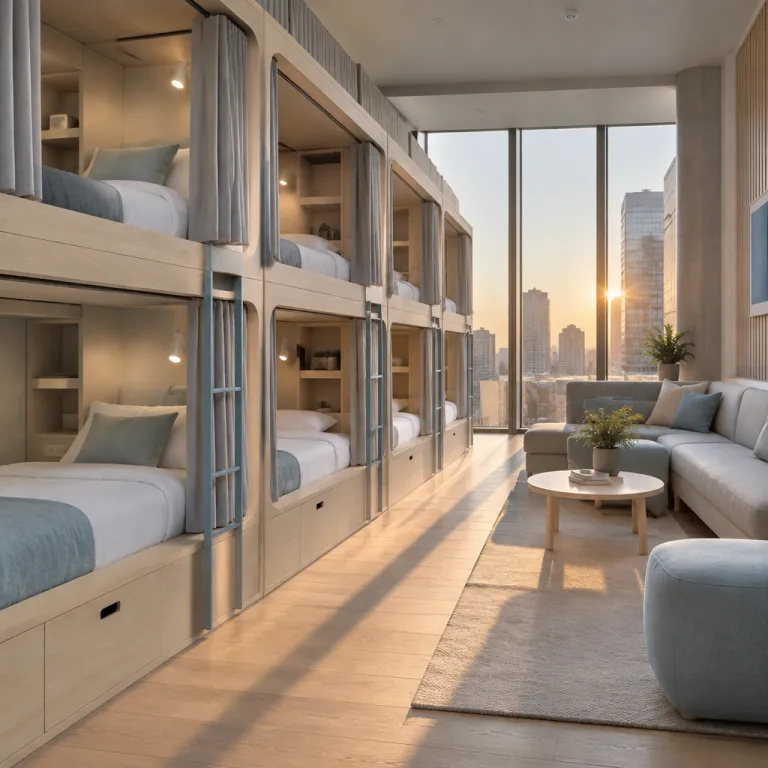
From Osaka capsules to luxury capsule hostel experiences
The first widely recognized capsule hotel opened in Osaka in the late 1970s as a radical space saving experiment. Since then, the humble capsule has evolved into a refined capsule hostel concept that blends privacy, design, and attentive guest staff service. A new generation of hotels now treats each pod room as a miniature sanctuary rather than a simple bed.
At its core, a capsule hostel offers pod style sleeping spaces with shared lounges, bathrooms, and social zones. Industry observers often describe it as “a hostel offering private pod-style sleeping spaces with shared common areas.” This hybrid between a classic inn and a contemporary hotel appeals to every guest who values both efficiency and atmosphere.
Architects and designers now treat capsules as modular suites, usually around two meters long, with lighting, power outlets, and capsule doors that glide smoothly. Rigid walls or curtains with sliding doors provide light and sound dampening, creating “rigid walls or curtains plus sliding doors, light/sound dampening.” For many guests, this level of privacy in compact rooms feels surprisingly luxurious when combined with quiet corridors and a consistently good guest rating.
Urban land prices have pushed hoteliers to rethink how many rooms can fit on a single street. Capsule hotels respond by stacking capsules vertically, creating elegant pod room layouts that still respect personal space. For travelers, this means more choice in central districts where a five minute walk brings you from a street capsule entrance to major stations, galleries, and restaurants.
Premium capsule hostel platforms now curate only high rating properties, often with verified guests and detailed guest reviews. You will see transparent information about room size, capsule configuration, and whether private pods or bunk beds dominate each floor. Before you complete your booking, you can check if the hostel capsule offers amenities such as free WiFi, air conditioning, and optional room service style snack delivery.
Design innovations that elevate every capsule hostel night
Design is where the luxury capsule hostel truly steps away from its budget roots. Early capsules were simple enclosed pods, while today’s capsule hotels feature sculpted pod room shells, layered lighting, and acoustic panels that enhance sleep quality. Many architects now collaborate directly with hostel operators to create layouts that feel calm, intuitive, and safe for every guest.
Privacy has become a central theme in these hotels, especially for solo travelers and women. Some properties dedicate entire floors to women only pod room layouts, with enhanced security, softer lighting, and extra storage; guides to women only pod floors show how carefully planned corridors and capsule doors can transform the experience. These design choices help guests feel protected while still enjoying the social energy of a hostel capsule environment.
Inside each capsule, the focus is on tactile comfort and smart technology rather than excess decoration. Expect high quality mattresses, breathable linens, and individual controls for air conditioning, reading lights, and sometimes even white noise. Many capsule hotels now add capsule features such as adjustable headboards, integrated storage, and small fold out desks that turn a private pod into a compact work zone.
Shared rooms and corridors also receive a premium treatment, with warm materials and thoughtful zoning. Instead of endless rows of bunk beds, you may find clusters of capsules arranged around quiet nooks, with separate areas for socializing, working, and sleep. This zoning allows light sleepers to rest while other guests chat, stream, or enjoy a late night snack in the lounge.
Luxury booking platforms highlight these design innovations with detailed photos and clear reviews from verified guests. When you check each listing, look for mentions of noise insulation, capsule length, and whether beds private from the corridor are available. A consistently high guest rating for comfort usually signals that the design team and guest staff have worked together to refine every room detail.
Premium amenities in compact rooms; how luxury capsule hostels compete with hotels
Modern capsule hostel properties now rival traditional hotels by offering a curated set of premium amenities. While the room footprint remains compact, the services surrounding each capsule hotel stay feel increasingly indulgent. Travelers who once booked a standard inn now often choose capsule hotels for the same trip, especially in dense city centers.
Connectivity is non negotiable, so free WiFi is standard across almost every luxury hostel capsule listing. Many platforms clearly label the WiFi speed in guest reviews, allowing you to check whether streaming or remote work will be smooth. When a capsule hostel consistently earns a strong guest rating for connectivity, it usually reflects both robust infrastructure and responsive guest staff support.
Climate control is another key differentiator between basic capsules and premium capsule hotels. Individual vents or controls for air conditioning inside each private pod help regulate temperature without disturbing neighboring rooms. Before you complete your booking, always check whether the property offers both heating and cooling, especially if you plan to sleep in a street capsule location exposed to seasonal extremes.
Food and beverage options have also evolved beyond vending machines and basic kitchens. Some capsule hostel properties now provide limited room service style delivery to your pod room, such as breakfast trays or late night snacks. Others partner with nearby cafés on the same street, allowing guests to add capsule breakfast packages to their booking with a simple check pick option.
Airport locations show how far the concept has come, with refined pod room layouts designed for short layovers. Guides to elegant airport sleeping pods illustrate how a well designed hostel capsule can offer a genuinely good rest between flights. When you read guest reviews for these properties, focus on comments about noise, cleanliness, and how refreshed travelers felt after a few hours of sleep.
How to read capsule hostel reviews and guest ratings with confidence
Choosing the right capsule hostel on a premium booking website starts with understanding reviews. Not all guest reviews carry the same weight, so focus on feedback from verified guests who stayed in the exact capsule type you are considering. Their comments about sleep quality, noise levels, and guest staff responsiveness will be more relevant than generic hotel impressions.
Look beyond the overall rating and examine how different aspects of the stay are scored. A capsule hotel might have an excellent guest rating for cleanliness and design but only average scores for shared bathrooms or street noise. When you check these details, you can decide whether a stylish pod room on a lively street suits your travel style or whether you prefer quieter rooms facing an inner courtyard.
Pay close attention to how reviewers describe the capsules themselves. Mentions of capsule doors closing smoothly, comfortable mattresses, and beds private from direct corridor views usually indicate thoughtful design. If several reviews mention that the private pod felt cramped, remember that the typical capsule length is around two meters, so taller guests may wish to check room dimensions carefully.
Comments about amenities often reveal more than the official hotel description. Guests frequently highlight whether free WiFi was reliable, whether air conditioning worked quietly, and whether any form of room service or snack delivery was available. When multiple guest reviews praise the same strengths, such as spotless pod room interiors or helpful guest staff, you can trust that these are consistent features rather than isolated experiences.
Finally, consider the context of each review, including the country and travel purpose. A capsule hostel in the United States serving mostly business travelers will receive different feedback than a street capsule property near nightlife aimed at backpackers. Use filters on premium booking platforms to check pick reviews from guests whose priorities match your own, whether that is deep sleep, social atmosphere, or design led comfort.
Luxury capsule hostel trends in Japan, the United States, and beyond
Japan remains the spiritual home of the capsule hotel, yet the concept has spread globally. In Tokyo and Osaka, you will find capsule hotels that refine minimalism to an art form, with serene pod room layouts and meticulous guest staff rituals. Guides to concepts such as the 9 hours minimalist capsule hotel show how time, light, and sound are choreographed to support restorative sleep.
Across the United States, capsule hostel properties are emerging in major transit hubs and creative districts. These hotels often blend local street art with sleek capsules, creating a contrast between vibrant public areas and calm pod room zones. Travelers appreciate being able to walk from a lively street to a quiet capsule in minutes, especially when late night transport options are limited.
Hybrid models are also gaining ground, combining traditional rooms with rows of capsules in the same property. A guest might book a private pod for a short city break, then upgrade to full rooms for longer stays or business meetings. This flexibility allows hotels to serve solo travelers, couples, and small groups without sacrificing the efficiency that makes capsule hostel operations so competitive.
Designers are experimenting with new materials and layouts to enhance both privacy and social interaction. Some properties arrange capsule doors around small courtyards or lounges, encouraging guests to chat before retreating to their beds private from the main corridor. Others integrate pod room clusters with co working spaces, so digital nomads can move seamlessly between work, walk breaks, and sleep.
As these trends mature, premium booking platforms are refining how they present capsule hostel options. Filters now allow you to check pick properties with women only floors, enhanced air conditioning, or upgraded free WiFi suitable for streaming. Over time, the best capsule hotels will be those that combine consistently high guest rating scores with thoughtful design and a clear sense of place, whether on a quiet Kyoto street or in the heart of a United States metropolis.
Practical checklist for booking a premium capsule hostel stay
Planning a stay in a luxury capsule hostel requires a slightly different mindset from booking a standard hotel. Start by confirming the basic logistics; know the check in and check out times, and whether late arrivals are possible. Many capsule hotels use automated kiosks, so make sure your identification and payment methods match the booking details exactly.
Comfort during sleep should be your next priority. Bring ear plugs in case your pod room is near a busy corridor, and check ventilation quality by reading recent guest reviews. If you are sensitive to temperature, confirm that individual air conditioning controls are available inside each private pod rather than only in shared rooms.
Safety and privacy deserve careful attention, especially in mixed gender environments. Confirm whether the hostel capsule offers same sex or mixed pods, and whether beds private from the main walkway are available on request. Women traveling alone may prefer properties with dedicated floors, secure capsule doors, and a consistently high guest rating for safety.
Evaluate the surrounding street and neighborhood as thoughtfully as you assess the capsule itself. A central street capsule location can be ideal if you plan to walk to museums, restaurants, and transport hubs, but it may also bring more noise. Use maps and reviews from verified guests to check whether the inn style entrance feels welcoming at night and whether public transport is within a comfortable walk.
Finally, consider how you will use shared facilities during your stay. If you plan to work, look for hotels with quiet lounges, strong free WiFi, and enough tables for laptops rather than only bunk beds and sofas. Travelers who value convenience may prefer capsule hotels that offer laundry, lockers, and limited room service, allowing them to add capsule comforts to an otherwise minimalist stay.
Future directions; how capsule hostel platforms will refine luxury stays
The next wave of luxury capsule hostel innovation will focus on personalization and sustainability. Operators already use guest reviews and operational data to refine lighting, bedding, and air conditioning settings across different rooms. Over time, booking platforms may allow you to save a preferred pod room configuration, from pillow type to ambient light color.
Space efficiency will remain central, but the experience around each capsule will grow richer. Designers are exploring modular capsules that can expand or contract, allowing hotels to add capsule units during peak seasons and reconfigure layouts for events or groups. This flexibility helps maintain a good balance between privacy, social interaction, and revenue per square meter.
Technology will also enhance trust and transparency between guests and hotels. Real time guest rating dashboards, based only on verified guests, will show how each capsule hostel performs on cleanliness, noise, and service week by week. Travelers will be able to check pick properties where guest staff respond quickly to issues, from malfunctioning capsule doors to requests for quieter beds private from the main corridor.
Wellness oriented features are likely to spread from high end hotels into premium capsule hostel spaces. Expect more pod room layouts with circadian lighting, soundscapes designed for deep sleep, and perhaps even guided breathing sessions accessible from your private pod control panel. These innovations will appeal to travelers who value restorative rest as much as location or street culture.
As the market matures, the distinction between a compact hotel room and a refined capsule will continue to blur. Some properties in the United States and Asia already offer hybrid suites where a pod room sits within a larger lounge, combining hostel capsule efficiency with hotel level amenities. For travelers, this means more ways to tailor each stay, whether they prioritize budget, design, social connection, or the simple luxury of a reliably good night’s sleep.
Key figures shaping the modern capsule hostel landscape
- The first widely cited capsule hotel opened in Osaka in 1979, marking the start of pod style urban accommodation that has since spread worldwide.
- Typical capsule length is around two meters, a dimension that balances space efficiency with enough room for most guests to stretch comfortably while they sleep.
- Many listings now describe capsules as enclosed pods rather than curtained bunks, indicating a strong shift toward greater privacy in capsule hostel design.
- Premium capsule hotels in dense city centers can fit significantly more beds private per floor than traditional hotels, often approaching double the capacity while maintaining individual pod room comfort.
- Guest rating data on leading booking platforms frequently shows that capsule hostel properties with reliable free WiFi and quiet air conditioning outperform similar hotels on overall satisfaction scores.
FAQ; luxury capsule hostel stays explained
What is a capsule hostel and how is it different from a hotel?
A capsule hostel offers private pod style sleeping spaces combined with shared bathrooms, lounges, and kitchens, while a traditional hotel usually provides full private rooms. The capsule format maximizes space efficiency and keeps prices lower without sacrificing privacy. Luxury capsule hostel properties add premium bedding, refined design, and attentive guest staff to compete directly with higher end hotels.
Where did capsule hostels originate?
The concept is widely associated with Osaka, Japan, where an early capsule hotel opened as a compact alternative to standard inns. From there, capsule hotels spread across major Japanese cities before appearing in other countries, including the United States. Today, many capsule hostel brands blend Japanese design principles with local culture in each street and neighborhood.
How much privacy do capsules provide compared with bunk beds?
Capsules provide significantly more privacy than traditional bunk beds because they use rigid walls or curtains plus sliding doors that dampen light and sound. Many capsule hostel properties design beds private from direct corridor views, creating a cocoon like feeling inside each pod room. For travelers who value quiet sleep, enclosed capsules are usually a better choice than open dormitory bunks.
What amenities are typically shared in a capsule hostel?
Shared amenities usually include bathrooms, showers, kitchens or kitchenettes, lounges, and laundry facilities. Most capsule hotels also provide free WiFi throughout the property, with some offering co working areas and café style seating. Lockers for luggage are standard, while higher end capsule hostel properties may add capsule extras such as saunas, small gyms, or limited room service.
How can I choose a good capsule hostel for my trip?
Start by checking guest reviews from verified guests, focusing on cleanliness, noise levels, and staff responsiveness. Confirm practical details such as check in times, air conditioning, and whether the property offers same sex or mixed pod floors. Finally, consider the street location, walking distance to transport, and whether the overall guest rating aligns with your expectations for a comfortable, stylish stay.