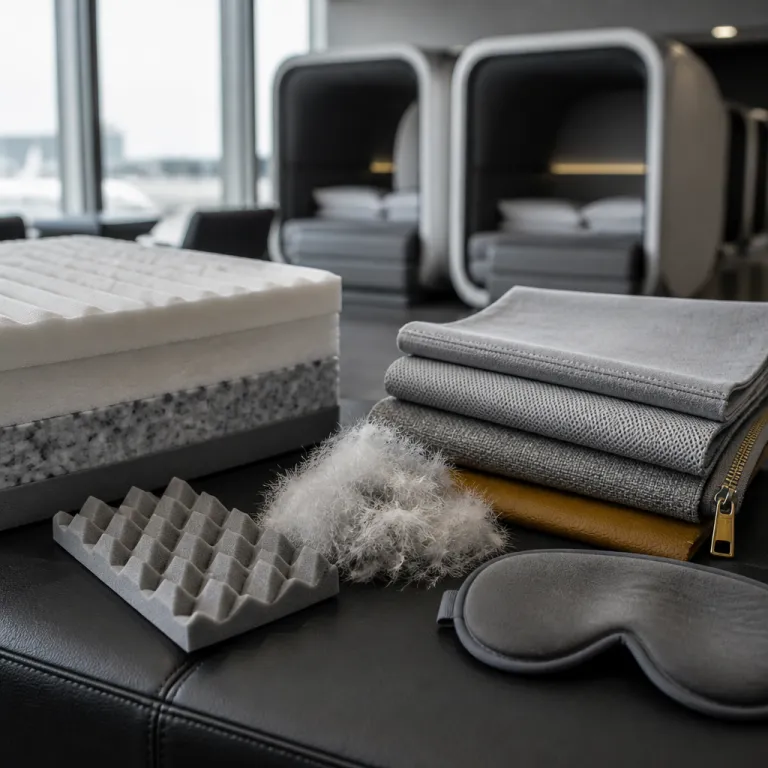
Miami International Airport sleep pods for luxury minded passengers
Miami International Airport sleep pods now bring discreet comfort to one of the busiest hubs in Miami. These premium sleeping capsules sit airside in the international airport, giving travellers a private space to sleep between long haul flights. For passengers used to a five star hotel, the concept translates that privacy into the terminal concourse with compact, design led rooms.
The first Wait N' Rest sleep facilities at Miami Airport are reported to be located in Concourse D, within the vast North Terminal complex. According to recent operator information and Miami International Airport terminal maps, this concourse level location means you step from the gate areas straight into a calm corridor of sound dampened pods, without passing through security again. For luxury travellers, that proximity to the terminal gates is as valuable as any lounge access, because it turns wasted hours into restorative sleep.
Each capsule is more than a simple sleeping pod; it functions as a compact hotel room adapted to the airport environment. Insulated walls, adjustable lighting, and touchscreen entertainment create a controlled sleeping atmosphere, even when the terminal is busy. Because the pods operate by the hour, passengers can tailor their rest to awkward departure times and overnight connections, much as they would with a flexible day room at a boutique hotel.
Layout of MIA: where the sleep pods fit into the terminals
Miami International, often referred to as MIA, is organised into three main terminals: North Terminal, Central Terminal, and South Terminal. The Miami International Airport sleep pods are described as sitting inside the North Terminal, integrated into Concourse D where American Airlines operates many international flights. This concourse connects multiple gate areas, so passengers from different flights can reach the sleep facilities without leaving the secure zone.
When you arrive at Miami Airport, you usually move from baggage claim on the lower level up to the departures level concourse for check in and security. The sleep pods are positioned on a concourse level that is convenient for both arriving and departing passengers, especially those transiting between international flights. Clear signage in the terminal concourse typically directs travellers from the main security checkpoints and from the MIA Mover station towards Concourse D.
For a straightforward route from common arrival points, follow this sequence: from the MIA Mover station, walk towards the main terminal and follow signs for the North Terminal; once inside, continue to the security checkpoints serving Concourse D; after screening, follow overhead wayfinding for D gates, pass the first cluster of gate areas and concourse restrooms, then look for the dedicated Wait N' Rest corridor marked as a sleeping area on the same concourse level. For those connecting from the Central Terminal or South Terminal, the internal walkways and moving sidewalks make the journey to the North Terminal equally direct.
Inside the pods: what premium travellers can expect
Inside each Wait N' Rest unit, the design philosophy mirrors that of a compact luxury hotel suite. The sleeping surface is full length, with quality bedding that supports proper sleep rather than a quick nap in a lounge chair. Lighting controls, power outlets, and entertainment screens are all located level with the bed, so passengers can adjust their environment without leaving the sleeping position.
Noise is the main challenge in any airport terminal, especially near a busy gate or concourse baggage zone. These Miami International Airport sleep pods use acoustic insulation to dampen announcements and foot traffic from the surrounding areas, creating a noticeably quieter sleeping environment. While you may still sense the pulse of Miami Airport outside, the interior remains calm enough for several hours of uninterrupted rest.
Travellers who value privacy will appreciate that each pod has a solid door at the corridor side, rather than a curtain. This door level separation from the terminal concourse gives a sense of security that feels closer to a hotel room than to a public lounge. One frequent flyer described the experience as “stepping into a tiny first class cabin that just happens to be parked inside Concourse D,” highlighting how the ability to stretch out horizontally in a private, lockable space between flights is a significant upgrade.
Wellness touches: from yoga room breaks to quiet concourse restrooms
Sleep is only one part of feeling well during long travel days at Miami International. Some terminals at MIA also offer a dedicated yoga room, where passengers can stretch before or after using the Miami International Airport sleep pods. Combining a short yoga session with two or three hours of deep sleep can reset your body clock more effectively than sitting in a crowded gate area.
Nearby concourse restrooms on the same level concourse provide convenient access for freshening up before you return to the gate. While the pods themselves focus on sleeping rather than full spa services, the proximity of clean facilities and premium lounges completes the wellness circuit. Many travellers choose to shower in a lounge, then retreat to the pods for quiet sleep, and finally head back to the terminal concourse for boarding.
For those planning a wider urban stay in Miami, it is worth pairing this airport rest strategy with elevated city experiences such as capsule hotels that feature rooftop bars and skyline views. That way, the transition from international airport to downtown hotel feels seamless, with comfort maintained from the concourse level to the city streets. The result is a travel day that feels curated rather than chaotic, even when connections are tight.
How to book Miami International Airport sleep pods on a premium platform
For luxury and premium booking websites specialising in capsule style properties, integrating Miami International Airport sleep pods requires precise mapping of the airport layout. The booking engine should clearly indicate that these sleep facilities are located in Concourse D of the North Terminal at MIA. That clarity helps passengers understand whether they can access the pods without passing through security again, depending on their arrival gate and baggage claim needs.
Because the pods operate on an hourly rental model, the booking interface must highlight available hours in real time. Travellers often decide between staying in a nearby hotel outside the international airport or reserving several hours of sleep inside the terminal concourse, so transparent pricing and time slots are essential. As an illustrative example, some capsule style airport rooms in comparable hubs start around USD 30–40 per hour, with discounted blocks for three to six hour stays, and premium platforms can display similar sample ranges while linking to live rates.
When presenting these options, the website should also explain access routes from key points such as the MIA Mover station, the Central Terminal check in halls, and the South Terminal security lanes. Clear descriptions like “located level with Concourse D gates, airside in the North Terminal” reduce confusion for passengers already tired from long haul flights. A concise booking summary that confirms terminal, concourse, and access conditions, plus a direct contact field for Wait N' Rest reservations, reassures travellers that they have chosen the correct in terminal sleep option.
Coordinating with other airport services on the booking journey
Premium booking platforms can enhance the value of Miami International Airport sleep pods by integrating them with other airport services. For example, a traveller arriving at Miami Airport who needs a rental car the next morning could book a pod for overnight sleep, then schedule car pickup after leaving the secure area. The system can flag that baggage claim and claim door locations will affect how quickly they can reach the rental car centre after waking.
Similarly, passengers with long connections who plan to use currency exchange services or visit a lounge should see these options mapped relative to the pods. A visual layout showing the concourse level, nearby concourse restrooms, and the closest gate areas helps travellers plan their hours efficiently. By presenting sleep, services, and movement through the terminals as one coherent journey, the platform positions itself as more than a simple hotel booking site.
For those continuing into Miami for a short urban break, curated suggestions for capsule style properties with panoramic views can extend the premium experience beyond the international airport. The traveller moves from sleep pods at the concourse level to skyline facing capsules downtown, maintaining a consistent design language and level of comfort. This continuity is particularly appealing to passengers who value efficiency and aesthetics in equal measure.
From terminal chaos to curated calm: designing the premium pod experience
Airports are inherently noisy, bright, and busy, especially at peak hours when passengers crowd every gate. Miami International is no exception, with its North Terminal and Central Terminal handling a constant flow of domestic and international flights. The Miami International Airport sleep pods respond to this environment by carving out a controlled micro hotel within the terminal concourse.
Designers have focused on the transition from public areas to private sleep, starting at the corridor entrance. Signage shifts from general airport wayfinding to softer, more hotel like cues as you approach the pods on the concourse level. Once inside, the lighting, materials, and acoustics all signal that you have left the hectic international airport behind, even though you remain only metres from active gates.
For premium travellers, this contrast is crucial because it preserves energy for the rest of the journey. Instead of spending hours in a lounge where announcements and foot traffic continue, they can retreat to a pod where sleep is the primary function. The experience feels curated, from the moment you leave the gate area and pass the concourse restrooms, to the moment you close the pod door and dim the lights.
Balancing privacy, security, and convenience at MIA
Security considerations are central when placing sleep facilities inside an international airport. At Miami Airport, the pods are positioned airside in Concourse D, so only screened passengers can access them from the North Terminal gate areas. This arrangement maintains the integrity of the secure zone while allowing travellers to move freely between their gate, the pods, and nearby services such as currency exchange counters.
From a design perspective, the pods must balance privacy with subtle oversight. Corridors remain visible from staff points on the concourse level, and access is controlled through digital systems that log entry and exit hours. This approach reassures passengers that while their individual pod feels as private as a hotel room, the overall sleeping area remains part of the monitored terminal concourse.
Convenience is enhanced by clear wayfinding from key nodes such as the MIA Mover station, the Central Terminal connection points, and the South Terminal walkways. Passengers can judge how long it will take to walk from their gate to the pods, factoring in any stops at concourse baggage zones or claim door exits if they are arriving. The result is a sleep solution that respects both the operational needs of the international airport and the comfort expectations of premium travellers.
Practical tips for using Miami International Airport sleep pods
Booking strategy matters when you plan to use Miami International Airport sleep pods during a busy travel period. Reports indicate there are fifteen private rooms in the current Wait N' Rest facility, so premium travellers should reserve their preferred hours in advance whenever possible. This is especially true for overnight connections in the North Terminal, when demand for quiet sleeping spaces peaks.
Once at Miami Airport, orient yourself by identifying whether you are in the North Terminal, Central Terminal, or South Terminal. If your gate is in Concourse D, you are already close to the sleep facilities on the concourse level, and signage will guide you to the correct door level. Passengers arriving at other terminals can follow the internal walkways or use the MIA Mover to reach the appropriate terminal concourse before heading to the pods.
Plan your schedule so that you allow time to move between the pods, any lounge you intend to use, and your departure gate. Remember that if you need to visit baggage claim or pass through a claim door to collect luggage, you will have to clear security again before returning to the sleeping area. For many premium travellers, the most efficient strategy is to use the pods only when remaining airside, keeping the flow between gate, sleep, and services entirely within the secure zone.
What to bring and how to maximise your rest
Although the pods function like compact hotel rooms, a few personal items can elevate the experience. A light change of clothes, minimal toiletries, and any necessary medication should be kept in your cabin baggage so you can access them without visiting baggage claim. Noise is already reduced inside the pods, but some passengers still prefer to use earplugs or noise cancelling headphones for deeper sleep.
Set an alarm that allows enough time to wake, freshen up in nearby concourse restrooms, and walk back to your gate. Because the pods are billed by the hour, consider booking a slightly longer block than your minimum required sleep, to avoid rushing through the terminal concourse. Many travellers find that even a structured three hour sleep at Miami International leaves them feeling significantly better than a full night spent upright in a lounge chair.
For those continuing into Miami for business or leisure, aligning pod usage with hotel check in times can smooth the transition from airport to city. A short sleep at MIA followed by a transfer to a central hotel or a premium capsule property downtown keeps your energy consistent throughout the day. This approach turns the international airport from a stressful transit point into an integral part of a well planned journey.
Future of premium capsule stays at Miami International and beyond
The Wait N' Rest facility at Miami Airport is described as the company’s first operation in North America, signalling a broader shift in how airports handle passenger comfort. With a cluster of soundproof rooms operating around the clock, the operator has already shown that there is strong demand for in terminal sleep facilities among international passengers. As traffic through the North Terminal and Central Terminal continues to grow, expansion of similar services across other concourses becomes increasingly likely.
Industry observers now routinely advise travellers to “book rooms in advance during peak times” and “check availability upon arrival” if they want to secure a pod. These commonly repeated tips reflect how quickly the Miami International Airport sleep pods can sell out during busy hours, especially when weather disruptions or schedule changes keep passengers in the terminal concourse longer than planned. For premium booking platforms, integrating live availability and clear messaging around these points is essential.
Looking ahead, the combination of airport sleep pods, wellness focused spaces such as the yoga room, and design forward capsule hotels in urban centres will reshape expectations for short stay accommodation. Travellers will increasingly move between concourse level pods, rooftop bar equipped capsule properties, and traditional hotels depending on their schedule. Miami International, with its mix of international traffic, efficient MIA Mover connections, and growing range of services, is well positioned to remain at the forefront of this evolution.
How Miami’s model can influence other top urban destinations
What is happening at Miami International has implications for other major hubs in top urban destinations. Airports that combine high passenger volumes with limited nearby hotel capacity are especially suited to adopting similar sleep facilities within their terminals. By placing pods on the concourse level near key gate clusters, they can offer travellers a premium alternative to sleeping in public areas.
For booking platforms focused on luxury and premium capsule stays, Miami’s example provides a blueprint. They can present airport pods, city centre capsule properties, and traditional hotels side by side, allowing passengers to design a seamless journey from international airport to downtown concourse and beyond. Clear descriptions of where each option is located level wise within the terminal or city block will help travellers visualise their movements.
As more airports follow MIA’s lead, passengers will come to expect that any major international airport offers some form of private sleeping space inside the secure zone. The Miami International Airport sleep pods are therefore not just a local amenity, but a signal of how global travel is evolving towards more flexible, design conscious, and time efficient accommodation choices. For discerning travellers, that evolution cannot come soon enough.
Key figures about Miami International Airport sleep pods
- Miami International is reported to host fifteen private sleep rooms operated by Wait N' Rest in Concourse D, providing a limited but high quality inventory for premium travellers (verify against official Miami International Airport or operator sources for the latest details).
- The pods are described as operating twenty four hours a day, seven days a week, so passengers on late night and early morning flights can access sleeping facilities regardless of departure time (confirm current hours directly with the operator or airport).
- Miami International ranks among the busiest airports in the United States by international passenger traffic, which increases demand for in terminal sleep options during long haul connections (see Miami Dade Aviation Department traffic statistics for current rankings).
- The Wait N' Rest facility at MIA is presented as the company’s first location in North America, marking a strategic expansion from other regions into one of the continent’s key aviation hubs (check the latest company announcements for confirmation).
FAQ about Miami International Airport sleep pods
Are the sleep rooms available 24/7 at Miami International?
Information from the operator indicates that they run around the clock. This continuous availability means that passengers arriving on late night flights or departing very early in the morning can still book several hours of sleep inside the terminal concourse. It is particularly useful for long haul international travellers whose schedules rarely align with standard hotel check in times.
How much does it cost to rent a sleep room at MIA?
Rates vary; check with Wait N' Rest or your chosen booking platform for current pricing. The pods are typically billed by the hour, allowing travellers to pay only for the specific duration they need between flights. Premium booking platforms often display these hourly rates alongside nearby hotel options so passengers can compare value.
Where exactly are the sleep pods located inside Miami International Airport?
The Miami International Airport sleep pods are generally described as being situated in Concourse D of the North Terminal at MIA. They are located level with the main gate areas on the concourse level, within the secure zone of the international airport. Clear signage in the terminal concourse usually directs passengers from security checkpoints and connecting corridors to the dedicated sleeping area.
Can I access the pods if I need to collect checked baggage first?
If you must visit baggage claim and pass through a claim door to collect luggage, you will exit the secure area. To reach the pods afterwards, you need to re clear security and return to the appropriate terminal concourse. For this reason, many travellers use the pods primarily when remaining airside between connecting flights.
Do the pods replace airport lounges for premium travellers?
The Miami International Airport sleep pods complement rather than replace traditional lounges. Lounges remain ideal for dining, working, and short rests, while pods provide a private, horizontal sleeping environment that lounges rarely match. Many premium passengers now combine both, using the lounge for meals and showers and the pods for deep, uninterrupted sleep.