The new urban base for remote workers
Digital nomads are quietly redefining what a practical city stay looks like. Many are moving from long co-living commitments to a more agile rhythm built around the digital nomad capsule hotel, using compact pods as flexible hubs in dense urban areas. The shift is driven by a desire for personal space, reliable work infrastructure, and a clean, comfortable place to sleep that still feels connected to the city outside.
Data from Numbeo’s 2023 cost of living database and a 2022 Statista overview of global co-living prices indicate that the average cost of co-living per month in major cities clusters around 1 500 USD for a private room in a shared apartment. A small sample of capsule and pod hotels on Booking.com and Hostelworld in 2023–2024 shows typical nightly rates in the 40 to 60 USD band, with many listings near 50 USD per night. For solo travelers who change city frequently and stay under two or three weeks, this makes short rotations financially attractive, especially when a hotel offers high quality Wi-Fi and dedicated work areas. Digital nomads use booking websites and mobile apps to switch between hotels and hostel style pods without deposits, leases, or complex contracts.
A 2023 Nomad List community survey on accommodation preferences for remote workers highlights three recurring reasons for choosing capsule hotels: cost savings, privacy, and flexibility. That combination of privacy and shared spaces is central, because a capsule hotel balances a compact pod with generous common areas that feel more like a refined hostel lounge than a traditional corridor of hotel rooms. For many guests, the comfort key is knowing that their personal space is secure inside capsule walls, while the common area remains social, bright, and designed for laptop work.
From co-living leases to capsule rotation
Co-living once looked like the default answer for remote workers who wanted a long stay in a major city. The model still suits some travelers, yet a growing group of digital nomads now prefers a rotation of capsule hotels that keeps commitments light and options open. When you compare a 1 500 USD monthly co-living bill with a 10 night capsule stay at roughly 50 USD per night, the numbers start to favour the pod for shorter projects.
To make the comparison clearer, consider a simple outline based on a 50 USD nightly capsule rate and a 1 500 USD monthly co-living fee: 7 nights in a capsule hotel cost about 350 USD versus roughly 525 USD for a pro-rated co-living month; 14 nights cost about 700 USD versus around 1 050 USD; 30 nights reach about 1 500 USD, which aligns with a typical co-living lease but without deposits or notice periods. Over a longer duration, co-living can still win on total cost if you remain in one city for several months and value a larger private room. Yet for digital nomads who bounce between cities like Tokyo, Vancouver, and Taipei, the capsule hotel model offers a modular way to stay that mirrors the way they work.
For a two week work sprint in Tokyo, Osaka, or Fukuoka, a digital nomad capsule hotel gives you a private pod, clean shared spaces, and a central location without paying for unused days. Properties such as The Millennials in Japan or refined capsule hotel Fukuoka stays for urban travelers in Kyushu often include co-working rooms, phone pods, and high quality Wi-Fi in the common areas, which narrows the gap with co-living infrastructure. One remote software engineer described a recent two week rotation between capsule hotels in Tokyo as “cheaper than my old co-living room, with better Wi-Fi and zero paperwork,” capturing how pay-per-night flexibility can replace a fixed lease.
Inside the pod: privacy, comfort, and work readiness
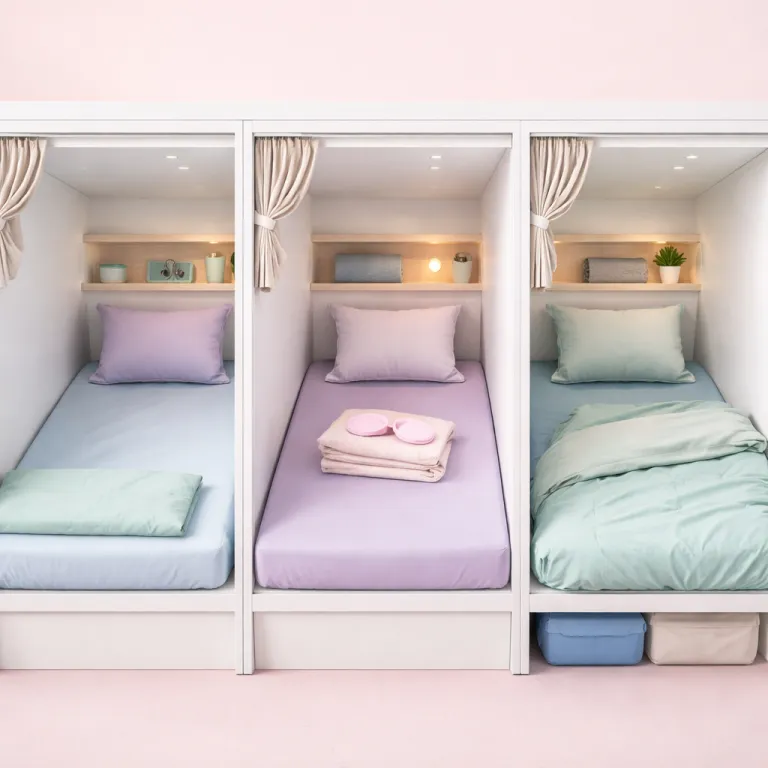
Step inside capsule walls and the logic of this new accommodation style becomes clear. A well designed capsule or pod is not about square metres; it is about how intelligently that space is organised for sleep, storage, and focused work. In the best capsule hotels, the pod feels like a compact first class cabin, with lighting, power, and ventilation tuned for solo travelers who live online.
In Japan, where the capsule hotel concept began, many properties now blend Japanese style minimalism with technology that serves digital nomads. A typical guest’s capsule might include a wide bed, a fold out desk, multiple charging points, and a small safe, creating a personal space that feels more controlled than many hostel dorms or budget hotel rooms. Taipei has followed with space smart concepts, and several capsule hotel Taipei stays for refined urban travelers now integrate ergonomic seating and laptop ledges directly inside capsule pods.
Across Asia and North America, the most successful pod hotel brands understand that comfort key details matter more than raw size. Panda Pod in Vancouver, for example, targets digital nomads with self check in, strong Wi-Fi, and pods that feel clean and comfortable even during a long stay of ten nights or more. In guest reviews, remote workers often describe stays there as “like having a tiny, quiet office that turns into a bedroom at night,” highlighting how a well designed pod can support both work and rest. When a hotel offers this level of high quality design inside capsule pods, guests quickly forget the compact footprint and focus instead on the quiet, the order, and the sense of a private room carved out of a shared area.
Shared spaces and the rise of work pods
Life in a digital nomad capsule hotel extends far beyond the pod itself. The real social and professional energy sits in the common areas, where travelers work, eat, and trade city tips between calls. These shared spaces are where the model pulls away from a traditional hostel, because the best hotels now design every common area around the needs of remote workers.
The Millennials brand in Japan was early to this, building co-working lounges and dedicated work pods directly into its capsule hotels so that guests can move from place sleep to place work in a few steps. Newer properties in cities like Taipei, Singapore, and Vancouver add phone booths and call pods, acknowledging that a capsule or hotel pod is perfect for laptop tasks but not ideal for long video meetings. Some hotels now carve out quiet zones, semi private desks, and even small meeting rooms within the shared area, creating a layered experience that feels closer to a members club than a simple pod hotel.
For digital nomads, this means you can keep your personal space minimal while relying on the hotel’s shared spaces for deep work, networking, and relaxation. When you choose a capsule hotel with high quality Wi-Fi, generous common areas, and clear etiquette, you gain many of the benefits of co-living without the fixed lease. Guides such as refined ways to book a capsule hotel in the USA for elevated urban stays help travelers identify which hotels take work infrastructure seriously, and which still operate more like a basic hostel with pods added as an afterthought.
Where capsule hotels work best for digital nomads
Not every city is equally ready for the digital nomad capsule hotel wave. The model thrives in dense urban areas where land is expensive, public transport is excellent, and travelers value location over large hotel rooms. In these cities, a capsule hotel can place you within a few minutes’ walk of major stations, co-working hubs, and nightlife while keeping nightly rates in the 30 to 60 USD band.
Japan remains the reference point, with Tokyo, Osaka, Kyoto, and Fukuoka offering a spectrum of capsule hotels that range from simple hostel hybrids to refined pod hotel concepts with spa level facilities. Taipei has emerged as another strong option, with capsule hotel Taipei properties using clever layouts to create quiet pods, generous common areas, and shared spaces that feel calm even at full occupancy. In North America, Vancouver’s Panda Pod shows how the concept can translate to a Western city, offering a clean, comfortable place sleep, self check in, and reliable Wi-Fi for under 100 USD per night in a central area.
For digital nomads planning a long stay, the strategy is often to mix capsules and traditional hotels across a multi city itinerary. You might book a hotel pod in a Japanese style capsule hotel for an intense work week, then shift to a larger hotel room or serviced apartment when you need more space. What matters is that hotels now recognise digital nomads as core guests, and the best capsule hotels respond with hotel offers that respect both the need for privacy inside capsule pods and the desire for a sociable, well equipped common area outside.
FAQ
What are capsule hotels and how do they differ from hostels ?
Capsule hotels are compact, affordable accommodations offering private sleeping pods, while hostels usually provide open dormitory style beds with less personal space. In a capsule hotel, each pod functions as a small room with walls or shutters, creating more privacy than a typical hostel bunk. Shared spaces such as bathrooms and lounges remain common, but the boundary between guests capsule units is clearer and quieter.
Why are digital nomads choosing capsule hotels over co-living ?
Digital nomads are choosing capsule hotels over co-living because short stays of one to three weeks often cost less than a full monthly co-living fee, especially when the nightly rate sits around 50 USD. They also gain flexibility, since there is no lease and they can move between cities or hotels without penalties. Many capsule hotels now provide high quality Wi-Fi, work friendly common areas, and central locations, which narrows the gap with co-living amenities.
Are capsule hotels suitable for long-term stays for remote workers ?
Capsule hotels are generally designed for short term stays, yet some digital nomads use them for several weeks by rotating between properties in the same city. This approach works best when the hotel offers strong Wi-Fi, good sound insulation, and varied shared spaces so that daily routines do not feel cramped. For stays of several months, many travelers still prefer co-living or serviced apartments with larger private rooms and kitchens.
How can I choose a capsule hotel that is good for work ?
When selecting a capsule hotel for remote work, check that the property clearly advertises reliable Wi-Fi, quiet hours, and dedicated work areas or co-working lounges. Look for photos of the common areas, including desks, power outlets, and any phone booths or call pods for video meetings. Reviews from other digital nomads and solo travelers are valuable, because they often mention whether the place sleep is quiet enough and whether the shared spaces feel conducive to focused work.
What should I expect inside a capsule or pod ?
Inside a modern capsule or pod, you can usually expect a mattress, reading light, power outlets, ventilation, and sometimes a small fold out desk or shelf. Many Japanese style capsules add controls for lighting and air, a small safe, and hooks or cubbies for personal items, creating a compact but efficient personal space. Bathrooms, showers, and lounges sit in shared areas outside the pod, so you trade a large private room for a smaller, well designed sleeping capsule within a larger hotel environment.