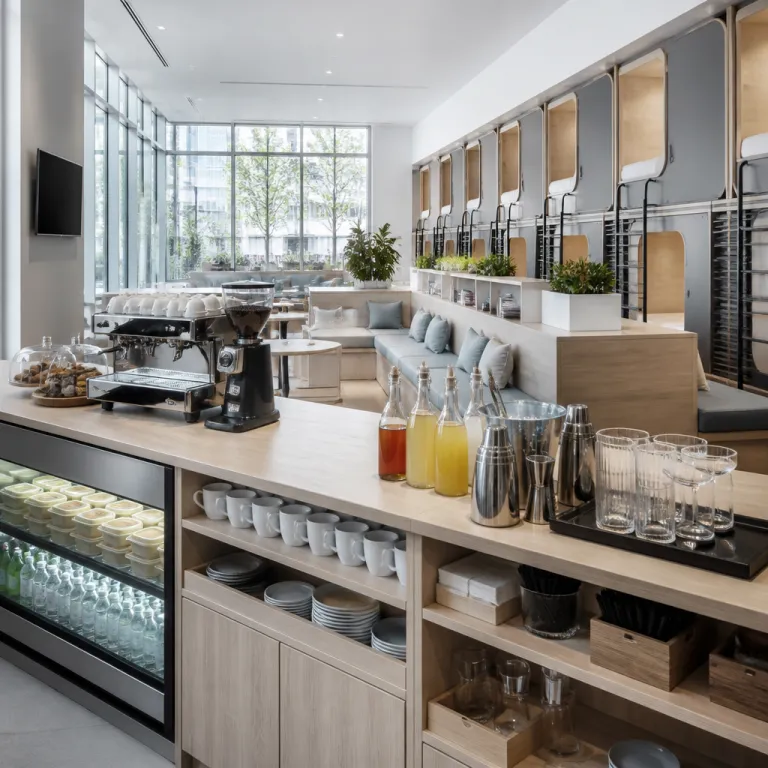
When the pod is your room, the lounge becomes your dining room
In a capsule hotel, the sleeping pod is deliberately compact, so the real stage for capsule hotel food, drinks and amenities is the shared lounge. Couples who book a capsule hotel or pod-style hotel in dense districts of Tokyo, Kyoto or New York quickly realise that the capsule is for sleeping, while the lobby café and bar are for lingering, tasting and talking. That shift from private room to communal living room changes how you plan each night of your stay and how you evaluate amenities beyond the mattress.
Operators of capsule hotels and micro hotels have learned that guests will trade square metres of sleeping quarters for generous social space if the food and drink offering feels curated rather than cheap. Pod Hotels in New York, for example, operate with on-site cafés and rooftop bars instead of classic room service, keeping rates competitive for a couple paying per night in yen or dollars. Pod 51 and Pod Times Square both highlight “no room service, but plenty of on-site dining and bars” in their FAQs, a model that mirrors many Japanese capsule hotel concepts where a precise location and easy access to neighbourhood restaurants matter more than a minibar inside the pod.
For travellers used to a traditional hotel, this can feel like a reset, because there is no tray arriving at your room and no printed menu by the phone. Instead, you check the lobby for coffee, pastries and snacks, or you walk to a nearby convenience store to assemble a picnic that you bring back to the shared tables. The result is that capsule hotel food and beverage options become part of the city experience, not a sealed-off service hidden behind a door, and reviews often mention the lounge as “the real living room” rather than the pod itself.
Guest exclusive hubs and self serve bars instead of full restaurants
Some of the most interesting capsule hotels for couples now treat food and drink as a private club perk rather than a public restaurant, with guest-only lounges that feel like a living room. A growing number of compact hotels in London, New York and Tokyo follow this capsule hotel food-and-drink trend, operating social hubs with fresh coffee, pastries, snacks and a self-serve bar offering beer, wine and cocktails, but no full kitchen, no wait staff and no printed menu. This approach echoes the Pod Hotels playbook in New York, where on-site cafés and rooftop bars replace room service and encourage guests to mingle rather than retreat to a small room.
The self-serve bar concept suits the economics of capsule-style accommodation, because it reduces labour costs while preserving the social element that couples often seek after a long flight from an airport. Instead of a bartender, you have a well-designed wall of taps, fridges and wine dispensers, and you charge drinks to your pod with a key card or app, which keeps the experience easy to access and almost friction free. For a pair arriving late at night from Tokyo or Kyoto, being able to pour a glass of wine without waiting for staff can feel like a great luxury, especially when the lounge has air conditioning, soft lighting and quiet corners that contrast with the compact sleeping capsule.
Rooftop bars at micro hotels and capsule properties extend this idea vertically, turning unused roof space into a social terrace with skyline views and simple menus. If you are planning a romantic pod-style city break, look for properties that combine capsules with elevated bars, then read guides to capsule hotels with rooftop terraces where you can drink with a view to understand which locations balance ambience, pricing and crowd. In these places, food and drink are not an afterthought but a signature, and the absence of room service feels intentional rather than like a cost-cutting measure, especially when guest reviews consistently praise the bar scene.
Grab and go, pod hotel breakfast hacks and why vending machines win
Because a capsule hotel rarely has the back-of-house space for a full kitchen, grab-and-go options become the backbone of capsule hotel food and drink amenities. Vending machines, snack walls and refrigerated cases stocked with pre-packaged meals often work better than conventional room service, since they match the rhythm of guests who may check in at odd hours or sleep in late after a long night. For couples, this means you can curate your own minibar from the lobby, then bring it back inside the capsule or to a quiet corner of the lounge.
In Japan, the connection between capsule hotels and the convenience store is especially strong, because chains such as 7-Eleven and Lawson offer high quality bento, salads and desserts within a short walk of most Tokyo or Kyoto hotel addresses. Many Japanese capsule operators lean into this by providing microwaves, hot water dispensers and small seating areas where you can enjoy store-bought meals without feeling rushed, which keeps nightly rates low while still delivering great amenities. Couples arriving in March, February or June for cherry blossom or festival seasons often praise this flexibility in reviews, noting that they can eat well without committing to a formal restaurant reservation every night of their stay.
The breakfast question is handled with similar pragmatism, because there is usually no grand dining room in a capsule hotel. Some properties offer free coffee and simple pastries in the morning, while others sell breakfast vouchers redeemable at a nearby café, which can be more appealing than a generic buffet. Pod Hotels in New York, for instance, direct guests towards on-site cafés and partner venues rather than sending trays to sleeping quarters, and they openly state: "No, Pod Hotels do not provide room service," alongside details such as "On-site restaurants, cafés, and rooftop bars" and "Yes, communal spaces are available for dining and socializing," which clarifies what pod hotel breakfast really looks like.
Why you rarely see communal kitchens in urban capsule hotels
Travellers who come from hostel culture sometimes expect a full communal kitchen, but the reality in most urban capsule hotels is different. Fire codes, ventilation requirements and the sheer cost of cleaning shared cooking spaces make full kitchens rare in dense city locations where every square metre must earn its keep. Instead, capsule hotel food and drink facilities focus on low-risk equipment such as kettles, microwaves and toasters, which are easier to maintain and safer to operate around constantly changing guests.
Hostel hybrid properties that blend dorms, pods and private rooms are the main exception, because they target longer-stay guests who value cooking facilities over rooftop bars. In these spaces, you might find a Japanese-style capsule wing alongside traditional bunks, with a compact kitchen where couples can prepare simple meals before retreating to their sleeping pod or shared lounge. However, in high-demand districts such as Shinjuku in Tokyo or central Kyoto, the opportunity cost of dedicating floor space to a kitchen instead of extra sleeping quarters or a larger bar is often too high for an operator focused on capsule-style accommodation.
For couples booking through a premium capsule hotel platform, the key is to check the amenities list carefully and understand what food-related services are actually available. Look for clear descriptions of whether there is a café, a bar, vending machines, or only a convenience store nearby, and pay attention to photos that show how much space exists outside the pod. Before you reserve, it is also worth reading a guide to capsule hotel etiquette and the unwritten rules every first timer should follow, because knowing how to behave in shared spaces will make your stay experience more relaxed and enjoyable.
Social programming, late night rituals and how couples actually use these spaces
Food and drink in capsule hotels are not just about calories, they are about choreography, because the way you move between pod, lounge and city shapes the mood of your trip. Smart operators design capsule hotel food and beverage amenities as part of a social programming calendar, layering happy hours, game nights and low-key tastings into the week to encourage strangers who share walls to finally share words. For couples, this can turn a simple hotel stay into a more memorable city break, especially when you are travelling in a place like Tokyo or New York where meeting locals can otherwise feel intimidating.
Some capsule hotels host early evening wine hours in the lounge, giving guests a free first glass and discounted refills, which draws people out of their sleeping quarters before they head into the city. Others schedule work-from-pod sessions during the day, pairing strong coffee with quiet zones so remote workers can focus, then transition to a self-serve cocktail bar in the same space after dark, which keeps the atmosphere lively without needing full-time staff. In Japanese capsule properties, you might also see late night ramen or snack offerings that cater to guests returning from bars, ensuring that nobody goes to bed hungry inside the capsule.
From an operational perspective, this programming helps justify the investment in generous lounges and high quality air conditioning, because the space earns revenue across multiple dayparts instead of sitting empty. For guests, it means that even though your private area is just a pod, the overall hotel experience feels rich, layered and social, and the lack of room service never feels like a downgrade. When you read reviews mentioning how couples used the bar, the café and the shared tables, you are really reading about how well the property has balanced compact sleeping spaces with expansive communal life.
How to choose the right capsule hotel for a food forward stay
Selecting a capsule hotel for a romantic trip starts with location, but it should quickly move to how the property handles food, drink and shared space. In Japan, for example, a Tokyo hotel address near a major station offers easy access to both the airport and an endless choice of restaurants, while a Kyoto hotel near the river might trade transport convenience for atmospheric streets and intimate bars. In New York, Pod Hotels place their properties in neighbourhoods where guests can walk to dozens of eateries, then return to on-site cafés and rooftop bars when they want something closer to their room.
When you compare capsule hotels, look beyond the headline rate per night and study the food and drink amenities in detail. Does the property offer free morning coffee, or is everything paid à la carte, and are there any partnerships with local bakeries or restaurants that provide discounts to guests who show a room key? Couples who value slow mornings might prioritise a pod hotel with a generous breakfast spread, while night owls may care more about a late night self-serve bar and nearby convenience store options that stay open around the clock.
Finally, consider the physical design of the sleeping capsule and the surrounding lounge, because this will determine how comfortable it feels to snack, sip and unwind outside your pod. Check whether there is strong air conditioning, enough seating and quiet corners where two people can talk without shouting over a crowd, and read recent guest feedback to see how often food, drink and social atmosphere are praised. A well chosen capsule hotel can turn compact sleeping quarters into a base for expansive culinary exploration, proving that when the room is just a pod, the real luxury lies in how and where you share your meals.
FAQ
Do capsule hotels usually offer room service for food and drinks ?
Most capsule hotels do not offer traditional room service, because their business model focuses on communal lounges, cafés and vending machines instead of in-room dining. Operators such as Pod Hotels in New York explicitly state that they do not provide room service, preferring on-site restaurants, cafés and rooftop bars. This setup keeps rates lower while still giving guests convenient access to food and drink.
What kind of breakfast can I expect in a capsule hotel ?
Breakfast in capsule hotels ranges from free coffee and simple pastries to paid grab-and-go options or vouchers for nearby cafés. Some Japanese capsule properties partner with local bakeries, while others rely on convenience stores within a short walk. Always check the amenities list before booking, because there is rarely a large dining room or buffet.
Are self serve bars in capsule hotels good for couples ?
Self-serve bars can work very well for couples, because they allow you to pour drinks at your own pace without waiting for staff. Many capsule hotels design these areas with comfortable seating, soft lighting and clear pricing, which creates a relaxed atmosphere. For travellers arriving late at night, this can be more appealing than searching for an open bar in an unfamiliar neighbourhood.
Can I cook my own meals in a capsule hotel ?
Full communal kitchens are rare in urban capsule hotels, due to fire regulations, space constraints and cleaning costs. You are more likely to find microwaves, kettles and small preparation areas than full stoves or ovens. Hostel hybrid properties aimed at longer stays are the best option if cooking is a priority.
How should I behave when eating or drinking in shared capsule hotel spaces ?
Guests are expected to keep noise low, clean up after themselves and avoid strong food smells inside the capsule or sleeping quarters. It is polite to use designated lounge areas for meals and to respect quiet hours posted by the hotel. For more detailed guidance, many travellers read etiquette guides that explain the unwritten rules of capsule hotel life before their first stay.