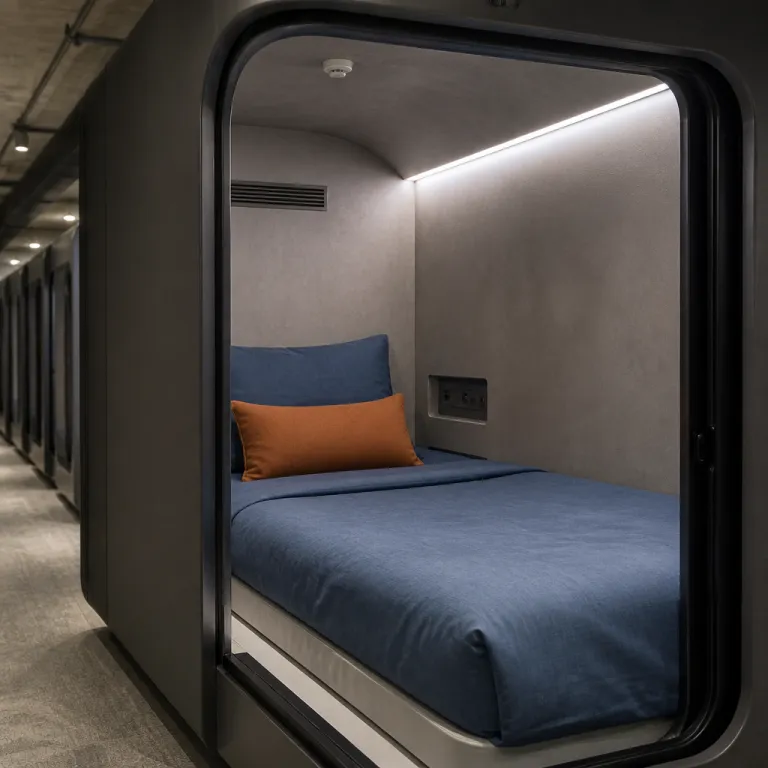
Why smart capsule hotel wellness technology is redefining the compact pod
Luxury capsule hotels are quietly reshaping the hotel market for couples who value sleep as much as location. In the most advanced capsule hotel properties, smart capsule hotel wellness technology turns each compact pod into a responsive sleep studio that feels closer to a private spa than a simple bed. For travelers planning urban stays, this shift means the choice between capsule hotels and traditional hotels is no longer about compromise but about which guest experience feels more finely tuned.
At the heart of this change sit biometric sensors embedded in the capsule walls, mattress and sometimes even the pillow. These systems, inspired by manufacturers such as Eight Sleep, Siesta and LumenaTherm, track heart rate, breathing and movement to run continuous analysis of your sleep phases and micro awakenings. A modern capsule hotel uses that data in real time, adjusting air conditioning, airflow and sound masking so guests find the pod settling around them rather than forcing them to adapt to the space.
For couples used to premium hotel technology, the surprise is how precisely a two square metre capsule can be tuned. Because the pod is small, iot enabled climate systems can shift temperature by half a degree in seconds, something that is far harder in a thirty square metre hotel room. In the upper middle of the market, enabled pods now offer dual zone climate for two guests, so one guest can sleep cooler while the other enjoys a warmer cocoon, a detail that matters on longer stays and for business travelers who arrive jet lagged.
Smart capsule hotel wellness technology also changes how we think about solo travel and couples’ escapes. In many asia pacific cities, from Tokyo to Seoul in south korea, capsule hotels were once seen as a last resort for travelers solo or late night commuters. Now, premium pod hotel brands position their pods as wellness capsules, with adaptive lighting, guided breathing audio and essential amenities curated for couples who treat sleep as part of their travel ritual.
For the hospitality industry, this is not a niche experiment but part of a broader smart hospitality market expansion that touches everything from the front desk to the guest’s phone. A recent report on smart hospitality shows strong growth in AI driven systems, and capsule hotels sit at the sharp end of that curve because their compact spaces are easier to automate. When you look at the global hotel market, the properties that invest early in iot enabled pods and meaningful wellness features are the ones that will stand out to discerning travelers over the next decade.
How adaptive lighting and climate sensors turn a capsule into a wellness space
Step into a leading capsule hotel in asia pacific and the first thing you notice is the light. Instead of a harsh overhead strip, adaptive LEDs shift from warm ambers in the evening to cooler daylight tones in the morning, mirroring natural circadian rhythms that help guests find deeper sleep and gentler wake ups. In couples pods, the best hotels offer separate lighting scenes on each side of the bed, so one traveler can read while the other drifts off in near darkness.
Climate sensors work in concert with these lighting systems, forming the backbone of smart capsule hotel wellness technology. Tiny sensors inside the pod track temperature, humidity and carbon dioxide levels, feeding AI driven analytics that adjust ventilation and air conditioning without the guest needing to touch a control panel. In practice, this means fewer stuffy wake ups at 03.00 and a more stable microclimate, even when the capsule hotel corridor outside is busy with late night arrivals or early departures.
Manufacturers such as Eight Sleep have shown how temperature regulation systems can improve sleep quality by cooling the body slightly during deep sleep and warming it before waking. Capsule hotels adapt similar methods, using under mattress cooling, quiet fans and zoned air conditioning to create a personalised climate envelope around each guest. For couples sharing a pod, this level of control is a quiet luxury, especially on long haul travel where one partner may still be on another time zone.
Lighting and climate are not just about comfort ; they are about measurable wellness outcomes. Research cited by health institutions shows that a significant percentage of adults report insufficient sleep, and that even a short nap in a well designed pod can reduce fatigue by a notable margin. When a capsule hotel integrates these findings into its hotel technology stack, the pod becomes a tool for recovery rather than simply a compact place to crash between urban adventures.
For couples planning a romantic weekend in Paris or another dense city, this matters when comparing capsule hotels with more traditional properties. A refined capsule stay can now offer adaptive lighting, climate sensors and soundscapes that many mid range hotels still lack, especially in older buildings. If you are weighing options for a premium stay in the French capital, a carefully chosen capsule hotel in Paris can deliver a more restorative night than a larger but less intelligent room.
From Tokyo to Los Angeles: where smart pods suit couples, solo travelers and groups
Geography shapes how smart capsule hotel wellness technology appears, and couples will feel the difference from asia pacific to the United States. In Japan and south korea, capsule hotels evolved from ultra compact urban shelters into refined pod hotel concepts where enabled pods now come with voice controlled lighting, white noise and integrated aromatherapy. In southeast asia, by contrast, the focus often falls on air conditioning performance and privacy, as humid climates and lively shared spaces demand pods that seal out both heat and noise.
For couples from the United States planning solo travel segments within a longer trip, these regional nuances matter. A traveler might choose a capsule hotel in Seoul for a few nights of focused rest between group tours, then shift to a design led pod hotel in Bangkok where the emphasis is on social lounges and co working space. In both cases, the same core hotel technology underpins the experience, but the way hotels offer it reflects local expectations and the maturity of the hotel market.
Smart capsule hotel wellness technology is also crossing oceans into cities such as Los Angeles, where compact pods appeal to business travelers who value efficient urban stays near transit hubs. Here, the narrative is less about necessity and more about choice ; couples and solo travelers pick pods because they want a controlled, tech forward sleep environment after late dinners or shows. For a sense of how this looks on the ground, explore our guide to refined capsule hotel stays in Los Angeles, where wellness features now sit alongside rooftop bars and art led lobbies.
Group dynamics add another layer to this story. When a group of friends or a multi generational family books several pods in one capsule hotel, each guest can tune their own wellness capsule while still sharing the same communal lounge and breakfast space. Couples within that group can retreat to their pod for quiet, while travelers solo can use the shared areas to connect with other guests, a balance that traditional hotels sometimes struggle to achieve.
For the hospitality industry, these patterns show that smart capsule hotel wellness technology is not limited to one demographic. Solo travelers, couples and business travelers all respond to the promise of better sleep, cleaner air and more control over their environment. As more hotels in asia pacific, southeast asia and North America adopt iot enabled pods, the line between a capsule hotel and a full service hotel will blur, leaving the quality of the pod and the surrounding space as the true differentiators.
What couples should look for when booking a wellness focused capsule hotel
When you open a booking page for a capsule hotel, the photos rarely tell the full story of the pod’s technology. Couples interested in smart capsule hotel wellness technology should read beyond the headline amenities and look for specific references to biometric sensors, adaptive lighting and personalised climate control. A serious property will explain how its pods use AI driven analytics to adjust temperature, airflow and lighting based on your sleep patterns, not just list generic essential amenities.
Start with climate, because air conditioning quality can make or break compact pods. Look for capsule hotels that mention zoned temperature control, humidity management and fresh air circulation, not just a single shared unit for an entire corridor. In iot enabled pods, each guest can usually set a preferred temperature range, and the system will nudge the climate up or down as your body cools or warms through different sleep stages.
Lighting comes next, and this is where smart capsule hotel wellness technology can feel genuinely transformative. The best hotels offer pre set scenes for winding down, reading and waking, often with gradual sunrise simulations that ease you into the day rather than jolting you awake. For couples, separate reading lights and dimmable panels mean one guest can stay up without flooding the entire pod with blue light, a small but meaningful detail on romantic city breaks.
Noise and privacy are also part of the wellness equation. Some capsule hotels integrate sound masking into the pod walls, using gentle pink noise to blur corridor sounds, while others rely on high quality insulation and thoughtful layout to keep the middle of the night quiet. When reading reviews, pay attention to how other guests describe sound levels and whether travelers solo and couples felt they could truly switch off inside their pods.
Finally, consider how the property handles sustainability, because efficient smart systems often align with lower environmental impact. Pods that adjust air conditioning and lighting automatically when empty reduce energy use without sacrificing comfort, a point explored in depth in our feature on eco conscious capsule hotels and carbon footprints. For couples who care about both wellness and responsible travel, choosing a capsule hotel that invests in intelligent systems can feel like a natural extension of their values.
Data, privacy and the future of the learning wellness capsule
Behind every responsive pod lies data, and couples considering smart capsule hotel wellness technology should understand what is being collected. Biometric sensors in the capsule track movement, heart rate variability and sometimes breathing patterns, feeding that information into AI systems that refine the pod’s behaviour over time. As one expert summary puts it, “They use sensors and AI to adjust temperature, lighting, and other factors for optimal sleep.”
Used well, this data can make travel feel remarkably seamless. Imagine checking into a capsule hotel in Tokyo, setting your ideal temperature, lighting and wake up routine once, then finding that a partner property in London or Los Angeles already knows your preferences on your next trip. Large hotel groups are moving in this direction, using shared hotel technology platforms so that a guest’s preferred climate, pillow firmness and even favourite soundscapes follow them across continents.
The privacy trade off is real, though, and couples should read each hotel’s data policy with the same care they apply to any connected device at home. A trustworthy capsule hotel will explain whether biometric data stays on the pod’s local system or is uploaded to a central server, how long it is stored and whether it is anonymised for broader analysis. In the best cases, aggregated data helps the hospitality industry refine pod design, improve air conditioning strategies and understand how different travelers solo or in a group actually use the space.
For the hotel market, this feedback loop is invaluable. Operators can see, for example, that solo travelers in asia pacific prefer cooler pods and darker lighting scenes, while couples on weekend stays in Europe choose warmer temperatures and softer wake up profiles. That kind of report, drawn from anonymised usage patterns, guides future investment in enabled pods, from mattress materials to the placement of control panels and charging ports.
As smart capsule hotel wellness technology matures, expect the line between wellness capsule and medical device to be carefully managed. Partnerships with health institutions and wellness centers are already emerging, especially around airport pod hotels and recovery pods in performance environments. For now, the sweet spot for couples lies in properties that use data to enhance comfort and rest, while keeping control simple, transparent and always in the guest’s hands.
FAQ
What is a sleep pod in a capsule hotel ?
A sleep pod in a capsule hotel is a compact, enclosed space designed for resting, usually large enough for a bed, storage niches and integrated controls. In premium properties, the pod functions as a wellness capsule, with adaptive lighting, personalised air conditioning and sometimes biometric sensors that respond to your sleep patterns. The goal is to provide the privacy and comfort of a small hotel room within a much smaller footprint.
How do adaptive sleep pods work in practice ?
Adaptive pods use embedded sensors to track movement, temperature and sometimes heart rate, then feed that data into AI driven systems that adjust the environment. If you move a lot during light sleep, the pod might cool slightly or dim the lights further to encourage deeper rest. Over time, the system can learn your preferences, so each night in the same capsule hotel feels more tailored than the last.
Are smart capsule hotel pods actually effective for better sleep ?
Studies on sleep technology suggest that well designed pods can improve sleep quality and reduce fatigue, especially when they manage temperature and light more precisely than a standard room. Guests who struggle with jet lag or irregular schedules often report that adaptive lighting and climate control help them fall asleep faster and wake more refreshed. As always, effectiveness depends on the quality of the hardware, the software and the overall noise levels in the property.
Is my biometric data safe when I stay in a smart capsule hotel ?
Data handling varies by brand, so it is important to read each hotel’s privacy policy before booking. Responsible operators explain what they collect, how long they store it and whether they anonymise it for aggregated analysis. If you are uncomfortable with biometric tracking, look for capsule hotels that allow you to disable advanced features while still enjoying basic comforts such as adjustable lighting and air conditioning.
Who benefits most from smart capsule hotel wellness technology ?
Couples on short urban stays, solo travelers on multi city trips and business travelers with tight schedules all benefit from pods that prioritise rest and recovery. The compact format suits guests who value location, design and sleep quality over large floor space. For many, the combination of responsive climate, quiet pods and thoughtful shared areas offers a more restorative stay than a larger but less intelligent hotel room.