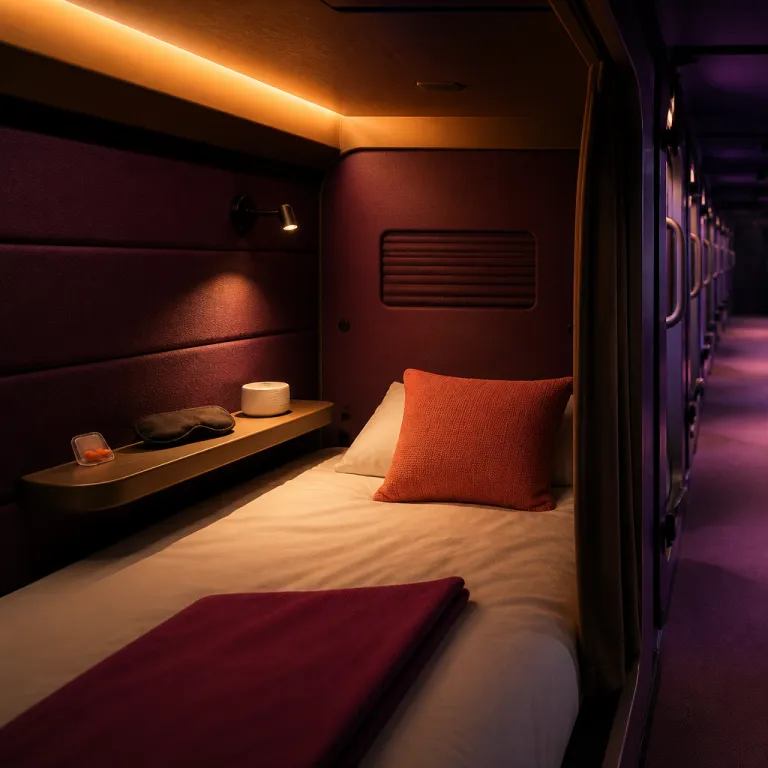
Choosing the right capsule for real rest
Learning how to sleep in a capsule hotel starts long before check in. The capsule you choose will shape your night, your mood the next day, and even how you remember the city. Think of it as selecting the quietest corner of a compact first class cabin rather than just any bed in a row.
In the most refined capsule hotels, soundproofing is the first serious filter for guests who value sleep. Some properties still rely on a simple curtain at the capsule entrance, while others use a rigid shell with acoustic insulation that can drop perceived noise by several decibels. Zedwell in London, for example, publicly describes its rooms as “cocoons” designed around sound insulation and sleep, with several hundred windowless pods built to minimise outside noise rather than maximise views.
When you compare capsule hotels in Tokyo, hotels in Singapore, or new generation pod hotels in the United States, look closely at how they describe the sleeping area. If the hotel mentions double layered walls, acoustic doors, or white noise systems, you are already closer to a good night. If the description only highlights a popular location and a minute walk from a station, assume you will need to manage noise yourself.
Families planning a stay in a capsule hotel should prioritise end of row capsules and lower bunks. A bottom capsule reduces ladder traffic above your head, while an end capsule usually means fewer guests passing your sleeping area at late hours. When you book, use the notes field to request a quiet capsule located away from the street facing capsule windows, lifts, and shared bathrooms.
For travellers comparing accommodation options, a luxury capsule hotel in Japan or a pod hotel in the United States can be as sleep friendly as a traditional room. The key is to read reviews that mention sleeping, not just design or the best things to do nearby. Look for repeated comments from previous guests about noise levels, mattress comfort, and how staff handle late arrivals during the night.
Official guidance from capsule specialists is refreshingly direct on this point. Travel and hotel advisory sites commonly note that average sound levels in shared sleeping areas can feel similar to normal conversation, so earplugs are recommended for light sleepers. That single idea explains why learning how to sleep in a capsule hotel always starts with understanding the building, not just the pod. Exact decibel figures vary between properties, but they give a useful sense of how active a shared corridor can feel.
Sound, light and spa level calm inside the pod
Once you have the right capsule, the next step in how to sleep in a capsule hotel is mastering the micro environment. In a space of roughly two square metres, every sound and every beam of light feels amplified. The best properties treat this tiny volume of air as a wellness capsule rather than a simple bed.
Luxury capsule hotels in Japan and hotels in Singapore increasingly integrate smart controls directly into the capsule shell. You will often find dimmable LED strips, individual air conditioning vents, and touch panels that let each guest tune the sleeping area without disturbing neighbours. Industry reports on smart hospitality suggest that a growing share of new capsule projects now include some form of integrated smart control, and the most advanced pods use AI driven lighting that shifts gently from warm evening tones to cooler morning light.
For families, this level of control is more than a gadget. Parents can lower the fan speed and dim the lights in a child’s capsule while keeping their own pod slightly brighter for late night reading. In some Japan capsule properties, spa inspired floors combine these pods with onsen style baths and quiet lounges, creating a full wellness circuit between the sleeping area and the relaxation zones.
When you compare hotels Japan wide, pay attention to whether the capsule hotel offers true blackout options. A solid door or thick blind at the pod entrance blocks corridor light far better than a thin curtain, which is crucial if you are sensitive to light or crossing multiple time zones. In busy areas of Tokyo, where neon spills into every street near capsule hotels, this extra layer can be the difference between fragmented sleeping and a deep eight hour reset.
Some of the most interesting spa and wellness capsules are located in central Tokyo, where the city is usually associated with speed rather than rest. Properties there now pair meditation rooms, aroma diffusers, and quiet zones with premium hotel pod designs that feel closer to a private cabin on a luxury train. For a deeper dive into these wellness focused concepts, look for independent reviews and round ups that profile stand out capsule hotels with spa experiences in Japan.
Wherever you stay, remember that the capsule hotel staff are part of your sleep toolkit. They can adjust corridor lighting schedules, tweak air conditioning settings on a floor, or move a guest who is struggling with noise. In well run capsule hotels, the équipe treats the sleeping area as a shared wellness space, not just a row of beds to fill.
Position, floors and quiet zones: where to sleep best
Even in a beautifully designed capsule hotel, your exact position in the building will influence how you sleep. Think vertically and horizontally, the way you would choose a cabin on a ship. The goal is to place your capsule where noise and light are naturally lowest.
Start with the floor. In dense districts of Tokyo and other cities in Japan, lower floors can pick up more street capsule noise, while very high floors may sit closer to mechanical equipment. For most guests, a mid level floor away from the main entrance offers the best balance between quiet and convenience, especially when travelling with children who may wake during the night.
Within a capsule hotel floor, the quietest sleeping area is usually at the far end of the corridor. Capsules located near lifts, vending machines, and shared bathrooms see constant foot traffic, which means more door clicks and whispered conversations. When you are planning a trip, look for floor plans on the hotel website or ask directly which capsules are furthest from these hubs.
Then consider vertical position within the capsule stack. A lower capsule makes it easier for a parent to check on a child without climbing, and it reduces the sound of someone climbing into a pod above your head. Upper capsules can feel more private for solo guests, but they also sit closer to ceiling mounted air conditioning units, which may hum through the night.
Many premium capsule hotels now offer women only floors and designated quiet zones, which are invaluable for light sleepers. These areas often come with stricter rules on phone use, reduced lighting after certain hours, and more attentive staff monitoring. For families, booking a cluster of capsules in such a zone can recreate the feeling of adjoining rooms in a traditional hotel, just with a more compact footprint.
Outside Japan, new capsule hotels in the United States and hotels in Singapore are adopting similar zoning strategies. A Los Angeles property highlighted in an overview of an ultimate capsule hotel stay in that city, for example, uses separate wings for social travellers and early sleepers. That kind of layout lets one guest enjoy the best things about a lively lobby bar, while another settles into a pod hotel wing where the only sound is the soft rush of ventilation.
What to pack for capsule sleep that feels luxurious
Knowing how to sleep in a capsule hotel also means arriving with a focused personal kit. The space is compact, so every item you bring should earn its place by improving comfort or calm. Think of it as curating a small, portable sleep ritual rather than packing a full bedroom.
Start with sound. Even in well managed capsule hotels, a shared floor means occasional footsteps, zips, and alarms. Travel guides that measure shared environments consistently note that using earplugs to block noise is still one of the simplest and most effective recommendations for guests, and pairing those earplugs with a white noise app on your phone can smooth out the remaining sounds.
Light control comes next. A soft, contoured eye mask turns a capsule with a basic curtain into a near blackout pod, especially helpful when your capsule is located near an emergency exit sign or a bright corridor. Many luxury capsule hotels provide masks, but bringing one you already like ensures no pressure points and no surprises on the first night.
For families, a compact toiletry kit and a clear routine make the shared facilities feel more manageable. Choose small pouches so each guest can carry essentials to the private shower area without juggling bottles, and agree on shower times to avoid queues at peak hours. In Japan capsule properties, late evening is often quieter than early morning, which can be useful when travelling with children who need more time.
Temperature is the final variable. Even with individual air conditioning vents in the capsule, some guests sleep warmer or cooler than others, so a light merino layer or breathable socks can make a real difference. If you tend to feel cold, choose a capsule hotel that offers extra blankets on request, and do not hesitate to ask staff if the sleeping area feels draughty.
When you are planning a trip that includes several capsule hotels Japan wide or a mix of hotels Singapore side and pod hotel stays in the United States, keep this kit consistent. It becomes a familiar ritual that signals sleep, even when the city outside changes from neon Tokyo streets to palm lined Los Angeles avenues. For more help on aligning your packing list with specific properties, look for booking guides that explain what premium capsules usually provide versus what you should bring yourself.
Etiquette, late arrivals and how staff protect your sleep
Even the best designed capsule hotel relies on human behaviour to stay quiet. Learning how to sleep in a capsule hotel therefore includes understanding the etiquette that staff expect and enforce. When most guests follow these rules, the entire floor feels calmer and more private.
Capsule hotel teams usually brief new arrivals on basic guidelines at check in. They ask guests to keep voices low in the sleeping area, to pack and unpack in the locker zone rather than inside the capsule, and to avoid phone calls near open pods. These rules may sound strict, but they are the reason a corridor of thirty capsules can still feel like a restful place at night.
Late night arrivals are the real test of a hotel’s culture. In well run capsule hotels, staff escort these guests quietly, encourage them to use phone torches instead of bright overhead lights, and sometimes offer a temporary locker area so they can sort luggage away from the sleeping area. If you are a previous guest returning to a favourite capsule hotel in Tokyo or another city, you will quickly notice how much this behaviour shapes your sleep.
Snoring and alarms are handled with a mix of technology and tact. Some capsule hotels provide complimentary earplugs at reception and post gentle reminders about setting single alarms rather than multiple snoozes, while others use soft wake up lighting in the capsule to reduce the need for loud tones. If a guest repeatedly disturbs others, staff may quietly offer to move them to a more isolated capsule located at the end of the corridor.
Families should not hesitate to speak with staff if a nearby capsule guest is making consistent noise. The équipe is trained to mediate these situations, often by suggesting alternative capsules or adjusting rooming plans for future nights. In premium properties, this responsiveness is part of the service, just as much as a private shower area or a well designed hotel pod.
Official advice from long running capsule operators underlines how etiquette supports comfort. Many widely circulated guidelines simply state “Follow hotel etiquette rules” as a core principle, placing it alongside practical tips like using earplugs and sleep masks. When guests respect these shared norms, the capsule hotels in Japan, the United States, and beyond can deliver a level of sleeping comfort that surprises travellers used to larger but noisier rooms.
Regional nuances: from Tokyo originals to United States and Singapore pods
Understanding how to sleep in a capsule hotel also means reading the regional context. A night in a Japan capsule property in central Tokyo feels different from a pod hotel in the United States or hotels in Singapore, even when the capsule dimensions are similar. The culture around quiet, the layout of shared spaces, and the rhythm of the city all play a role.
In Japan, capsule hotels grew from the need for efficient, affordable lodging in dense urban areas. Typical capsule dimensions sit at around two square metres, yet the etiquette and design make these compact spaces feel surprisingly calm for most guests. Many hotels Japan side place the sleeping area on a separate floor from the lounge and bar, which keeps late night social noise away from the pods.
Tokyo remains the reference point for many travellers learning how to sleep in a capsule hotel. In districts where bright lights and late hours are the norm, the best capsule hotels use double doors, thick corridors, and carefully tuned air conditioning systems to buffer the sleeping area from the street. Some properties are located just a minute walk from major stations yet feel almost monastic once you slide your capsule door closed.
In the United States, capsule hotels and pod hotels often lean into a more social, design led identity. You will find larger communal lounges, co working areas, and sometimes live music or events, which can be one of the best things about these properties for extroverted travellers. To protect your sleep, choose capsules located on dedicated quiet floors or in wings that sit away from the main activity zones.
Hotels in Singapore tend to blend the Japanese capsule template with a Southeast Asian sense of hospitality. Many are located in heritage shophouses or near vibrant food streets, so the contrast between the lively exterior and the calm sleeping area can be striking. When you find a capsule hotel there that offers both a private shower area and strong sound insulation, you gain a restful base in a city that rarely slows down.
Across all these regions, the same core principles apply. Look for clear information about the sleeping area, ask how staff manage noise, and read reviews from guests who mention actual sleeping hours rather than only location or design. Once you understand these patterns, you can confidently find capsule hotels that match your family’s sleep needs, whether you are crossing the United States or tracing a route through Japan and Singapore.
Step by step: your first capsule night, from check in to wake up
Putting all these elements together turns how to sleep in a capsule hotel from theory into a simple routine. Think of your first capsule night as a sequence of small, deliberate choices. Each one nudges the environment closer to the calm of a private room, even when you are sharing a floor with dozens of other travellers.
At check in, confirm your capsule location and ask directly for a quiet sleeping area if that matters more than proximity to the lounge. Once you reach the floor, take a minute to understand the layout, noting where the bathrooms, lockers, and exits sit in relation to your capsule. This quick scan helps you move confidently later without turning on extra lights or wandering the corridor at odd hours.
Before you settle into the capsule, organise your night bag in the locker zone. Place everything you will need until morning into a small pouch so you do not have to open and close your main luggage in the sleeping area, which is one of the main sources of noise for other guests. Families can prepare one shared pouch with children’s pyjamas, toothbrushes, and a small comfort item, making the transition to bed feel smooth and familiar.
Inside the capsule, set the environment deliberately. Adjust the air conditioning vent so you feel a gentle flow rather than a direct blast, dim the lights to a warm tone, and arrange your pillow and blanket before you put on your eye mask and earplugs. Many travellers find that a short breathing exercise or a few pages of reading helps signal to the body that this compact space is now a safe place for sleep.
During the night, trust the etiquette and the staff. If a nearby guest is louder than expected or an alarm keeps ringing, use the call button or step quietly to reception rather than trying to manage the situation yourself. In well run capsule hotels, staff are trained to intervene discreetly, preserving both your rest and the other guest’s dignity.
In the morning, take a moment to notice how you feel after sleeping in such a compact space. Many guests report that, once they adapt, the capsule’s enclosed design and controlled environment lead to surprisingly deep sleeping hours, especially compared with thin walled budget hotels. That experience is the real answer to how to sleep in a capsule hotel well; it is less about square metres and more about thoughtful design, respectful neighbours, and a simple, repeatable routine.
Key figures on capsule hotels and sleep quality
- Typical capsule size in classic Japan capsule properties is often quoted at around 2 m², which means careful design and etiquette are essential to maintain comfort in such a compact sleeping area (JapanNook, industry overview and similar summaries).
- Noise levels in many capsule hotels are frequently described as comparable to a normal conversation, so earplugs and good sound management significantly improve sleep quality for light sleepers (YouGoJapan and other travel guides that discuss shared spaces).
- Zedwell London promotes roughly several hundred sound engineered pods, illustrating how large scale acoustic design can transform a dense pod hotel into a quiet, sleep focused property.
- Analysts expect the global smart hospitality market to grow substantially over the next few years, and many new capsule projects already include integrated smart controls for lighting and climate, reflecting this broader trend.
- Since the first widely recognised capsule hotel opened in Osaka in the late twentieth century, capsule hotels have expanded from Japan to multiple regions, with modern luxury versions now common in cities across the United States and Asia.
FAQ about sleeping in capsule hotels
Are capsule hotels noisy for light sleepers ?
Capsule hotels can be noisy because many capsules share a single corridor, and overall sound levels are often similar to people talking in a hallway. Properties with solid doors, acoustic shells, and quiet zones reduce this significantly, especially when guests follow etiquette. Light sleepers should always pack earplugs and consider using a white noise app inside the capsule.
Do capsule hotels provide real privacy ?
Capsule hotels offer visual privacy through curtains or doors, but they do not provide full sound isolation like a traditional room. Luxury capsules with rigid shells and better insulation feel more private, particularly when combined with women only or quiet floors. For most travellers, this level of privacy is sufficient for comfortable sleeping, especially on short stays.
Are capsule hotels comfortable for families with children ?
Modern capsule hotels can work well for families when you book a cluster of capsules together on a quiet floor. Parents should choose lower pods for children, request capsules away from lifts and bathrooms, and use shared lockers to keep the sleeping area uncluttered. Properties that offer private shower rooms and family friendly lounges make the overall stay smoother.
What should I pack to sleep well in a capsule hotel ?
Bring high quality earplugs, a soft eye mask, and a small pouch with night essentials so you do not unpack in the corridor. A light layer for temperature control and a familiar sleep item for children also help. Many capsule hotels provide basic amenities, but your own kit ensures consistent comfort across different properties.
How do capsule hotels handle snoring and phone alarms ?
Most capsule hotels rely on a mix of etiquette reminders, complimentary earplugs, and staff intervention when necessary. Guests are asked to set single alarms, keep tones low, and avoid long snooze cycles, while staff may relocate a persistently noisy guest to a more isolated capsule. In higher end properties, soft wake up lighting and better sound insulation further reduce these disturbances.