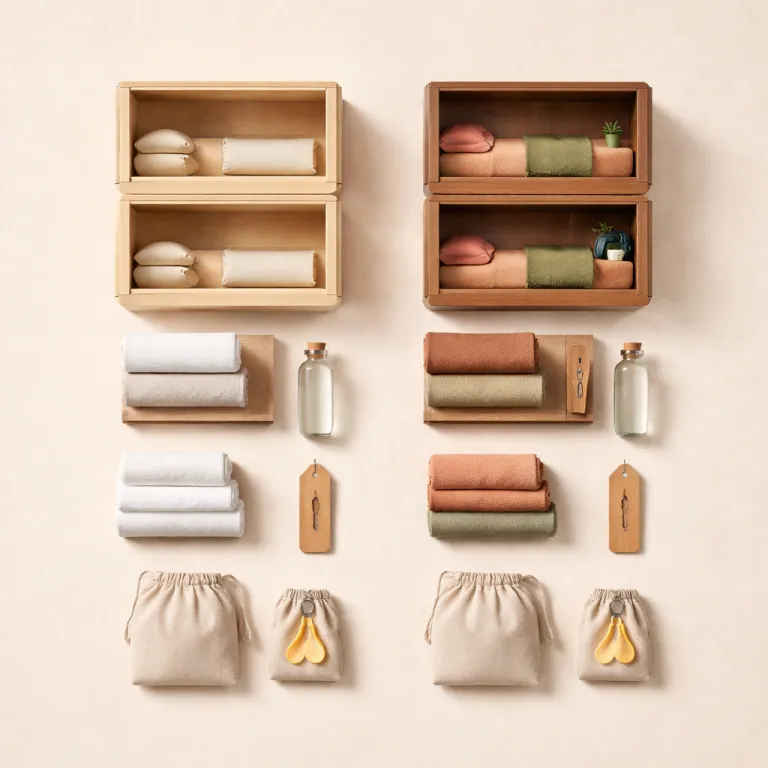
The original Japanese capsule hotel and why Europe could not just replicate it
Walk into a classic capsule hotel in Japan and the logic is immediate. Every capsule, every corridor, every vending machine is tuned to maximum efficiency and minimum friction for travelers who value function over flourish. In the debate around compact pod stays in Europe vs Japan, this original Japanese model still defines the baseline for what a truly space efficient night can be.
The archetype emerged around busy stations in Osaka and Tokyo, serving salarymen who missed the last train and needed a clean, anonymous room for a single night. A typical capsule hotel in Tokyo or another major city in Japan offers pods of about 2 square metres, stacked in quiet rows, with a curtain or sliding screen instead of a door and shared bathrooms down the hall. Industry guides and operator data place average prices between roughly 16 and 40 USD per night, which keeps these properties firmly in the budget segment even when the capsule hostel branding feels stylish.
Inside the Japanese capsule, you usually find a firm mattress, a small television, a control panel for light and air conditioning, and just enough shelving for a phone and wallet. The pod is not designed as a hotel pod for lingering or remote work; it is a sleeping tool, not a micro apartment, and the pros cons balance clearly in favour of price and location. Most hotels in Japan that operate this way still separate male and female floors, and families rarely stay together in the same area, which already makes the comparison with European pod-style hotels tricky for parents planning a stay.
Public spaces in a traditional capsule hostel in Japan are functional rather than social. You will find coin lockers, vending machines, perhaps a small lounge with plastic chairs, and often a sento-style bath or sauna that feels closer to a commuter facility than a design-led spa. The aesthetic is fluorescent and vending-machine bright, and while some travelers love the retro-futurist mood, others experience it as closer to a hostel transit hub than a lifestyle hotel. As one long-time Tokyo operator told a domestic travel magazine, “our job is to give you a safe, quiet bed near the station, not a living room.” This is where the European interpretation of capsule accommodation begins to diverge sharply from the compact hotels Japan pioneered.
Service culture also shapes the contrast between Japanese capsule hotels and their European counterparts. In a Tokyo pod hotel, staff interaction is polite but minimal, and the system is engineered so that guests can arrive late, sleep, and leave without conversation. That makes sense in dense districts where time is money and a capsule is simply a better room than a night on a bench, but it does not align with European expectations of a social hostel bar, a café, or a lobby where digital nomads can work for several hours.
How Japanese pricing and layout influence European expectations
Because the Japanese capsule model is so tightly linked to ultra-low pricing, European travelers often arrive in Tokyo expecting the best capsule hotel to be both cheap and cinematic. They quickly learn that the experience is closer to a refined hostel than to a love hotel fantasy, with rules about luggage size, check-out time, and where you can take calls. When these same travelers return home and book a capsule hotel in Europe, they carry those memories into their next stay and unconsciously compare every pod hotel to that first compressed night in Japan.
Developers in Europe understand this psychology and use it to reposition the capsule. They know that a family who has tried a Japan capsule stay near Shinjuku Station will accept compact rooms, but only if the rest of the hotel offers generous communal areas and thoughtful design. That is why European capsule hotels will often advertise private rooms alongside capsules, allowing parents to book a standard room while teenagers experiment with pods in the same property.
Industry experts summarise the contrast succinctly in one of the most cited explanations of cross-regional capsule dynamics: “European capsule hotels offer larger capsules, diverse designs, and enhanced amenities.” This line, echoed in hospitality conference panels and trade reports, captures how the original Japanese capsule has become a reference point rather than a template. For premium travelers, the key question is no longer whether a capsule hotel in Japan is authentic, but whether a capsule concept in Europe can translate that authenticity into a richer, more flexible stay.
Europe’s design forward capsules: when compact becomes a lifestyle choice
Step into a new-generation capsule hotel in Europe and the mood shifts immediately. Instead of fluorescent corridors, you are more likely to find warm timber, indirect lighting, and a lobby café that feels closer to a neighbourhood living room than to a transit hostel. This is where the story of pod-style accommodation on each continent becomes less about copying and more about reinterpretation.
European capsule hotel developers have embraced the pod as a design object. Industry commentary from groups such as HOTREC and the European Travel Commission notes that many European pods now measure closer to 3 square metres on average, which gives architects more room to play with shelving, integrated desks, and better mattresses that appeal to digital nomads who need to work as well as sleep. Properties like Zedwell in London, with more than 1,000 windowless “sleep cocoons”, have invested heavily in soundproofing rather than pod size, proving that silence can be a luxury even when the room is compact.
In Scandinavia, the Dream Hostel & Hotel in Tampere shows how capsules and micro rooms can coexist in a single concept. Here, Scandinavian design principles meet the capsule hostel idea, with compact rooms carved out of a historic factory and pods used as a flexible layer for short-stay travelers. Families can combine capsules and private rooms on the same floor, which is a configuration that most hotels in Japan still do not offer in their traditional capsule wings.
Across Europe, the best capsule properties lean into local materials and architect-led interiors. You will see wool felt, oak, terrazzo, and custom lighting rather than plastic shells, which changes the emotional temperature of the pod hotel from utilitarian to quietly indulgent. For a premium family, this means that a capsule hotel can feel like a design hotel, even when the room is technically a pod, and the pros cons calculation shifts towards value rather than pure savings.
Communal spaces are where the gap between Japanese sleep pods and European capsule concepts becomes most obvious. European guests expect a café, a bar, perhaps a terrace or co-working area where travelers and digital nomads can spend time outside their capsules, and many hostels now build their entire concept around these shared rooms. In contrast, the Japanese capsule tradition still treats the capsule as the primary asset and the lounge as a secondary service, which is why some European guests find hotels on the Japan side a little austere for longer stays.
Family friendly capsules and the premium traveler
For families, the question is not only whether a capsule is comfortable, but whether the whole hotel works as a base for urban exploration. European capsule hotels will often offer interconnected capsules or adjacent pods that can be booked together, creating a semi-private zone that feels safer for children while still giving teenagers their own space. Some properties go further and add a small number of private rooms with pod-style beds, effectively blending the hotel capsule idea with a more traditional layout.
Premium booking platforms now curate these options carefully, highlighting which capsule hotels include air conditioning in every pod, which offer family-sized lockers, and which provide quiet hours that respect younger sleepers. A capsule hotel in Lucerne, for example, might emphasise refined urban design and lake views, and a guide such as capsule hotel stays with a refined urban edge in Lucerne helps travelers understand how these micro rooms fit into a broader city break. This level of curation is essential when parents are comparing compact pod stays in Europe and Japan for a multi-stop itinerary.
By contrast, a capsule hotel in Japan is still more likely to be marketed as a solo traveler solution, even when couples or small groups occasionally book adjacent capsules. The love hotel segment in Japan, which offers short-stay themed rooms, remains a separate category and rarely overlaps with the capsule market, whereas in Europe some playful pod hotels flirt with that aesthetic through lighting and music. For premium families, though, the priority remains clarity: they want to know exactly what kind of experience they are booking, and whether the hotel offers the right mix of privacy, safety, and atmosphere.
When you compare Japanese capsule hotels and European pod properties on a single booking site, these nuances matter more than the headline rate. A compact sleep pod near Tokyo Station might be the best capsule choice for a one-night stop, while a European pod hotel with generous communal rooms and a strong breakfast could be the better hotel for a three-night city break. The art lies in matching the capsule, the city, and the length of stay to your own travel rhythm.
How pricing, amenities, and technology reshape the capsule business model
Under the surface, the economics of capsule hotels in Europe and Japan are diverging just as quickly as the design language. In Japan, the low nightly rate and high density of capsules per floor keep margins healthy even when guests stay only one night and spend little on extras. In Europe, where labour costs and real estate prices are higher, capsule hotels will only succeed if they persuade travelers to treat the hotel as a place to stay, work, and socialise rather than just a place to sleep.
That shift explains why so many European capsule hotels now highlight their cafés, bars, and co-working rooms as strongly as their capsules. Revenue from coffee, cocktails, and day passes for digital nomads helps offset the smaller number of capsules per square metre compared with a Japanese capsule property. The result is a hybrid between a hostel, a design hotel, and a members club, where the pod is simply one of several room types that guests can book.
Technology plays a different role on each side of the capsule accommodation equation. Japanese properties have long used vending machines, keycard lockers, and automated check-in kiosks to streamline operations, but the in-capsule technology often feels frozen in time, with small televisions and basic control panels. European capsule hotels, by contrast, are more likely to offer app-based check-in, smart lighting, and integrated USB-C charging, which makes the pod hotel format more appealing for guests who travel with multiple devices.
Air conditioning is another subtle but important differentiator. In many hotels in Japan, air conditioning is centrally controlled, and individual capsules rely on vents rather than independent systems, which can frustrate travelers who run warm or cold. European capsule hotels increasingly market individually adjustable ventilation within each capsule or micro room, positioning this as a comfort upgrade that justifies a nightly rate starting around 30 to 50 EUR, higher than the average Japan capsule but still below many traditional hotels.
For premium families and frequent travelers, these details influence how they evaluate the pros cons of a capsule stay. A capsule hotel in Osaka that focuses on a pure sleep pod experience, such as those covered in guides to refined comfort at an Osaka capsule hotel, might be perfect for a late arrival after a long-haul flight. A capsule and pod hotel in New York, profiled in resources like comfort and innovation at a capsule and pod hotel in NYC, shows how the same concept can be adapted again for a different urban market.
From a booking perspective, premium platforms now treat capsule hotels as a distinct category rather than as a sub-type of hostel. Filters allow travelers to search specifically for capsule hotel properties, pod hotels, or capsule hostel hybrids, and to see at a glance whether private rooms are available in the same building. This clarity helps families compare compact pod stays in Europe and Japan more rationally, weighing not only price and location but also how much time they plan to spend inside the hotel itself.
Why Europe’s higher rates can still represent strong value
At first glance, the price gap between capsule hotels in Japan and Europe might seem to favour Tokyo and Osaka. When a Japanese capsule can cost less than half the rate of a European pod, budget travelers understandably hesitate before paying more for less space. Yet the value equation changes when you factor in design quality, soundproofing, and the ability to work comfortably from the hotel during the day.
European capsule hotels often include high-quality mattresses, thicker walls, and better acoustic insulation than older capsule properties in Japan, which can make a huge difference for light sleepers and families. When you add in the cost of buying coffee and workspace access elsewhere, a slightly higher nightly rate at a capsule hotel with strong hotel offers and integrated co-working can become the smarter choice. For digital nomads who bill by the hour, the ability to work productively from a pod hotel lobby or shared lounge is not a luxury; it is a necessity.
As the European capsule market grows over the coming decade, according to regional market research cited by hotel groups in the United Kingdom, Germany, and the Netherlands, operators are refining their mix of capsules, private rooms, and social spaces. Some properties lean closer to hostels, with shared kitchens and dorm-style bathrooms, while others position themselves as compact luxury hotels with spa access and elevated breakfast service. For travelers comparing capsule concepts across Europe and Japan, this diversity means that the word capsule now covers a far wider range of experiences than it did when the first Japanese capsule opened its doors.
What this means for premium families planning a capsule based itinerary
For a premium family planning a multi-city trip, the contrast between Japanese capsule hotels and European pod properties is not an abstract industry debate. It shapes where you sleep, how your children experience cities, and how much energy you have left after a long day of museums and markets. The key is to treat capsules as one tool in your accommodation strategy rather than as a one-size-fits-all solution.
In Japan, capsule hotels still work best as short-stay options for one or two nights, especially in transport hubs like Shinjuku, Shibuya, or Ueno where traditional hotel rooms can be expensive. Families might combine a few nights in a larger hotel room or serviced apartment with a one-night capsule adventure for older children, framing it as a cultural experience rather than as the default stay. Because many capsule hotels in Japan separate genders by floor, parents should check in advance whether adjacent capsules are possible and whether the hotel offers any family-friendly configurations.
Europe invites a different strategy. Here, capsule hotels will often be suitable for longer stays, particularly when they combine capsules with private rooms and generous communal areas where children can play board games while adults enjoy a glass of wine. A capsule hotel in cities like London, Amsterdam, or Lucerne can serve as a stylish base for three or four nights, especially when the hotel offers breakfast, luggage storage, and late check-out that align with train or flight times.
Premium booking platforms specialising in capsule hotels now curate properties with families in mind. They highlight which capsule hostel concepts offer family pods, which pod hotels provide cribs or extra bedding, and which hostels maintain quiet hours that respect younger guests. For parents comparing compact pod stays in Europe and Japan, these filters are more valuable than a simple star rating, because they speak directly to how the hotel will function in real time for their particular group.
Safety and privacy remain central concerns. In both Europe and Japan, capsules themselves are usually secure, with lockers for valuables and keycard access to floors, but the level of privacy varies between curtain-fronted capsules and fully enclosed hotel pod designs. Families who value more separation may prefer properties that offer a mix of capsules and private rooms, allowing teenagers to enjoy the pod experience while parents sleep behind a solid door.
Practical booking advice for capsule curious travelers
When planning a trip that includes both Europe and Japan, start by mapping where a capsule stay genuinely enhances the experience. Use capsules in Japan for late arrivals or early departures in Tokyo and Osaka, where the proximity to major stations outweighs the lack of private bathrooms, and choose more spacious hotel rooms for longer stays in resort areas. In Europe, consider capsule hotels in city centres where traditional hotels are either too expensive or too far from the action, and prioritise properties with strong reviews for cleanliness, soundproofing, and staff attentiveness.
Always read the fine print on amenities. Check whether air conditioning is individually controlled, whether the hotel offers family-friendly facilities like high chairs and laundry rooms, and whether digital nomads can work comfortably from the lobby or lounge without extra fees. Pay attention to the pros cons mentioned in guest reviews, especially around noise levels, bathroom queues, and the behaviour of other travelers in shared spaces.
Finally, remember that the most rewarding capsule stays often come from aligning your expectations with the local culture. In Japan, treat the capsule as a refined, efficient hostel bed with a strong emphasis on rules and quiet, and you will appreciate the precision of the system. In Europe, approach the capsule as part of a broader lifestyle hotel ecosystem, where the real luxury lies not in the size of the room but in the quality of the design, the warmth of the communal spaces, and the way the hotel connects you to the city outside.
Key figures shaping the capsule hotel landscape
- Typical capsule dimensions in Europe are often reported at around 3 square metres, compared with approximately 2 square metres in Japan, according to operator specifications and summaries in publications from bodies such as the Japan National Tourism Organization and European hotel groups, which gives European properties more flexibility for integrated storage and small desks.
- Industry briefings from regional consultancies and hotel groups in the United Kingdom, Germany, and the Netherlands describe the European capsule segment as a fast-growing niche within the broader hostel and budget-hotel market, signalling a rapid maturation from experiment to mainstream option.
- Typical nightly rates for capsule hotels in Japan range from roughly 16 to 40 USD, while many European capsule hotels start between 30 and 50 EUR per night, based on price bands reported by major online travel agencies, reflecting higher operating costs but also enhanced design and amenities.
- Surveys by hotel operators indicate that a growing share of European capsule hotels now offer either private or semi-private bathrooms, a feature still less common in traditional Japanese capsule properties that rely on fully shared facilities.
- Family-focused configurations, including interconnected capsules and adjacent pods, are increasingly present in European capsule hotels, while in Japan such layouts remain relatively rare, underscoring the different target demographics in each region.