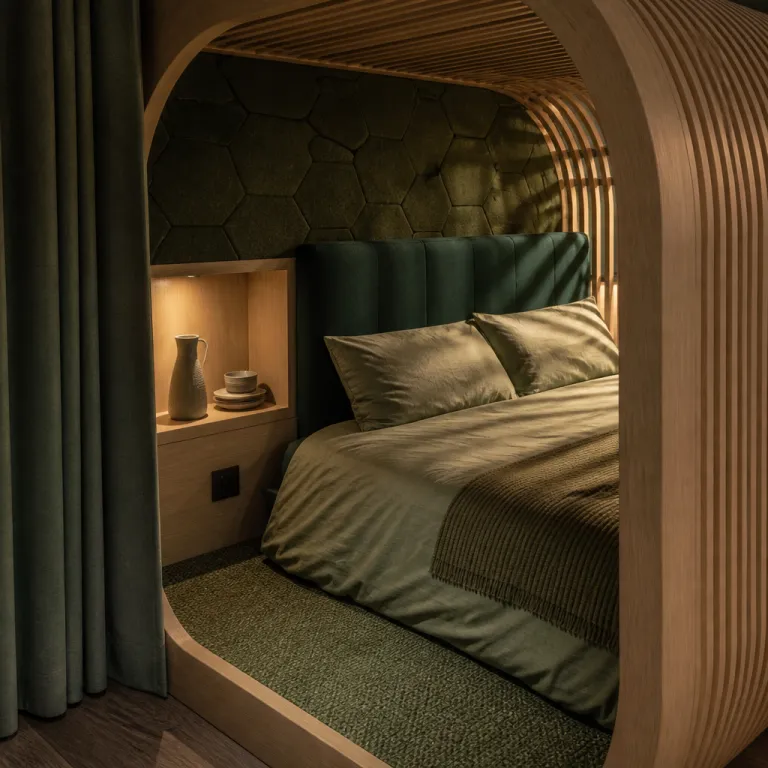
Why refined bedroom pods appeal to luxury capsule guests
Bedroom pods in premium capsule hotels offer a calm, private retreat. These compact units use every millimetre of space to feel generous, with each pod or cluster of pods designed to rival an elegant first class cabin. Guests who usually book a full room in a traditional house style property now choose a modern pod model when they value privacy, technology, and smart design over sheer floor area.
In high end capsule properties, each sleeping pod is treated as a miniature suite with curated features. Expect insulated walls, refined cladding, and precise control of light and sound that help create a restful atmosphere for deep sleep. Many luxury capsules integrate a dedicated bedroom bathroom zone nearby, so the transition from sleep to shower feels as seamless as in a larger wooden cabin or tiny house.
For travellers comparing price points, the nightly rate of a premium sleep pod is often lower than a conventional hotel room. Yet the perceived value can be higher, because the pod focuses investment on what matters most for sleeping and recovery rather than on underused living room space. This balance between price, comfort, and design explains why bedroom pods are now appearing in upscale airports, corporate office pods, and even curated garden rooms within resort grounds.
Modern capsule design lessons shaping today’s bedroom pods
Current bedroom pods build on decades of Japanese capsule innovation while elevating materials and comfort. Designers study how early pod hotels organised vertical space, then refine the model with better cladding, softer acoustics, and more generous windows doors where privacy allows. A detailed look at design lessons from Tokyo’s original pod hotels shows how Western luxury capsules now blend that heritage with contemporary expectations.
Manufacturers such as HOHM Inc. and Eco Lodge Cabins use modular construction to create insulated pods that can be installed indoors or as a wooden cabin style garden room. These bedroom pods often share a common design language with tiny house and log cabins architecture, using wooden finishes, curved corners, and integrated storage to help create a warm, cocooning feel. Soundproofing materials, ambient lighting, and climate control systems are now standard features in many sleeping pods, nap pods, and office pods aimed at the premium market.
For guests, the result is a pod or series of pods that feel more like a thoughtfully crafted cabin than a simple compartment. A modern sleep pod may include a high quality mattress, adjustable ventilation, and a compact office pod style desk for late night work. When you view product specifications on a luxury capsule booking website, pay attention to the pod’s materials, insulation level (for example, walls rated around 0.18–0.25 W/m²K based on typical high performance timber construction), and bathroom access, because these details determine whether the experience feels refined or merely functional.
How luxury capsule hotels curate space, privacy, and shared areas
Premium capsule hotels treat every square metre as a design opportunity. Bedroom pods are arranged to maximise privacy while still allowing a pleasant view into thoughtfully lit corridors, garden rooms, or lounges. Instead of anonymous hallways, you often step from your sleeping pod directly into a calm living room style space with soft seating and a carefully framed view of the city or an internal garden.
In London and other major hubs, some high end capsule properties now position pods around a central atrium or indoor garden room. A detailed case study of a premium capsule hotel in London redefining comfort and design shows how this layout can help create a sense of community without sacrificing quiet. Guests move from their sleep pods to shared areas that feel like a compact living room, while bedroom bathroom facilities are zoned to avoid queues and noise.
For business travellers, integrated office pods or desk equipped sleep pods allow work and rest in the same controlled space. Some properties add insulated nap pods near co working zones, so guests can take short breaks without returning to their main pod or cabin. When comparing options on a booking website, look for floor plans that show how pods, bathrooms, and social rooms connect, because the overall model of circulation matters as much as the design of each individual pod.
Indoor versus outdoor bedroom pods in luxury hospitality
Luxury capsule hotels increasingly experiment with both indoor and outdoor bedroom pods. Indoor pods typically sit within a larger building envelope, while outdoor pods may appear as a wooden cabin or tiny house style unit in a landscaped garden. Eco Lodge Cabins, for example, supplies modular bedroom pods that hotels can position as stand alone cabins with a private view over a courtyard or garden.
Outdoor sleep pods require more robust insulated construction, weather resistant cladding, and carefully sealed windows doors to maintain comfort in different climates. These pods often resemble compact log cabins or a refined wooden cabin, with a small bedroom bathroom layout and sometimes a micro living room corner. When you view product descriptions for such pods, you will often see references to U values (for instance, triple glazed windows around 0.8–1.0 W/m²K, consistent with figures published by European window manufacturers), ventilation systems, and other technical features that directly influence sleep quality.
Indoor pods, by contrast, can rely on the main building for thermal stability and may focus more on acoustic insulation and lighting design. A sleeping pod located in a quiet interior zone can use softer materials and more experimental shapes, because it does not face rain or direct sun. Whether you choose indoor or outdoor pods, check how the listed rate compares with the standard price of regular rooms, and consider whether the added privacy, view, and unique setting justify the premium.
What to look for when booking premium bedroom pods online
When browsing a luxury capsule booking website, start by checking whether the bedroom pods are described as fully self contained or semi shared. A fully self contained pod or cabin will usually include integrated storage, power outlets, and sometimes an en suite bedroom bathroom, while semi shared pods rely on nearby communal facilities. Read the detailed features list rather than only the headline model name, because two pods with similar photos can offer very different levels of comfort.
Pay close attention to materials, insulation, and layout, especially if you are sensitive to noise or temperature. High quality insulated pods with solid cladding and well sealed windows doors will maintain a stable sleeping environment and reduce corridor sounds. Look for mentions of soundproofing (for example, doors rated to around 30–35 dB, a range commonly cited in acoustic door product data), ambient lighting, and climate control systems, which are now common in premium sleeping pods, nap pods, and office pods designed for hospitality.
Price transparency also matters, so compare the base rate of a pod with any promotional offers displayed on the booking engine. Some hotels offer tiered pricing for different pod models, such as a basic sleep pod, a larger sleeping pod with a desk, or a garden room style wooden cabin with a private view. If possible, consult floor plans or a 3D view product tool to understand how your pod sits within the wider house like structure of the hotel, including proximity to bathrooms, lounges, and any office pod or co working areas. Include images or diagrams with descriptive alt text, such as “floor plan of bedroom pods around central garden atrium”, to make layouts easier to interpret.
How bedroom pods support sleep, work, and wellbeing for travellers
Bedroom pods in luxury capsule hotels are designed to support more than just overnight sleep. Many travellers now use their pod as a compact office, a meditation space, or a quiet retreat between meetings and flights. This shift aligns with the broader trend of integrating sleep pods and office pods into workplaces, airports, and universities to improve wellbeing and productivity.
Manufacturers and hoteliers respond by offering different pod models tailored to specific activities. A pure sleeping pod focuses on mattress quality, ventilation, and lighting that supports circadian rhythms, while a work oriented office pod adds a desk, ergonomic seating, and extra power outlets. Some properties even provide short stay nap pod zones near lobbies or lounges, so guests can book a nap pods session without committing to a full night in a cabin or room.
For travellers, this flexibility means you can choose pods that match your itinerary rather than defaulting to a single room type. If you arrive early, a nap pod or sleep pod booking can bridge the gap until your main bedroom pods are ready, helping you arrive at meetings rested. According to the U.S. Centers for Disease Control and Prevention (CDC), about one third of American adults report short sleep duration in its Behavioral Risk Factor Surveillance System survey, which helps explain why demand for high quality sleep pods and related services continues to grow across the hospitality sector.
Key statistics shaping the rise of luxury bedroom pods
- Approximately one in three adults in the United States report not getting enough sleep, according to the CDC’s Behavioral Risk Factor Surveillance System, which underlines why premium sleeping pods and nap pods in hotels and offices attract sustained demand.
- Industry timelines show that bedroom pods first gained traction in workplaces before expanding into airports and universities, and this staged adoption helped hotel operators refine pod design, insulation, and cladding standards before rolling them out to guests.
- Manufacturers such as HOHM Inc. have recently introduced outdoor sleep pods for hospitality and personal use, signalling a shift from purely indoor pods to insulated wooden cabin style units that can sit in garden rooms or rooftop spaces.
- Modular construction methods used by companies like Eco Lodge Cabins allow hotels to add new bedroom pods or log cabins in phases, reducing downtime and enabling precise control over price, capacity, and room mix.
FAQ: bedroom pods in luxury and premium capsule hotels
What are bedroom pods in a luxury capsule hotel ?
Bedroom pods are compact, self contained sleeping units designed for privacy and comfort, often equipped with insulated walls, refined cladding, and integrated lighting. In luxury capsule hotels, these pods function as miniature suites, sometimes paired with nearby bedroom bathroom facilities or even private garden rooms. They offer a focused space for sleep and relaxation without the unused areas of a large room.
Where are bedroom pods commonly used beyond hotels ?
Bedroom pods appear in workplaces, airports, universities, and hotels, where they provide quiet spaces for rest or focused work. In hospitality, you may find them indoors as part of a larger building or outdoors as wooden cabin or tiny house style units in landscaped gardens. The same core model also underpins many office pods and nap pods used in corporate environments.
What features should I expect in a premium sleeping pod ?
Premium sleeping pods typically include soundproofing, ambient lighting, and climate control systems to support high quality sleep. Many also offer storage, charging points, and sometimes a compact desk, making the pod suitable for both rest and work. When you view product details on a booking site, look for information about insulation, windows doors quality, and proximity to shared bedroom bathroom areas.
How do bedroom pods compare in price with regular hotel rooms ?
In many cities, the standard rate of a high end sleep pod is lower than that of a traditional hotel room, even when the pod offers similar mattress quality and technology. Hotels can pass on savings from the smaller footprint while still investing in premium materials and design. Guests should compare the advertised price shown for each pod model with the amenities included, such as access to garden rooms, lounges, or office pod facilities.
Are outdoor sleep pods comfortable in different seasons ?
Outdoor sleep pods used by luxury hotels rely on insulated construction, weather resistant cladding, and high quality windows doors to maintain comfort year round. Many follow a wooden cabin or log cabins aesthetic while hiding advanced climate control systems inside the walls. When booking, check whether the pod is rated for your travel season and whether the property offers clear data on heating, cooling, and ventilation performance.
As one frequent business traveller put it after a week in a London capsule hotel, “My bedroom pod felt like a tiny first class cabin: quiet, perfectly lit, and surprisingly spacious once the door closed.”