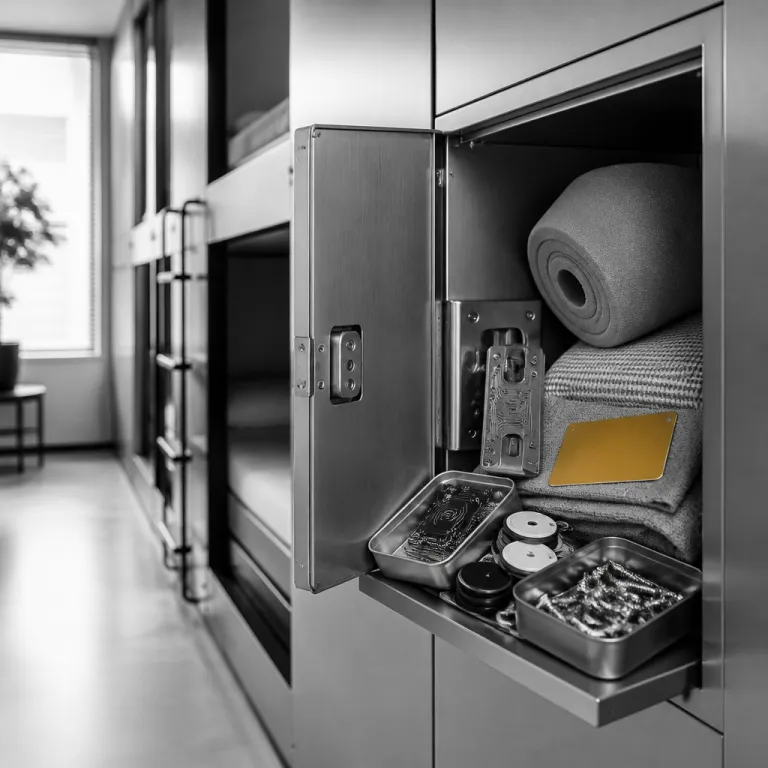
Why capsule hotel safety security matters for premium families
Capsule hotel safety security is no longer a niche concern for backpackers. For premium families and solo travelers who expect a refined stay, the real question is whether a capsule hotel can feel as safe and controlled as a traditional hotel while still offering the playful sense of shared spaces. When you choose the right capsule hotels, the compact space becomes a carefully engineered cocoon where every guest can sleep with genuine peace of mind.
At its best, a capsule hotel uses layered security measures to compensate for the open plan layout of corridors, common areas and shared spaces. Properties that target families and discerning solo travelers now combine digital access control, secure lockers and 24/7 surveillance cameras to keep both people and belongings safe. The result is a new generation of capsule-style properties that feel affordable and budget friendly yet operate with the discipline of a well run city hotel.
For parents, the key question is simple yet demanding: can a capsule hotel keep children safe inside capsule pods while still allowing them to enjoy the social energy of lounge areas and amenities such as play corners or media rooms? Families want capsule hotels that feel intimate, where each guest has privacy and a defined space, but where on site staff and technology quietly ensure that the entire stay remains secure from check in to check out.
From keys to RFID: how lockers and access systems protect your stay
The most visible layer of capsule hotel safety security is the locker system, because it determines where your passport, laptop and camera sleep at night. In premium capsule hotels, you will usually find a mix of secure lockers near the capsules, in pod safes inside capsule units and sometimes a supervised locker room in the common areas. Each option shapes how guests move through the hotel and how much peace of mind they feel when leaving valuables behind.
RFID wristbands and keycards have become the standard in many capsule hotels, replacing old metal keys and simple codes. A 2022 survey by a Japanese hotel technology association reported that over 80% of newly opened capsule properties in Tokyo use RFID or mobile keys for capsules or lockers. These digital tools allow the hotel to assign each guest a specific locker, control access to women only floors and track who enters sensitive areas such as luggage rooms or staff corridors. When hotels provide RFID access to both the capsule and the locker, solo travelers and families gain a double layer of security that feels intuitive rather than intrusive.
Combination code lockers still appear in some hotels affordable to a wider audience, but midscale and luxury capsule hotels increasingly prefer RFID because lost codes cannot be guessed from worn keypads. In properties such as refined capsule hotels in Akihabara, a guest can tap a wristband to open the capsule, the floor door and the personal locker, reducing the risk of unauthorised entry while keeping the stay capsule experience smooth. For parents, this means children can access their own locker and capsule without carrying metal keys, yet the system still keeps other guests out of their space.
Are capsule hotels safe for solo female travelers? Yes, especially those with women-only floors and secure access. Do capsule hotels provide lockers for valuables? Yes, most offer secure lockers for guests. Is RFID access common in capsule hotels? Yes, many use RFID keycards for secure entry.
Women-only floors, quiet zones and natural surveillance in pod design
For many women, capsule hotel safety security starts with the option of women only floors that feel both calm and controlled. Several Japanese capsule hotel chains, including Anshin Oyado and nine hours, now dedicate entire levels to female guests, with access restricted by RFID or biometric systems at the stair and elevator lobbies. This approach reassures solo travelers who value privacy and prefer not to cross mixed gender corridors late at night after a long day of travel.
These women only areas usually sit close to staffed zones, so on site teams can respond quickly if a guest needs help or if any security measures are triggered. In well designed capsule hotels, the layout of corridors and capsules creates natural surveillance, with clear sightlines from the reception or lounge into key access points. Lighting is bright but warm, avoiding dark corners in shared spaces and ensuring that surveillance cameras and CCTV cameras can capture clear images without feeling oppressive.
Quiet zones add another layer of capsule hotel safety security, especially for families with light sleeping children who still want to stay capsule in central districts. By grouping pods for families and solo travelers who request silence, the hotel can reduce late night foot traffic in those areas and make it easier for staff to notice unusual movement. When you combine women only floors, quiet zones and thoughtful pod placement near exits, the result is a capsule hotel where every guest, from solo travelers to parents with teenagers, can relax inside capsule pods without worrying about who might walk past.
Airport capsule hotels have taken this concept further by zoning their floors according to departure times and traveler profiles, which reduces corridor noise and makes surveillance more efficient. In these properties, families often choose clusters of capsules near emergency exits and staff stations, balancing quick escape routes with constant human presence. The overall effect is a compact hotel that feels more controlled than many larger properties, especially during late night arrivals and early morning departures.
Digital access, biometric control and what premium guests should check
Behind the scenes, capsule hotel safety security now relies heavily on digital access control that would once have been reserved for luxury hotels. Many capsule hotels use mobile keys, facial recognition or fingerprint readers to restrict entry to guest floors, meaning that only registered guests can reach the capsule corridors. This protects solo travelers and families alike, because casual visitors cannot simply wander up from the lobby into sleeping areas.
Biometric systems are particularly effective in capsule properties that attract a high volume of short stays, such as those near major train stations or airports. When a guest checks in digitally, the system can grant time limited access to specific floors, lockers and amenities, then automatically revoke it at checkout, reducing the risk of lingering access cards. For parents, this means that children can move safely between their capsule, the bathroom areas and the lounge without encountering non guests in those controlled zones.
When you evaluate capsule hotel safety security before booking, look for clear information about surveillance cameras, CCTV cameras and on site staff coverage. A strong property will explain how its security measures protect both people and belongings, from secure lockers to monitored entrances and emergency procedures. If a hotel simply states that it is safe without describing how, treat that as a signal to research further or choose a different stay capsule option.
Premium families should also check whether the capsule hotel offers adjacent pods for parents and children, ideally with linked access via the same RFID or mobile key. This arrangement keeps the family close while still giving older children a sense of independence inside capsule pods. When combined with women only floors or family zones, such design choices turn compact accommodation into a controlled, reassuring environment rather than a compromise driven only by budget friendly pricing.
Protecting belongings and privacy in compact shared spaces
Even in the most advanced capsule hotels, capsule hotel safety security still depends on how guests use the systems provided. The golden rule is simple: keep passports, cash and electronics in secure lockers or in pod safes, and carry only what you need in the common areas. When hotels provide RFID controlled lockers close to the capsules, it becomes easy to follow this habit without constant back and forth to a distant locker room.
Privacy inside capsule pods is another pillar of a safe stay, especially for women and solo travelers who may feel exposed in open dorm layouts. Modern capsule hotels use solid walls, blackout curtains and sometimes sliding doors to separate each guest space from the corridor, while still allowing staff to access the pod in emergencies. Good design also includes acoustic treatment, so conversations in shared spaces do not carry directly into the sleeping capsules, preserving both rest and a sense of personal territory.
Families should treat the capsule as a private bedroom and the lounge as a living room, adjusting behaviour accordingly. That means teaching children not to leave phones or tablets unattended in shared spaces, even if the hotel feels safe and well supervised. It also means using the locker for anything you would normally lock in a hotel room safe, from spare credit cards to travel documents, because the compact nature of the capsule does not change the value of what you carry.
When capsule hotels communicate clearly about their security measures, guests can make informed choices about what to store and what to keep on their person. Look for signage that explains how to use lockers, how to contact staff and how surveillance cameras protect, rather than invade, guest privacy. A hotel that invests in both technology and guest education usually delivers a more secure, more relaxed stay for every type of traveler.
Family focused strategies for a safe capsule hotel stay
For premium families, capsule hotel safety security is about more than locks and cameras; it is about choreography. Before arrival, parents should request adjacent capsules, ideally in a quiet zone or on a women only floor if the group is all female, so that movement between pods feels natural and supervised. Many capsule hotels offer family friendly layouts where two or four capsules face each other across a short corridor, creating a semi private cluster within the larger floor.
During check in, walk children through the route from capsule to bathroom, to locker, to lounge, pointing out emergency exits and staffed areas. Show them how the RFID wristband or mobile key controls access to their capsule, their locker and sometimes the floor door, reinforcing that these tools keep both people and belongings safe. Encourage them to close the curtain fully when inside capsule pods and to avoid sharing access codes or wristbands with new acquaintances, no matter how friendly they seem.
Parents should also consider travel insurance that covers theft from lockers and shared spaces, especially when carrying high value electronics. While well run capsule hotels create safe environments with strong security measures, no property can eliminate every risk in communal settings. Insurance adds a final layer of peace of mind, complementing the secure lockers, surveillance cameras and on site staff that the hotel provides.
Finally, trust your instincts when you arrive at any capsule hotel. If the lobby feels chaotic, if staff seem disengaged or if access to guest areas appears uncontrolled, it may be worth asking direct questions or even changing your stay capsule plans. The best capsule hotels combine budget friendly pricing with a disciplined approach to safety, proving that compact accommodation can be both stylish and genuinely secure for solo travelers and families alike.
Key figures on capsule hotel safety and smart security
- Industry observers report that a large majority of modern capsule hotels now use RFID access systems for capsules, lockers or floors, a level that significantly reduces unauthorised entry compared with traditional metal keys (summary of security vendor case studies).
- Travel publications have profiled dozens of capsule hotels worldwide that operate women only floors, including well known Japanese brands such as Anshin Oyado and nine hours, giving women and solo travelers more choice when selecting a safe, compact stay (travel magazine analysis).
- Sector wide reporting shows that secure lockers are now standard in most midscale capsule hotels, reflecting a clear shift from basic open shelving to individually controlled storage for each guest.
- Security consultancies note that the combination of surveillance cameras, CCTV cameras and on site staff monitoring has become a core expectation in urban capsule hotels, particularly in Japan and increasingly in European city centres.
FAQ about capsule hotel safety and security
Are capsule hotels safe for families with children ?
Well managed capsule hotels can be safe for families, especially when they offer adjacent capsules, quiet zones and clear security measures such as RFID access and secure lockers. Parents should request pods near exits and staffed areas, then show children how to move safely between capsules, bathrooms and lounges. Choosing properties with strong surveillance and visible staff presence further enhances safety for younger guests.
How do capsule hotels protect valuables during a stay ?
Most capsule hotels provide secure lockers for each guest, often controlled by RFID wristbands, keycards or digital codes. Some premium properties also install small safes inside capsule pods for passports and electronics, adding another layer of protection. Guests should always store high value items in these lockers or safes rather than leaving them unattended in shared spaces.
What makes women only floors safer for solo female travelers ?
Women only floors restrict access to female guests, usually through RFID or biometric controls at the floor entrance, which reduces the risk of unwanted encounters in corridors and bathrooms. These floors are often located close to staffed areas and monitored by surveillance cameras in public zones, creating both privacy and rapid support if needed. For solo female travelers, this combination of controlled access and human oversight can make a capsule hotel feel significantly more secure.
Do surveillance cameras invade guest privacy in capsule hotels ?
Responsible capsule hotels place surveillance cameras only in public areas such as entrances, corridors and lounges, never inside capsule pods or bathrooms. The goal is to monitor access points and detect unusual behaviour, not to watch individual guests in their private space. Clear signage and privacy policies help guests understand how footage is used and stored, reinforcing trust in the property.
What should solo travelers look for when booking a capsule hotel ?
Solo travelers should prioritise capsule hotels that explain their security measures in detail, including access control, locker systems and staff coverage. Features such as women only floors, quiet zones, secure lockers and visible surveillance in common areas all contribute to a safer stay. Reading recent guest reviews can also reveal how consistently the hotel applies its safety policies in daily operations.