The fully digital capsule hotel with no reception, explained
Otherwander Soho sits in the heart of London’s Dean Street and treats the idea of a fully digital capsule hotel with no reception not as a slogan but as an operating system. The property runs hundreds of pods from around £70 per night (launch rate advertised on the official booking engine in early 2024), and every guest moves from street to single capsule or double pod through a QR based Wanderpass stored in a mobile wallet rather than a traditional key card. This is a capsule style hotel designed for travellers who are comfortable when the front desk disappears and the phone in their hand becomes the only real concierge.
The hotel experience starts long before you see your room, because you complete an online check in process, receive your Wanderpass, and then use that passgo style credential to unlock the entrance and your capsule. Methods such as online registration, mobile key access, and automated services are stitched together by the Apaleo property management system, which powers the fully digital journey and keeps the on site operations lean. Guests who value speed over ceremony often describe this as the best version of a reception free pod hotel, because there is no queue, no paper form, and no need to wait for staff to print anything.
There is still a human équipe behind the scenes, but they are not standing at a front desk in the lobby for twenty four hours each day. Staff focus on cleaning the rooms, maintaining internet access, and handling luggage storage or policies check questions via chat or on demand support points in the corridors. One recent guest, London based photographer Maya K., a solo explorer used to navigating international airports with only a phone and a boarding pass, described the digital airport style flow inside the hotel as “oddly calming, like the building just recognised me and let me get on with my trip,” which captures the quietly luxurious feel and appears in the property’s March 2024 guest feedback summary.
How the zero reception model actually works for guests
From the moment you book, Otherwander Soho treats your stay as a sequence of digital touchpoints rather than a series of conversations at a front desk. You receive clear guidance to ensure your mobile device is charged, to download the Wanderpass before arrival, and to familiarise yourself with the mobile check in process so that the transition from airport, train, or previous hotel to capsule feels seamless. For many guests, this is the purest expression of a digital first capsule hotel with no reception, because the building behaves almost like a well designed app.
On arrival you scan your QR code at the front door, then again at the pod corridor, and finally at your single capsule or double pod, with the system logging your dates stay and automating the check day and check out times. There is no physical desk, but there are help points and limited staff available primarily for assistance, which means that when something fails — a QR code that will not load, a question about breakfast passgo options, a concern about shared bathroom etiquette — you still find a human within minutes. According to internal pre opening trials, over 90% of guests completed access without staff intervention, yet early guest feedback and internal testing suggest that the balance between automation and presence can work when support is easy to reach.
For travellers curious about the wider staffless trend, the property feels like a live case study that sits neatly alongside concepts analysed in pieces such as this guide to AI concierges and biometric check in. A digital capsule hotel with no reception is not just about removing people, it is about reassigning them to where they add the most value, whether that is cleaning the rooms, resolving internet issues, or helping a guest who has never used a mobile wallet before. The result is a hotel that operates with fewer visible staff but still aims to deliver a premium, tightly engineered hotel experience.
Designing pods, amenities and shared spaces for a premium digital stay
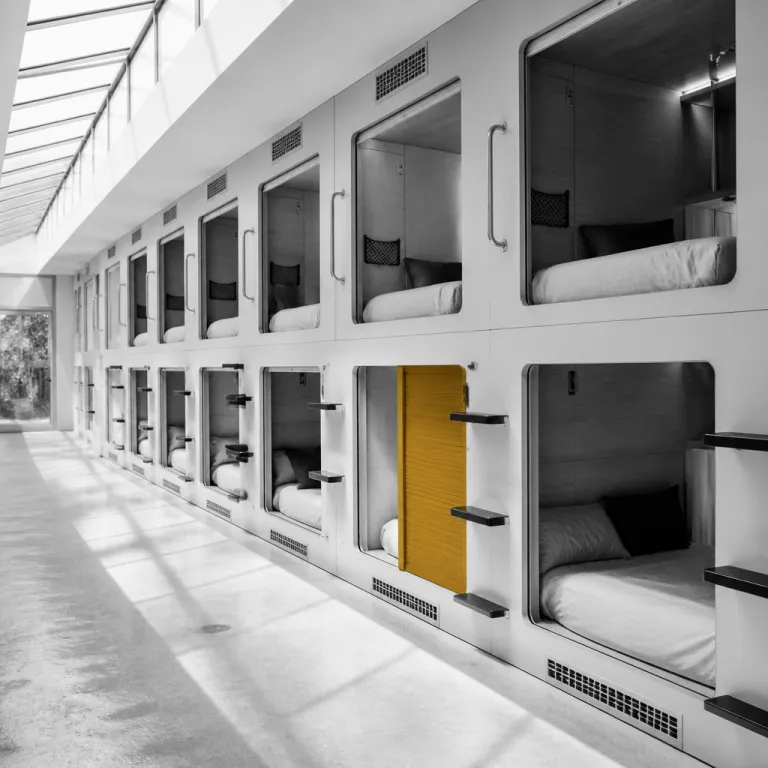
Step inside the pod corridors at Otherwander Soho and you see how the physical design supports the digital capsule hotel no reception philosophy. Each capsule is compact yet carefully engineered, with air conditioning, lighting, and internet access controlled from a simple panel that feels closer to an aircraft cabin than a traditional hotel room. The single capsule layout suits solo travellers who want privacy without paying central London hotel rates, while double pods cater to couples or close friends who are comfortable sharing a compact space.
Bathrooms are shared, but the design leans towards spa rather than hostel, with clear zoning between showers, toilets, and vanity areas to keep the flow civilised even at busy hours of the day. Luggage storage is handled through secure lockers and dedicated zones, which matters in a capsule hotel where the rooms are not designed for large suitcases and long unpacking rituals. Guests who arrive straight from an international airport often appreciate being able to lock away their bags, take a shower in the shared bathroom, and then head straight back out into Soho without worrying about security.
There is no restaurant in the classic sense, yet the property still thinks about breakfast passgo style options, vending, and partnerships with nearby cafés to round out the amenities. For travellers who have read our refined guide to choosing a capsule hotel in Paris for a premium stay, the Soho property will feel like part of the same design conversation, where the focus is on quality of sleep, water pressure, and acoustics rather than on square metres. In that context, the digital capsule hotel no reception model becomes one more design choice, sitting alongside decisions about mattress firmness, sound insulation, and whether to include access to hot springs or wellness partnerships off site.
Who thrives in a reception free capsule hotel — and who does not
Not every traveller will feel at ease in a digital capsule hotel no reception, and that is precisely why Otherwander Soho is such a useful test case. The model clearly favours guests who are comfortable with mobile wallets, QR codes, and self service, the same people who glide through a digital airport journey without printing a single document. Solo explorers, frequent flyers, and remote workers who treat their phone as a boarding pass, payment card, and room key often find the experience liberating.
There are vulnerabilities, though, and they matter if this model is to scale beyond early adopters and tech confident guests. Accessibility for travellers with disabilities, support for older guests who may not use smartphones, and clear procedures for emergency situations all become more complex when there is no staffed front desk watching the lobby twenty four hours a day. The operator acknowledges this by keeping limited staff available for assistance and by designing clear signage, yet the question remains whether a digital capsule hotel with no reception can fully match the reassurance some guests expect from traditional hotels.
For comparison, think about capsule hotels in Japan, where the ritual of check in at a front desk and the presence of attendants in the corridors still play a central role in the hotel experience. Those hotels Japan properties often combine compact rooms with access to hot springs, lounges, and sometimes even small libraries, creating a social rhythm that balances privacy and community. A reception free model like Otherwander Soho shifts that balance towards autonomy, which will appeal to some travellers and unsettle others, especially on their first stay.
From Soho to the world: scaling the zero reception pod model
Otherwander Soho is not just a one off digital capsule hotel no reception, it is the prototype for a network of pod properties planned for major cities worldwide. The technology architecture behind the Wanderpass and Apaleo integration took more than four years to refine, according to the operator’s 2023 investor presentation, and the ambition is to replicate this infrastructure in locations near an international airport, in dense city centres, and potentially even in transit linked airport hotel clusters. That raises practical questions about regulation, cultural expectations, and how far guests in different markets are willing to trade human contact for frictionless access.
In some regions, labour laws, fire regulations, or data protection rules may require a staffed presence at certain hours, which could reshape the pure digital airport style flow that works in London. In others, guests may expect more guidance on policies check details, such as quiet hours, shared bathroom etiquette, or local tax rules, and that could push operators to invest more in multilingual digital interfaces and responsive chat support. As the model expands, it will sit alongside other ambitious capsule brands analysed in our feature on capsule hotel empires in Europe, where concepts like CityHub and Code are already testing how far automation can go.
For travellers, the upside is choice, with a growing ecosystem of capsule hotels that range from fully staffed to almost entirely automated, each with different rates, amenities, and levels of service. A digital capsule hotel with no reception will suit the guest who values speed, control, and predictable design, while a more traditional property may still be the best option for those who want a human to handle every check and every question. As one internal summary of the concept puts it without hedging, "How do guests check in? Online via mobile device. How do guests access their pods? Using QR-enabled Wanderpass. Are there staff available? Limited; primarily for assistance."
Practical tips for booking a premium stay in a reception free pod hotel
Booking a digital capsule hotel no reception demands a slightly different mindset from reserving a classic city hotel. Before you even choose your dates stay, think about your own comfort with technology, your phone battery habits, and whether you are happy to resolve most issues through chat rather than at a front desk. If you already move through airports with mobile boarding passes and rarely speak to airline staff, you are probably ready for this style of stay.
When comparing hotels, look beyond headline rates and check what is included in the amenities, especially around internet access, air conditioning, and luggage storage, because these details matter more when your room is a compact capsule. Read the policies check section carefully to understand quiet hours, shared bathroom rules, and any breakfast passgo style partnerships with nearby cafés or grab and go counters. For travellers arriving from an international airport late at night, it is worth confirming that the digital keys work reliably at all hours and that there is a clear process if your phone fails or the QR code will not load.
Finally, remember that a capsule hotel is not trying to replicate a full service property, even when it sits on a luxury and premium booking website. The best digital capsule hotels focus on sleep quality, acoustic insulation, and efficient circulation through the rooms and corridors, not on sprawling lobbies or elaborate restaurants. If you align your expectations with that reality, a reception free pod stay can feel less like a compromise and more like a precise, well engineered way to live in the heart of a city for a few days.
FAQ
How does check in work at a reception free capsule hotel like Otherwander Soho ?
Guests complete online check in before arrival, receive a QR based Wanderpass in their mobile wallet, and then use that code to access the building, corridors, and their capsule without visiting a reception desk. The system records the check day and departure time automatically, so there is no need to queue at a front desk on arrival or departure. Limited staff remain available for assistance if the digital process fails or a guest needs extra help.
Is a digital capsule hotel with no reception safe for solo travellers ?
Safety in a digital capsule hotel no reception relies on controlled access points, surveillance, and clear emergency procedures rather than on a constantly staffed lobby. At Otherwander Soho, QR codes are individual, doors are monitored, and staff can be reached quickly through help points or digital channels if something feels wrong. Solo travellers who are used to navigating large hotels and airports alone generally find the environment secure, though those who prefer visible staff presence may feel more comfortable in a traditional property.
What should I check before booking a stay in a reception free pod hotel ?
Before you book, confirm that your phone is compatible with the mobile wallet used for access, that you will have reliable internet during your trip, and that you understand the policies check section regarding shared bathroom use, quiet hours, and luggage storage. It is also wise to read recent guest reviews to see how well the digital systems are working in practice and whether staff respond quickly when issues arise. If you are travelling with someone who is not comfortable with smartphones, consider whether a more traditional hotel might be easier.
How does a reception free capsule hotel compare with capsule hotels in Japan ?
Capsule hotels Japan style often retain a staffed front desk, clear rituals around check in, and sometimes access to hot springs or large communal baths, which creates a more hosted atmosphere. A digital capsule hotel with no reception, such as Otherwander Soho, shifts the emphasis towards self service, automation, and compact private pods with efficient shared facilities. Both models can be comfortable and premium, but the Japanese approach leans more on human interaction, while the reception free model prioritises speed and autonomy.
Can a reception free capsule hotel work near airports and in other countries ?
The zero reception model is particularly well suited to locations near an international airport, where travellers are already accustomed to digital boarding passes and self service kiosks. Scaling it to other countries will depend on local regulations, cultural expectations about service, and the reliability of mobile internet and payment systems. Operators planning expansion will need to adapt the balance between automation and staff presence to each market, ensuring that guests who value human support are not left behind.