How capsule hotel brands in Europe moved from niche to new standard
The story of capsule hotel brands in Europe starts far from europe, in the dense urban areas of Tokyo and Osaka Japan. A classic Japanese capsule hotel was built for salarymen who missed the last train, prioritising a clean bed, a quick shower and a guaranteed night sleep over any sense of theatre. As these capsules evolved in Japan, from the first capsule inn in Osaka to sleeker pod hotel concepts in Tokyo, the model quietly proved its resilience.
When the concept crossed into europe capsule markets, the equation changed because travelers capsule expectations were different and more design conscious. European guests arrived with a taste for Nordic minimalism, a habit of booking online and a willingness to trade square metres for a better postcode, so the capsule hotel had to become both a clever sleep solution and a lifestyle statement. That shift is why the capsule hotel brands Europe now talks about are less about emergency beds and more about curated experiences in prime urban areas.
Today, the global capsule hotel market is still led by Asia Pacific, yet Europe is the fastest growing region by revenue and new hotel openings. Analysts tracking this hotel capsule segment point to three drivers ; rising city centre rents, a new generation of business leisure travelers and a wave of hotel company investors looking for higher yield per square metre. For guests, the result is a cluster of capsule hotels that feel closer to a well run hostel with private sleeping pods than to the fluorescent corridors of early Japanese capsule properties.
The European playbook: adaptive reuse and the new capsule flagships
Across Europe, the most ambitious capsule hotel brands are not building on empty plots but reimagining existing structures. TARKA Hotels is turning a former job centre at 11 13 South St Andrews Street in Edinburgh into a 242 bed capsule hotel, with an origami inspired façade by Studio LBA and construction managed by Clark Contracts and Axiom Project Services. This TARKA hotel opens as a statement that a capsule hotel can sit beside traditional hotels and still feel premium, with a rooftop Japanese restaurant framing Edinburgh Castle rather than a basement canteen.
CityHub, the Dutch hotel company that helped define the modern European pod hotel, has followed a similar adaptive reuse strategy in Amsterdam, Rotterdam and beyond. Its properties feel like a cross between a tech led hostel and a compact design hotel, with sleeping pods arranged around social spaces and a digital check in system that lets you head straight to your capsule. CoDE Pod Hostels, operating in Scotland, has also leaned into heritage buildings, turning Georgian townhouses into capsule hotels where the bed television, USB ports and individual ventilation make each pod feel like a private cabin.
This reuse of vacant offices, job centres and heritage shells is not just an architectural flourish ; it is the economic engine behind capsule hotel brands Europe investors now watch closely. Retrofitting allows a hotel company to enter expensive city cores like Edinburgh, London or Copenhagen with lower land costs and faster build times, while guests enjoy locations that traditional budget hotels rarely secure. For travelers, it means you can book a capsule in a building with real character, rather than sleeping pods hidden on a ring road.
For a broader view of how these adaptive reuse projects fit into the wider wave of compact hospitality, see our analysis of new capsule openings reshaping urban hospitality, where TARKA, CityHub and CoDE sit alongside other innovators.
Who is winning the race for Europe’s capsule guests
Among capsule hotel brands Europe travelers actually book, four names surface repeatedly in reservation data and industry report summaries. CityHub has carved out a loyal following with its compact hubs in the Netherlands and planned London openings, positioning itself as a lifestyle pod hotel for digital natives who want a reliable sleep and strong Wi Fi rather than a sprawling lobby. CoDE Pod Hostels has become a reference point in Scotland, blending hostel energy with capsule hotel privacy in properties that can host hundreds of guests without feeling chaotic.
Then there is TARKA Hotels, a newer company but one that industry analysts expect to scale quickly if the Edinburgh capsule hotel performs as projected. With 242 capsules in its first property and a rooftop Japanese restaurant, TARKA is clearly targeting the business leisure segment that wants a refined night sleep and a memorable bar rather than a basic bed in a dorm. Zedwell in London, while not always labelled as a classic Japanese capsule brand, operates more than 1 000 sleeping pods in Piccadilly Circus and shows how a focus on pure sleep can resonate with guests who value silence over frills.
Outside Europe, brands like Bobobox in Indonesia and long standing Japanese capsule pioneers in Tokyo and Osaka Japan are expanding aggressively, but their european capsule presence remains limited for now. Asia Pacific still holds the majority of the global capsule hotel market share, yet Europe’s growth rate suggests that local hotel companies will define the region’s character before large Asian groups arrive in force. If you want to compare what you will pay for a capsule inn in Tokyo versus a hotel capsule in London or a pod hotel in Copenhagen, our guide to capsule hotel prices from Tokyo to New York sets out realistic ranges.
From Japanese capsule roots to European design language
The DNA of every capsule hotel in Europe still traces back to Japan, where the first capsule inn in Osaka distilled the hotel experience down to a bed, a locker and a shared bath. A traditional Japanese capsule hotel in Tokyo or Osaka Japan offers a grid of capsules stacked two high, with guests slipping into their pod for a short sleep before returning to the neon outside. The focus is on efficiency and anonymity, with minimal emphasis on communal lounges or curated social programming.
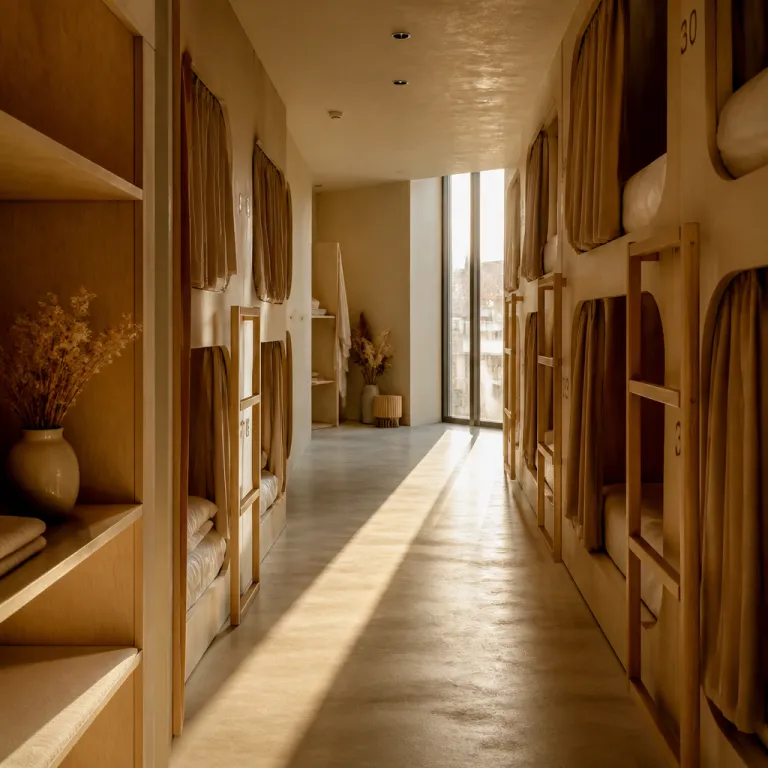
European capsule hotel brands have borrowed that efficiency but layered on a different sensibility, one that values warm materials, softer lighting and a sense of place. In a CityHub property or a CoDE Pod Hostel, the capsules feel more like private cabins, often with a bed television, individual reading lights and ventilation controls that make a long night sleep genuinely comfortable. Shared bathrooms are designed with the same care as a good eco hotel, and public areas resemble compact co working spaces rather than transit lounges.
For travelers capsule guests, the result is a hybrid between a hostel and a micro hotel, where you can book a capsule for a solo trip yet still enjoy a glass of wine with other guests in the lobby. This is particularly visible in hotel Copenhagen style properties and in emerging projects in cities like Zurich, where a future hotel Zurich capsule concept is already being discussed by investors. If you are curious about how this shift is changing long stay habits, our feature on why digital nomads are trading co living for capsule hotels explains why compact pods are replacing larger apartments for many remote workers.
What this means for your stay: comfort, tech and booking strategy
For guests, the rise of capsule hotel brands Europe wide translates into more choice, but also more nuance when you book. A CityHub or CoDE Pod Hostel will feel very different from a no frills hostel with basic sleeping pods, even if both technically offer capsules and shared bathrooms. The best properties now treat each capsule as a micro suite, with a high quality bed, sound insulation and a bed television or integrated media panel that turns the pod into a private retreat.
Smart technology is central to this shift, with digital check in, app based room controls and cashless payments now standard across many capsule hotels. These tools allow a hotel company to run leaner operations while still delivering a premium experience, which in turn keeps rates competitive compared with traditional hotels in the same urban areas. For you, that means a better chance of securing a quiet night sleep in a central location without paying full service hotel prices.
When you book a capsule hotel in Copenhagen, Edinburgh or Zurich, pay attention to how the hotels offer privacy and storage, especially if you are carrying business luggage. Look for clear information on capsule size, whether the pod hotel provides secure lockers and how the hostel style common areas are managed at night. As one industry FAQ puts it, “Book in advance due to limited space.”, and that advice holds especially true for peak dates when the most desirable capsules sell out quickly.
Scaling the model: franchises, groups and the next wave of capsules
Behind the scenes, capsule hotel brands Europe investors are watching are refining their expansion models with a mix of owned assets, leases and franchises. TARKA Hotels, CityHub and CoDE Pod Hostels each operate as a distinct group, yet all rely on the same fundamentals ; compact capsules, shared facilities and smart technology that keeps staffing efficient. This combination allows a hotel company to open in high cost cities where traditional hotels would struggle to achieve a sustainable return.
Franchise agreements and management contracts are likely to drive the next phase of growth, especially in secondary european cities where local partners know the market but lack capsule expertise. Adaptive reuse of office blocks, job centres and older inns, such as a potential inn Osaka style conversion or a future hotel Zurich capsule project, will remain central to the strategy. As more eco hotel investors look for lower impact builds, the ability to retrofit existing shells with sleeping pods and Japanese capsule inspired layouts will become a competitive advantage.
For travelers, this scaling means that a recognizable capsule hotel brand will soon be as easy to find in Copenhagen or Edinburgh as in Tokyo or Osaka Japan. You will be able to book a familiar capsule inn style pod hotel in multiple cities, knowing that the bed, the sleep quality and the digital services will meet a consistent standard. The global capsule hotel market may still be anchored in Japan, but the race for Europe is now shaping how the next generation of capsules will feel everywhere.
FAQ: capsule hotel brands in Europe
What is a capsule hotel and how does it differ from a hostel?
A capsule hotel offers compact, pod like sleeping spaces with shared facilities, while a hostel usually provides traditional bunk beds in open dormitories. In a capsule hotel, each guest has an enclosed capsule or pod with a curtain or door, often with lighting, power and sometimes a bed television. Hostels focus more on social dorms, whereas capsule hotels balance privacy with shared lounges and bathrooms.
Are capsule hotels in Europe suitable for business travelers?
Many European capsule hotel brands now target business leisure guests who value location and reliable sleep over large rooms. Properties like CityHub, CoDE Pod Hostels and the upcoming TARKA Edinburgh capsule hotel offer strong Wi Fi, smart check in and quiet capsules that work well for short work trips. If you need meeting rooms or full service dining, you may still prefer a traditional hotel, but for solo executives extending a stay, capsules can be an efficient choice.
Do capsule hotels provide enough privacy for a comfortable night?
Modern capsule hotels in Europe are designed to provide more privacy than a typical hostel dorm. Each capsule is enclosed, with individual lighting, power outlets and often ventilation, so you can control your own micro environment. As one industry answer puts it, “Do capsule hotels provide privacy? Yes, each pod is enclosed, offering personal space, though facilities are shared.”
Should I book a capsule hotel in advance?
Capsule hotels often operate with a high occupancy rate because they sit in prime urban areas and attract price sensitive but design conscious travelers. Availability can be tight during major events or peak seasons, especially in cities like Edinburgh, Copenhagen or London. Booking in advance secures the best located capsules and usually better rates than last minute reservations.
Are capsule hotels in Europe influenced by Japanese designs?
European capsule hotel brands draw heavily on Japanese capsule concepts that originated in Osaka and Tokyo. They retain the core idea of compact capsules and shared facilities, but reinterpret the design with warmer materials, social spaces and technology suited to European guests. The result is a hybrid that respects Japanese efficiency while offering a more lifestyle oriented experience.