Why accessible capsule hotel design matters for modern travellers
Accessible capsule hotel design starts with a simple truth ; compact does not excuse exclusion. When a hotel compresses the room into a capsule or pod, every centimetre of space, every step, and every grab rail either supports guests with different needs or quietly shuts them out. For families, older travellers, and any guest recovering from injury, the sleeping area in capsule hotels can feel ingenious or impossible, depending on how thoughtfully the layout has been planned.
Most capsule hotels were inspired by japan, where early capsule pods prioritised space efficiency over accessibility. Those original japanese pod layouts often assumed a slim, agile guest who could climb into a bed and twist easily inside tight hotel rooms. As capsule hotels and pod hotels spread from pods Tokyo to Zurich and New York, operators realised that a travel accessible concept must work for wheelchairs, pushchairs, and larger bodies, not just solo backpackers.
Families booking a capsule hotel now expect more than a budget friendly bed near the station. They want a hotel capsule that offers clear information about accessibility, from step free access at the entrance to an accessible bathroom shower close to the pods. For a premium audience, the promise of a luxury capsule or luxury hotel stay only feels real when the capsule pods, corridors, and shared rooms support safe, dignified movement for every guest.
From regulations to reality : how laws shape inclusive pod hotels
Legal frameworks quietly define what accessible capsule hotel design can and should be. In the United States, the Americans with Disabilities Act (ADA) requires hotels to provide a percentage of accessible hotel rooms, and capsule hotels are no exception to that baseline. In the United Kingdom, the Equality Act and similar European Union rules demand that pod hotels remove barriers where reasonable, which directly affects pod layout, corridor width, and access to every shared room.
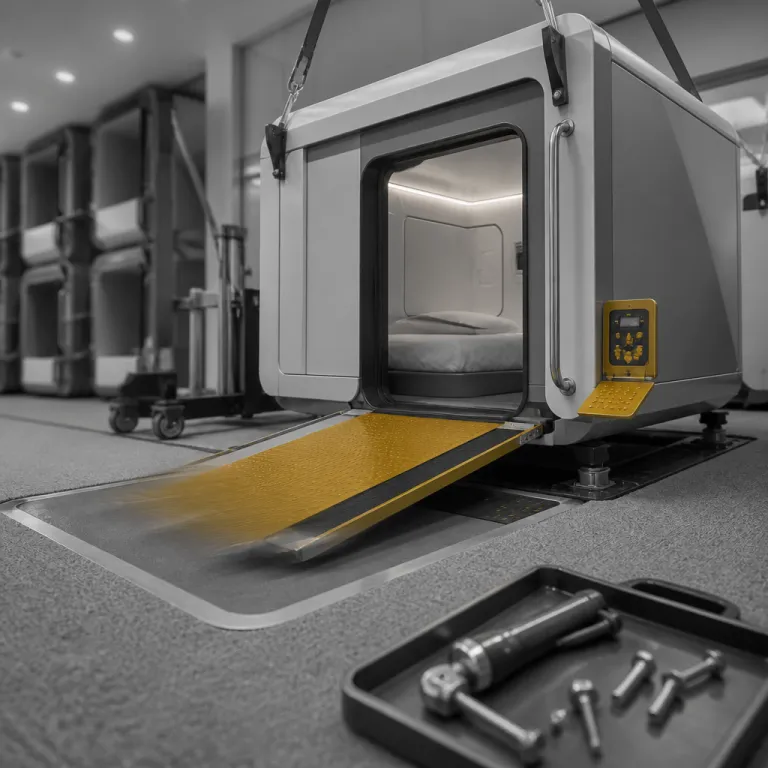
For capsule hotels, translating these regulations into a compact pod hotel format is demanding but achievable. Operators must ensure that at least some capsule pods are wider, with ground level beds and transfer space beside the mattress, rather than stacked capsules that require climbing. Accessible hotel design also means that the route from reception to the sleeping area, bathroom shower, and lounge remains step free, with elevators where floors change level.
Zurich Airport’s Capsule Hotel, operated by Capsule Hotel in Switzerland, offers a useful case study in this regulatory shift. Working with accessibility consultants, architects, and local authorities, the team has integrated universal design principles, adding step free access, elevators, and wheelchair accessible capsules into a high speed airport environment. Their internal accessibility report notes that around 15 % of rooms are now accessible, a figure that places this hotel among the more progressive capsule hotels in Europe and aligns it with premium concepts such as the premium capsule hotel in London redefining comfort and design.
Inside the pod : layouts that actually work for different bodies
The real test of accessible capsule hotel design happens inside the pod, where centimetres matter. A standard japanese pod might be just wide enough for a single guest to roll over, but inclusive pods add shoulder room, turning space, and a clear transfer zone beside the bed. When a capsule hotel widens a pod by even 10 to 20 centimetres and lowers the entrance, that small design decision can transform the sleeping experience for a wheelchair user or a parent lifting a child.
Thoughtful hotel design treats the capsule as a tiny house, not just a box for sleeping. Power outlets, lighting controls, and high speed Wi-Fi should sit within easy reach from the bed, so guests with limited mobility are not forced into awkward stretches. Shelving, hooks, and luggage space must be reachable from a seated position, while the pod door or curtain should slide smoothly with minimal force.
Body size is another frontier for inclusive capsule pods, especially in japan capsule properties that once catered mainly to slim business travellers. Wider mattresses, higher weight rated beds, and taller pod ceilings respect a broader range of bodies and sleeping positions, without sacrificing space efficiency in the overall layout. If you want to understand how these details affect rest, look for properties that explain their pod dimensions clearly and study guides such as this analysis of capsule hotel sleep quality and pod design before you book.
Shared spaces, bathrooms, and fire safety in capsule hotels
Even the most accessible pod fails if the route to the bathroom shower or exit is not equally inclusive. In well designed capsule hotels, corridors are wide enough for wheelchairs and pushchairs to pass, with turning circles near lifts and at the ends of rows of pods. Handrails, non slip flooring, and clear sightlines help every guest, from older travellers to children navigating the hotel at night.
Bathrooms are where accessible capsule hotel design often succeeds or fails dramatically. Roll in showers with fold down seats, grab bars at multiple heights, and space beside the toilet for lateral transfers are essential for wheelchair users and also support guests with temporary injuries. When a capsule hotel clusters accessible rooms close to these bathrooms, it reduces travel distance and makes the entire experience feel more like a thoughtfully planned house than a converted corridor.
Fire safety in a capsule hotel requires particular attention, because pods Tokyo style layouts can create dense sleeping areas. Visual fire alarms, vibrating pillows, and clear audio announcements in multiple languages help guests with hearing or visual impairments respond quickly. For families, knowing that the hotel capsule section has well marked exits, illuminated low level signage, and staff trained to assist in evacuating capsule pods can be the deciding factor between booking and looking elsewhere.
Visual, hearing, and cognitive accessibility in pod hotel environments
Accessibility in capsule hotels is not only about ramps and wider doors. For guests with low vision, high contrast signage, tactile indicators on stairs, and consistent lighting levels between the sleeping area and corridors make navigation less stressful. Inside each pod, backlit switches, clear icons, and uncluttered design help every guest understand the controls instantly, even after a long flight.
Hearing accessibility in pod hotels demands more than a single flashing alarm in the lobby. Inclusive capsule hotel design integrates visual fire alerts inside pods, vibrating alarms for deep sleepers or guests with hearing loss, and text based notifications for schedule changes or emergencies. When a hotel connects these systems to high speed networks, staff can communicate quickly with guests who rely on written messages rather than spoken announcements.
Cognitive accessibility matters just as much, especially for families travelling with neurodivergent children or older relatives. Clear wayfinding, predictable layouts, and quiet zones away from the busiest capsule pods reduce sensory overload and confusion. Properties that explain their layout, noise levels, and accessibility features in plain language on their booking pages make the entire travel accessible journey smoother, from planning at home to settling into the pod.
What inclusive capsule hotels get right for families and multi generational trips
For a premium family, the most appealing capsule hotels balance privacy, proximity, and practicality. Parents often want pods close together, ideally in the same room zone, so they can supervise children while still enjoying a degree of personal space. When a hotel offers adjacent capsule pods at ground level, with at least one accessible pod for a grandparent or injured guest, the layout suddenly works for three generations.
Pushchairs and luggage create their own accessibility test in any hotel capsule corridor. Inclusive properties provide dedicated storage near the sleeping area, step free routes from lifts to rooms, and staff trained to help reposition bags without blocking access to pods. These details matter just as much in a luxury capsule setting as in a budget friendly one, because comfort is measured in ease, not only in thread count.
Families also benefit from the same features designed for wheelchair users, such as wider doors, roll in bathrooms, and flexible beds that allow side transfers. A capsule hotel that invests in universal hotel design ends up serving a far broader audience, from solo travellers with heavy backpacks to parents carrying sleeping toddlers. For a deeper look at how capsule brands are rethinking their building stock, including accessible conversions of older properties, see this analysis of how pod hotels are reviving vacant city buildings.
How to assess accessibility before you book a capsule hotel
Evaluating accessible capsule hotel design from a distance requires more than scanning a single wheelchair icon. Start by checking whether the hotel publishes detailed accessibility information, including the number of accessible rooms, pod dimensions, bathroom layouts, and routes from entrance to sleeping area. Properties that have worked with accessibility consultants or completed formal accessibility audits usually describe these features clearly, because they understand that informed guests are more confident guests.
Capsule Hotel at Zurich Airport, for example, has updated its accessibility page and implemented new features as part of an ongoing universal design programme. The operator reports that around 15 % of its rooms are accessible, supported by step free access, elevators, and wheelchair accessible capsules that integrate into the main layout rather than being hidden away. This approach reflects a broader industry context, where growing demand for accessible accommodations is pushing capsule hotels to set higher standards and use guest feedback to refine every pod.
When you narrow your shortlist, take one extra step and contact the hotel directly to discuss your needs. As the operator guidance puts it, “Confirm accessibility features before booking. Contact hotel for specific needs. Review guest feedback on accessibility.” Asking specific questions about pod height, transfer space beside the bed, bathroom shower configuration, and fire safety procedures will help you decide whether a particular capsule hotel, pod hotel, or luxury hotel with capsule pods truly matches your expectations.
Key figures on accessibility in capsule hotels
- Capsule Hotel at Zurich Airport reports that approximately 15 % of its rooms are accessible, a relatively high share for compact accommodation formats in Europe, according to its internal accessibility report.
- Industry consultations with architects and accessibility specialists indicate that even a 10 to 20 centimetre increase in pod width can significantly improve transfer comfort for wheelchair users and larger body types, without dramatically reducing overall space efficiency in the hotel layout.
- Accessibility audits conducted for capsule properties in transport hubs such as airports and major rail stations consistently highlight step free access and elevator reliability as the two most critical factors influencing guest satisfaction scores among travellers with reduced mobility.
- Universal design adoption in compact hotels has been linked to higher repeat stay rates among families and older guests, as features like roll in showers, wider corridors, and clear signage benefit a much broader audience than the original target group of wheelchair users.
FAQ about accessible capsule hotel design
What accessibility features are common in capsule hotels ?
Common accessibility features in capsule hotels include step free access from the entrance to the sleeping area, elevators between floors, wheelchair accessible capsules with wider entrances, and accessible bathrooms with roll in showers. Many properties also add grab rails, non slip flooring, and clear high contrast signage in shared spaces. Increasingly, inclusive capsule hotels integrate visual fire alarms and vibrating alerts to support guests with hearing impairments.
How can I ensure a capsule hotel meets my accessibility needs ?
The most reliable approach is to review the hotel’s published accessibility information and then contact the property directly with specific questions. Ask about pod dimensions, bed height, transfer space, bathroom layout, and the route from reception to your capsule, including any ramps or lifts. Reading recent guest feedback that mentions accessibility will also help you understand how well the hotel’s design works in real life.
Are capsule hotels suitable for wheelchair users and families ?
Some capsule hotels are suitable for wheelchair users and families, but not all properties meet the same standard. Look for hotels that offer wheelchair accessible capsules on the same level as shared facilities, roll in bathrooms, and corridors wide enough for pushchairs and mobility devices. When these features are in place, capsule hotels can provide a compact yet comfortable option for multi generational trips.
What should I ask about fire safety in a capsule hotel ?
When assessing fire safety, ask whether the hotel provides visual alarms, vibrating alerts, and clear evacuation routes from the pod area. It is also worth confirming that staff are trained to assist guests with reduced mobility during an emergency and that exits are accessible without stairs. Properties that can answer these questions confidently usually have stronger overall safety planning.
Do accessible pods cost more than standard capsules ?
Pricing policies vary, but many responsible operators price accessible pods similarly to standard capsules in the same category. Some luxury capsule and premium pod hotels may charge more for larger accessible rooms, yet they often include additional amenities and more generous space. If cost is a concern, ask the hotel directly whether accessible pods are priced differently before you confirm your booking.