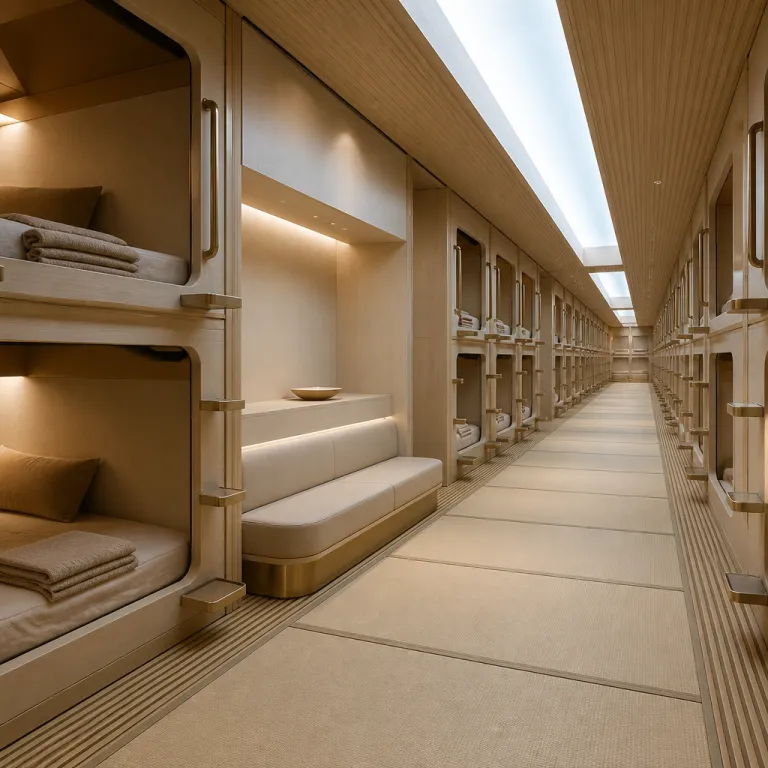
The 9 hours hotel philosophy: minimalist luxury in motion
The 9 hours hotel concept in Japan refines the classic capsule hotel into a calm, almost meditative travel ritual. Built around a symbolic nine-hour cycle for your stay, it divides the experience into one hour to check in and shower, seven hours of sleep, and one final hour to get ready for the day. This simple structure turns every hour into a key part of a carefully choreographed journey through the hotel, whether you stay by the night or only for a few hours in the day.
At properties operated under the nine hours brand, including the planned nine hours Shinjuku North in Tokyo, the focus is on a modern, ultra-clean capsule that feels more like a private pod than a compromise. Each capsule hotel in this network typically uses separate floors for men and women, with a clear locker number system that makes it easy to store luggage and move between the shower area and your place to sleep. The result is a hotel Japan visitors often choose when they want predictable comfort, transparent cost, and a frictionless stay measured in flexible hours rather than rigid nights.
This philosophy appeals strongly to travelers who value time as much as space, especially in dense districts such as Shinjuku and the wider central Tokyo area. A nine hours stay lets you pay for the exact duration you need, whether that is a short nap-and-shower stop between meetings or a full night of deep sleep before an early flight. For premium capsule hotel booking platforms, this hour-based model has become a key reference point when curating lists of minimalist yet luxurious properties across Japan.
From airport layovers to urban escapes: when a 9 hours hotel makes sense
Many travelers first encounter the 9 hours hotel idea at major gateways such as Narita Airport, where a capsule hotel can turn a long layover into restorative rest instead of a lost day. Instead of paying for a full hotel block you do not use, you can check in for a flexible daytime or overnight package that matches your flight schedule. This approach reduces both stress and cost, while keeping you close to your gate and your luggage.
In central Tokyo, the same model suits business travelers who need a quiet place to sleep between late client dinners and early morning meetings. A modern pod with a clean mattress, tech toilets, and a powerful shower becomes a compact sanctuary in the middle of the city, especially in busy areas such as Shinjuku. For many younger guests comparing options on premium booking sites, a nine hours capsule stay feels more efficient and more private than a shared dorm, a trend explored in depth in this guide to why young travellers choose capsules over hostels.
Leisure travelers also use these capsules as a base for festival weekends, shopping trips, or quick city breaks across Japan. You might book a capsule hotel for just a few hours of sleep after a late concert, then use the shower area and nap-and-shower options before checking out for the day. Because the cost is transparent and the stay is structured by the hour, you can plan a precise list of activities around your hotel time without wasting money or energy.
Nine hours Shinjuku North: health focused minimalism in the heart of Tokyo
Nine hours Shinjuku North brings the 9 hours hotel idea into one of Tokyo’s most dynamic districts, with a large number of capsules arranged across separate floors for men and women. Located in Hyakunincho, in the Shinjuku area, it places guests within easy reach of nightlife, shopping streets, and major train lines while still offering a quiet place to sleep. For travelers comparing every hotel Japan option in this part of the city, the combination of location, cost control, and sleep-focused design is compelling.
According to information shared by the operator at the time of writing, this property is run by nine hours in collaboration with Tokyo Women’s Medical University, marking a notable attempt to integrate medical expertise into a capsule hotel model. The official Q&A describes nine hours Shinjuku North as “a capsule hotel in Tokyo” and notes that it will offer capsule accommodations, sleep analysis, and 24-hour operation. Readers should always check the latest details on the official nine hours website or booking pages, as opening dates, services, and partnerships may change.
Inside, guests can expect a modern pod layout with intuitive lighting, a clean shower zone, and thoughtful amenities such as toothbrush-and-toothpaste sets ready at each locker number. The time-based structure remains flexible, so you can book a short nap-and-shower package during the busiest hours in Shinjuku, or settle in for a full night when the area finally quiets. For more context on how premium capsules fit into this district, see this overview of Shinjuku Tokyo capsule hotel premium stays for modern travelers, which highlights why this area is ideal for minimalist yet upscale stays.
Inside the capsule: what luxury looks like in a 9 hours hotel
Step into a nine hours capsule and the first impression is clarity rather than clutter. The pod is long enough for most guests to stretch out comfortably, with soft lighting that supports both reading and winding down for sleep. Every surface feels intentionally clean, from the mattress to the walls, reinforcing the sense that this is a carefully prepared place to sleep rather than a compromise.
Premium booking platforms highlight details that matter to discerning travelers, such as the quality of the linens, the quiet ventilation, and the way sound is managed between capsules. In a well-designed capsule hotel, you should hear only a soft hum, not your neighbor’s alarm or locker beeps, even during the busiest hours Tokyo experiences. Tech toilets, strong water pressure in the shower area, and amenities such as toothbrush-and-toothpaste sets and hair dryers elevate the experience beyond a simple pod to something closer to a compact spa.
Storage is another key element of perceived luxury in such a small footprint. At nine hours Shinjuku North and other properties in Japan, guests can store luggage in secure lockers linked to their capsule, which keeps the sleeping corridor visually calm. Clear signage helps you check your route from entrance to locker to shower, so you never feel the need to skip content on orientation screens or maps. The result is a hotel stay where every hour feels purposeful, whether you are taking a quick shower between meetings or settling in for seven hours of sleep after a long day.
How to book a premium 9 hours hotel stay with confidence
When you search for a 9 hours hotel on a luxury or premium booking website, start by clarifying how many hours you actually need, day or night. Some travelers arriving from Narita Airport choose a short package to bridge the gap before an early bullet train, while others prefer a full night in a capsule hotel before exploring Tokyo. Knowing your ideal sleep window helps you compare cost options accurately and avoid paying for unused time.
Next, look closely at the layout details provided by the hotel and by the booking platform. Check whether there are separate floors for men and women, how the locker number system works, and whether you can store luggage securely if you arrive before your capsule is ready. A reliable nine hours listing will also explain the shower area setup, including whether shower access is available for non-staying guests who only need a nap-and-shower break and a place to refresh during the day.
Premium platforms increasingly highlight wellness features such as sleep analysis services, quiet zones, and air quality monitoring, especially at properties like nine hours Shinjuku North that collaborate with medical partners. When you read reviews, focus on comments about noise levels, cleanliness, and how staff handle peak Tokyo traffic in and out of the building. If you plan to attend events or concerts, you may also want to consult resources such as this guide to festival season in a pod, which explains how to align your capsule stay with late-night schedules and early departures.
The future of minimalist stays: why the 9 hours hotel model matters
The 9 hours hotel approach is shaping the future of minimalist stays by proving that small spaces can still feel premium when every detail is intentional. As urban centers such as Tokyo become denser, the ability to sell time in precise hour blocks rather than only by the night gives both hotels and guests more flexibility. Capsule hotel operators in Japan are already experimenting with dynamic pricing across different times of day, aligning cost with demand peaks around stations, business districts, and airports.
Health-focused collaborations, such as the reported partnership between nine hours and Tokyo Women’s Medical University at nine hours Shinjuku North, signal a shift from simple convenience to evidence-informed rest. Travelers are increasingly aware of how many hours of sleep they need to function, and they expect a pod to support that with good ventilation, sound control, and ergonomic design. In this context, features such as tech toilets, powerful shower facilities, and high-quality toothbrush-and-toothpaste amenities are not just perks; they are part of a holistic promise that every hour in the hotel will contribute to well-being.
For premium booking websites, the challenge now is to present these minimalist stays with the same care usually reserved for large suites. That means detailed photos of each capsule, clear explanations of how to check in, where to store luggage, and how separate floors are organized, as well as transparent lists of what is included in each time-based package. As more travelers choose to skip content that feels like marketing and focus on practical information, platforms that explain exactly how a 9 hours hotel stay works in Shinjuku, Narita Airport, or other parts of Tokyo will earn lasting trust.
Key figures shaping the 9 hours hotel and capsule trend
- Nine hours Shinjuku North is designed with a substantial number of capsules, allowing the hotel to serve both short-stay and overnight guests while maintaining separate floors for men and women (based on nine hours operator information available at the time of writing; readers should verify current details on official channels).
- The nine-hour structure used by the brand divides a typical stay into one hour for check-in and shower, seven hours of sleep, and one hour to get ready, a model that has become a reference point for many capsule hotel operators in Japan.
- Collaboration with Tokyo Women’s Medical University at nine hours Shinjuku North has been described by the operator as an effort to integrate medical insight into the nine hours network, highlighting a broader industry move toward health-focused sleep analysis services.
- Capsule hotels located near major hubs such as Narita Airport and central Tokyo stations capture a growing share of transit passengers who need only a few hours of rest or a single nap-and-shower session before continuing their journey.
FAQ about the 9 hours hotel concept and minimalist capsule stays
What is the 9 hours hotel concept in Japan?
The 9 hours hotel concept is a minimalist capsule hotel model that structures each stay around a nine-hour cycle, typically one hour to check in and shower, seven hours of sleep, and one hour to prepare for the day. Properties operated by nine hours in Tokyo and other cities use this framework to offer flexible, time-based stays instead of only traditional overnight bookings. Guests can often choose shorter or longer packages, paying only for the hours they actually use.
How does nine hours Shinjuku North differ from other capsule hotels?
Nine hours Shinjuku North stands out because it combines the standard 9 hours hotel design with a health-focused collaboration with Tokyo Women’s Medical University, according to operator announcements. The property is planned with a large capsule inventory, separate floors for men and women, and services such as sleep analysis alongside the usual clean pods, shower areas, and locker-based storage. Its location in the Shinjuku area of Tokyo also makes it convenient for both business and leisure travelers.
Is a capsule hotel near Narita Airport suitable for long layovers?
Capsule hotels near Narita Airport are well suited to long layovers because they allow travelers to book only the hours they need, day or night. Instead of paying for a full night in a traditional hotel, you can reserve a pod for a short sleep period, use the shower facilities, and store luggage securely between flights. This approach reduces both cost and transit time while keeping you close to your departure gate.
What should I check before booking a 9 hours hotel stay?
Before booking, you should check how the hotel structures its time-based packages, whether there are separate floors for men and women, and how luggage storage works. Look for clear information about the shower area, amenities such as toothbrush-and-toothpaste sets, and whether non-staying guests can access nap-and-shower services. Reviews that mention cleanliness, noise levels, and staff support during busy Tokyo periods are especially valuable.
Are capsule hotels comfortable enough for a full night’s sleep?
Well-designed capsule hotels such as those in the nine hours network are built specifically to support a full night of sleep, with attention to ventilation, sound insulation, and mattress quality. Many guests report that the pod layout feels surprisingly spacious once the curtain is closed and the lighting is adjusted. For travelers who value efficiency and location, a 9 hours hotel stay can be as restful as a traditional room, provided you are comfortable with the minimalist format.