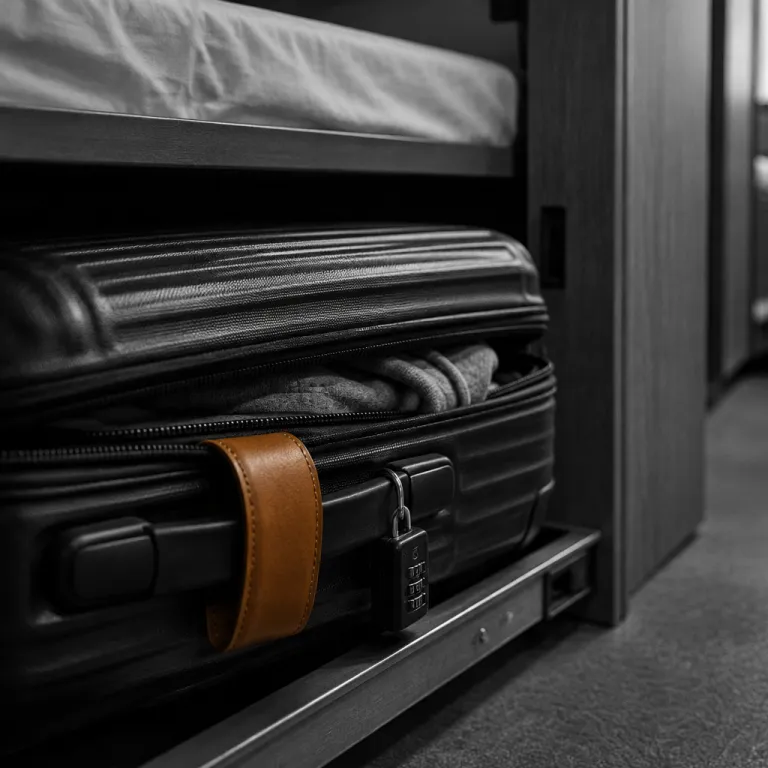
How capsule hotel luggage storage really works when the bed is the room
Walk into a Japanese capsule hotel with a large suitcase and the first question is simple. You look at the compact capsule rooms, the narrow corridor on each floor, and you immediately wonder where any serious luggage can realistically live during your stay. Understanding capsule hotel luggage storage before you book removes that anxiety and lets you focus on the pod hotel experience instead.
Most capsule hotels in Japan separate sleeping pods from luggage areas, so your capsule or cabin stays visually calm and uncluttered. You will usually find a dedicated luggage room near reception, a row of full-height lockers beside the shoe locker zone, or under-bench storage in the changing area, and the exact mix varies widely between older properties and newer Tokyo capsule concepts. When you plan a stay in a capsule hotel, always check storage details on the property page rather than assuming your suitcase fits inside the pod itself.
In traditional Japanese capsule hotels, especially around busy stations such as Shinjuku or Ueno in central Tokyo, the layout follows a predictable rhythm. You leave street shoes in a shoe locker, step onto a raised floor in slippers, then roll your suitcase to a locker area before heading to the sleeping zone with only a small bag. Design-forward capsule brands such as Nine Hours or First Cabin refine this flow with clearer signage, better lighting, and staff who will walk you through the process on your first night in a capsule.
Premium capsule hotels offer several storage tiers to match different styles of short stays. Compact lockers handle daypacks while larger lockers or a supervised luggage room accommodate check-in-sized suitcases for guests staying multiple nights. The most polished properties offer a mix of both, so solo travellers staying in women-only capsule zones or on mixed floors can choose the storage option that feels most secure and convenient.
What actually fits where: lockers, luggage rooms and under bench tricks
Space is the real luxury in any capsule hotel luggage storage setup, so you need to think in dimensions rather than vague promises. A typical carry-on suitcase of around 55 centimetres in height usually fits into standard lockers in many capsule hotels, while a truly large 70–80 centimetre check-in case often needs a shared luggage room or a dedicated floor rack. When you plan a stay in a Tokyo capsule property, assume the locker is sized for regional train travel rather than intercontinental relocation.
Look closely at photos of the locker area before you book through any platform that uses affiliate links or curated lists. Some hotels offer tall but shallow lockers that swallow a backpack and a slim cabin suitcase, while others provide deep horizontal lockers under a bench where you slide luggage in sideways. In several modern pod hotels, you will see dimensions such as 30 × 50 × 60 centimetres listed for small lockers and 40 × 80 × 90 centimetres for large units, which helps you check suitability for your exact bag rather than guessing on arrival.
Shared luggage rooms feel different from private lockers, and that difference matters for a relaxed stay. In higher-end Japanese capsule properties, these rooms are usually monitored by cameras, sometimes staffed during peak check-in hours, and often controlled by keycard access linked to your capsule or cabin number. When you are staying in women-only sections or on mixed-gender floors, ask whether your luggage room is shared across the whole building or zoned by floor.
Not every item needs to live in a locker during your capsule adventure. Many capsule hotels allow you to keep a soft overnight bag inside the pod for pyjamas, toiletries and electronics, while heavier items remain in the main storage area. This split system keeps the sleeping floor quiet and uncluttered, yet still gives you the feeling of a private Tokyo-style retreat where your essentials are always within reach.
Shared spaces shape how you move with luggage too, especially in properties that lean into social design. If you are curious about how communal lounges and co-working corners are planned around circulation routes, the analysis of the communal lounge effect in pod hotels shows why some hotels offer more generous luggage corners near social areas. Those design choices directly influence whether rolling a suitcase at night feels discreet or disruptive.
Security, access and timing: how safe is your suitcase really
Security around capsule hotel luggage storage is less about heavy vault doors and more about smart, layered access. Most modern capsule hotels use RFID keycards or numeric codes that control both your sleeping capsule and the locker or luggage room assigned to your stay, which means staff can track who enters each area and when. In better-run Tokyo properties, this system is paired with discreet cameras in corridors outside storage rooms rather than inside sleeping zones.
When you check in, pay attention to how staff explain the storage process. A clear briefing about where to place your suitcase, how to lock the unit, and what happens if you lose your keycard is a strong indicator of an organised operation that respects both privacy and efficiency. If the explanation feels rushed or vague, that is a signal to ask more questions before you commit to multiple nights in the same property.
Timing matters as much as locks, especially for solo travellers arriving early or leaving late after a night in a capsule hotel. Many places offer day-use luggage storage before official check-in, so you can drop a bag, explore the area around the station, and return later to access your capsule without dragging everything through the city. After checkout, some capsule operations allow several extra hours of storage, sometimes for a small fee of a few hundred yen, which is invaluable if your train or flight leaves in the evening and you want one more unhurried walk through the neighbourhood.
Remote workers and digital nomads often treat a capsule hotel as both a place to sleep and a compact office. If that is your plan, check policies on leaving laptops or camera gear in lockers while you work in shared lounges or co-working pods, because some Japanese brands encourage you to keep high-value items on your person. For a deeper look at how work zones and storage intersect inside these properties, the guide to co working pods and desk space inside capsule hotels explains what you can realistically expect from different layouts.
Packing strategy for a pod: soft bags, smart edits and what stays with you
Thoughtful packing turns capsule hotel luggage storage from a worry into a quiet luxury. A soft-sided cabin bag or duffel compresses into awkward corners far better than a rigid hard-shell suitcase, which matters when lockers are shallow or the luggage room is busy at peak check-in times. If you are staying several nights in a capsule hotel near a major station, consider pairing one large check-in case left at a long-term storage service with a smaller bag dedicated to your pod stay.
Inside capsule pods, you will usually find a narrow shelf, a small safe, and hooks or rails for clothes, so think in terms of vertical space rather than floor area. Keep a slim packing cube with sleepwear, a compact toiletry kit, and a single change of clothes in a tote that lives beside you, while bulkier items remain in the main luggage area. This approach keeps the capsule calm and functional, especially in women-only sections where guests often value both privacy and a sense of order.
Electronics deserve their own micro strategy during any stay in compact accommodation. Store chargers, adapters and cables in a single pouch that moves easily between your in-capsule shelf and the locker, and keep power banks fully charged in case outlets are not ideally placed. When you stay capsule-style in older properties, you may find fewer sockets than in newer mixed-use concepts, so a small multi-port adapter can quietly transform the experience without adding much weight.
Shoes are another overlooked detail in capsule hotels, especially in Japan where the transition from street to indoor space is ritualised. Expect to leave outdoor shoes in a shoe locker near reception, then move around the floor in slippers, which means your main footwear lives away from your capsule for most of the night. Pack lightweight slip-ons or sandals that flatten easily into your luggage, so you are not sacrificing precious locker volume to bulky shoes during your stay.
Design-focused capsule hotels across Tokyo have refined these micro rituals over decades of experimentation. For a deeper sense of how pod layouts, storage niches and circulation patterns evolved, the feature on design lessons from Tokyo’s original pod hotels shows how Japanese pioneers balanced tiny sleeping areas with surprisingly generous luggage solutions. Those lessons now inform many properties across Japan, from Osaka business districts to Sapporo station hubs.
Questions to ask before you book: heavy luggage, special cases and real world scenarios
Before you commit to any capsule hotel luggage storage setup, your booking questions should be as precise as your packing list. Ask the hotel directly for locker dimensions in centimetres, clarify whether the largest lockers are included in the standard rate, and check whether the luggage room is staffed or only monitored by cameras. If you travel with sports equipment or unusually large cases, send photos and measurements in advance so the hotel can confirm what will actually fit.
Location shapes storage comfort more than many travellers expect, especially in dense urban areas. A capsule hotel attached to a major station often sees intense turnover at check-in and checkout times, which can make the luggage area feel crowded if the space is undersized. Properties in quieter neighbourhoods usually have more generous floor space around lockers, so rolling a suitcase at night feels less like navigating a narrow corridor and more like moving through a compact but well-planned lobby.
Solo travellers staying in women-only capsule zones or on mixed-gender floors should also ask about zoning in luggage rooms. Some hotels offer separate storage areas for women guests, while others use a single shared room for all floors, and your comfort level with that arrangement is personal. If you are unsure, choose capsule brands that clearly describe their layout online and respond quickly to storage questions, because that responsiveness often mirrors their overall approach to guest care.
Finally, think about your whole trip rather than just one night in a capsule. If you will be circling back through the same city, it can be smarter to leave a large suitcase in a long-term storage facility near the station and move between capsule hotels with only a cabin bag. That strategy keeps your stay light, makes every pod moment feel more spacious, and turns the question of where the suitcase goes into a solved detail rather than a lingering worry.
FAQ about luggage in capsule hotels
Can I keep my suitcase inside the capsule itself
In most capsule hotels, full-size suitcases do not fit safely inside capsule pods. You usually keep only a small bag, electronics and night essentials in the sleeping area, while larger luggage stays in lockers or a dedicated luggage room. This separation keeps corridors clear and maintains quiet on each floor.
Are luggage lockers in capsule hotels secure enough for valuables
Lockers in reputable capsule hotels use keycards or numeric codes and are often located in monitored areas near reception. They are generally secure for clothing and standard luggage, but many travellers prefer to keep passports, cash and high-value electronics in a small safe or on their person. If you are concerned, ask the hotel whether the luggage area is covered by cameras and whether staff are present around the clock.
What should I pack differently for a capsule hotel stay
A soft-sided cabin bag works better than a rigid suitcase because it compresses into smaller lockers and under-bench spaces. Pack a slim overnight kit with sleepwear, toiletries and one change of clothes that can live beside you in the capsule, and keep bulkier items in the main luggage area. Limit the number of shoes and use packing cubes to keep your small capsule space organised.
Can I store luggage before check in and after checkout
Many capsule hotels offer complimentary or low-cost luggage storage for a few hours before check-in and after checkout. This allows you to explore the area around the station without carrying heavy bags, then return later to access your capsule or collect your suitcase. Always confirm exact hours and any fees in advance, especially if you have a late flight or overnight train.
Is a capsule hotel practical if I travel with a very large suitcase
Travelling with an oversized suitcase makes capsule hotel logistics more complex but not impossible. You need to confirm locker dimensions, ask whether the hotel has a separate luggage room for large items, and consider using external storage near the station for part of your trip. Many frequent travellers pair one large stored suitcase with a smaller bag dedicated to the capsule hotel portion of their journey.